
VA Form 20-10207 Errors That Delay Priority Processing
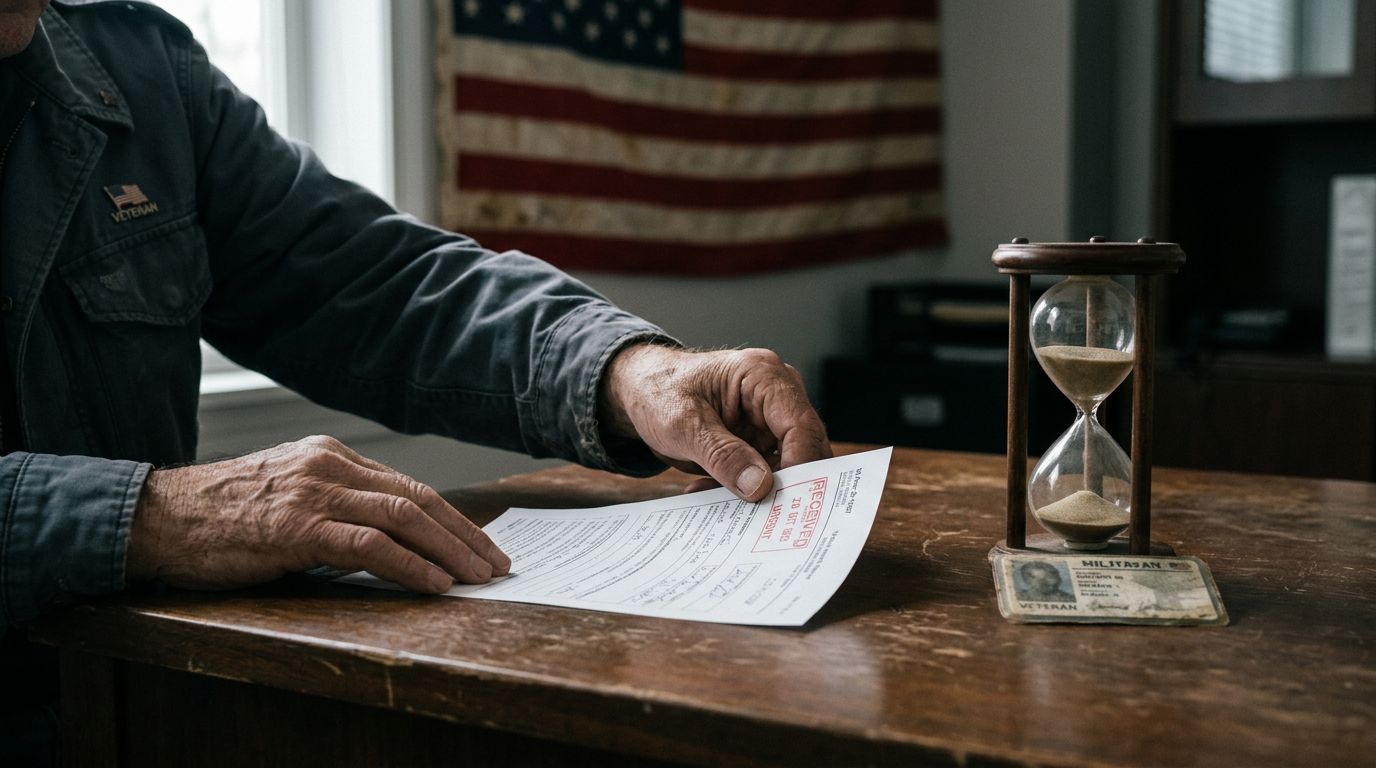
If your VA claim needs urgent handling, a bad priority request can cost you weeks. VA Form 20-10207 is the form the VA uses to request priority processing, but it only works when the file is complete and the proof fits the reason for the request.
In 2026, veterans who qualify usually fall into a narrow group, including extreme financial hardship, terminal illness, homelessness, Purple Heart status, POW status, or age 85 and older. When the form is wrong or the evidence is thin, the VA may reject the request and send the claim back to the regular line.
What VA Form 20-10207 does in 2026
VA Form 20-10207 is not a general request for faster service. It is a formal request for priority treatment based on a qualifying status or hardship. If the VA accepts it, the claim gets a file-level priority marker, and that can move it ahead of routine work when a reviewer reaches it.
That marker does not fix every delay. Records still have to be gathered, medical evidence still has to be reviewed, and a C&P exam can still take time. So even a valid request helps most when the file is already organized and the proof is easy to verify.
The form matters because the VA is not guessing about hardship. It needs documents that show the problem clearly. If the proof leaves room for doubt, the request usually slows down or gets denied.
The errors that most often slow priority processing
A lot of veterans think the form itself is the problem. Usually, the real issue is the evidence attached to it.
Maybe a key document is missing. Maybe the proof does not match the reason for the request. Sometimes the form is signed and mailed, but the records are too old, unreadable, or incomplete. Then the VA has to stop and ask questions, which defeats the point of the request.
This quick reference shows the kinds of proof the VA usually expects and the mistakes that cause trouble.
| Priority basis | What VA expects | What goes wrong |
|---|---|---|
| Extreme financial hardship | Bills, income records, bank statements, or notices showing you cannot keep up | The file does not show the full money problem |
| Terminal illness | Recent medical records or a provider statement showing the diagnosis | The evidence does not clearly show terminal status |
| Homelessness | Shelter letters, service provider statements, or similar proof | The VA cannot confirm current housing status |
| Purple Heart or POW status | Status already reflected in the file or clearly listed on the form | The claim details are inconsistent |
| Age 85 or older | Clear identifying information showing age | The form does not match the record |
The takeaway is simple. The VA needs enough proof to act without guessing. If the file forces a reviewer to interpret your situation, the request usually slows down.
Incomplete hardship proof
Extreme financial hardship is one of the most common requests, and one of the easiest to miss. A stack of bills alone may not show the full picture. A single bank statement may not show why the claim needs urgent handling.
The VA wants to see the gap between income and expenses. It also wants to know whether the hardship is current, not just old. If your documents do not connect those points, the request can sit while the file waits for more proof.
Wrong evidence for the category
Each qualifying reason has its own proof. A medical letter may help with terminal illness, but it will not prove homelessness. A shelter letter may support a homelessness request, but it will not show financial hardship.
That mismatch creates delay because the reviewer has to sort through records that do not answer the question. The more the evidence drifts from the actual request, the longer the file can sit untouched.
Missing signatures, dates, or claim identifiers
Small errors can stop a request cold. An unsigned form, a missing date, or a claim number that does not match the file can cause a hold.
Those details matter because the VA has to connect the request to the right veteran and the right claim. If the paperwork is unclear, the file may sit until someone sorts it out.
Filing mistakes that turn a fast request into a slow one
The way you submit VA Form 20-10207 matters almost as much as the evidence itself. A complete request can still stall if it goes to the wrong file, uses the wrong claim type, or arrives in a format the VA cannot read well.
Unreadable scans are a common problem. So are missing pages. If the form looks fine on your computer but a page cuts off in the upload, the VA may not have what it needs. Paper copies can create the same problem when a page gets separated or copied poorly.
Another issue is timing. If the request is filed before the underlying claim is properly identified, the VA may not connect the hardship evidence to the right case. That means the request can sit while staff try to match it to the file.
If the VA cannot read the documents or match them to the claim, the priority request can lose its place before anyone reviews the merits.
Priority processing is useful, but it is not a reset button. It can move a file ahead of routine work, yet it does not erase confusion caused by bad paperwork.
What happens when the VA rejects the request
A rejected priority request does not end the underlying claim. It usually means the claim returns to standard processing while you fix the problem. That is frustrating, because the file loses the chance to move faster.
Start by reading the denial reason closely. In many cases, the problem is a missing document or evidence that does not show the qualifying status clearly. If the VA asks for more proof, send it quickly and keep a copy of everything.
If the denial affects the larger disability claim, the next step may be an appeal. How to appeal a denied VA disability claim explains the basic path when the claim itself needs another look. When the case becomes more serious or reaches the Board, veterans disability benefits attorneys can help you sort out the next move.
How to reduce delays before you send the form
The cleanest requests are usually the simplest ones. Match the evidence to the reason for priority processing, then check every page before you submit.
A short checklist can help:
- Use the exact reason you qualify for priority processing.
- Attach recent, readable evidence that supports that reason.
- Make sure the name, claim number, and dates match across the file.
- Save a full copy of everything you send.
After that, look for anything that could confuse the reviewer. Old records, torn pages, blank fields, or mixed-up claim numbers all create avoidable delay. The VA does not have to deny the request to slow it down. Sometimes it only has to pause long enough to ask for clarification.
Florida veterans often do better when they treat the priority request as part of the full claim, not as a separate piece of paper. A rushed form can send the file backward. A careful one can keep it moving.
When legal help makes sense
Some priority requests are easy to fix. Others turn into repeated denials, missing records, or disputes over whether the veteran qualifies at all.
That is where legal help can matter, especially for Florida veterans who are already dealing with treatment, bills, and a long wait for benefits. A veteran disability attorney can review the form, check the evidence, and spot the gaps that keep the VA from moving the file.
The issue can be even bigger when the claim also needs appeal work or Board review. In that setting, the right help is not just about filling out paperwork. It is about protecting the claim from more delay.
Conclusion
VA Form 20-10207 is designed to speed up qualifying claims, but it only works when the proof is clear and the paperwork is complete. Missing evidence, mismatched records, unreadable pages, and filing errors can send the claim back into the regular queue.
The safest approach is simple. Match the evidence to the reason for priority processing, check every detail, and respond quickly if the VA asks for more. In a system built on paperwork, small mistakes can create big delays.