
Florida Brake Check Crash Claims and Dash Cam Proof
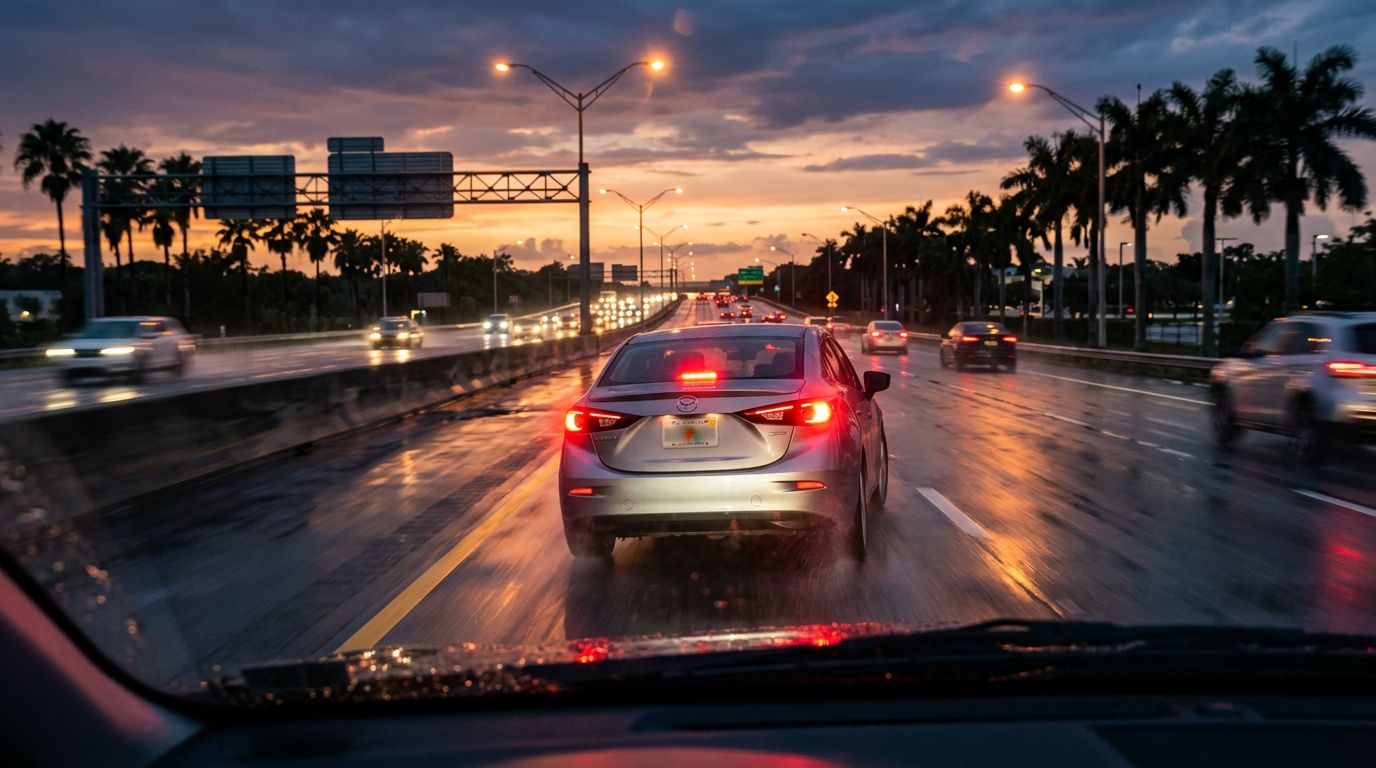
A rear-end crash usually looks simple until the lead driver hit the brakes on purpose. In Florida, that one detail can change who pays.
Florida brake check claims often turn on timing, distance, and video. If you were hit after a sudden stop, the facts matter fast because insurers will look for any reason to shift blame. A dash cam can be the difference between a denied claim and a case with real weight.
When a brake-check crash changes the fault analysis
Why the rear driver is not always the whole story
Florida rear-end crashes often start with a presumption that the following driver was careless. That makes sense in many cases, because drivers are supposed to leave enough room to stop safely.
A brake-check crash is different. If the front driver slammed on the brakes without a safety reason, the issue becomes whether that move was intentional and unreasonable. Florida has no separate ticket labeled “brake checking,” so police and insurers usually look at reckless driving and aggressive careless driving laws instead.
Under Florida Statutes section 316.192, reckless driving means operating a vehicle with willful or wanton disregard for safety. Section 316.1923 covers aggressive careless driving. A sudden, unnecessary stop can fit either one when the facts support it.
Fault can be shared
Florida uses modified comparative negligence. That means fault can be divided between drivers. If one driver followed too closely and the other brake-checked on purpose, both can share responsibility.
The number matters. If you are found more than 50% at fault, you cannot recover damages in a Florida injury case. That is why brake-check claims are rarely solved by a single statement or a quick insurance call.
Florida also starts most auto claims through PIP, or Personal Injury Protection. Still, serious injuries can open the door to a claim against the other driver. The crash may look like a routine rear-end collision, but the law does not stop at the bumper.
The law looks at conduct, not just impact
A valid brake-check claim usually needs proof that the lead driver braked intentionally, without a good safety reason, and in a way that created danger. If traffic slowed, a light changed, or a pedestrian crossed, the claim gets weaker.
That is why these cases often feel like a credibility contest. The question is not only “who hit whom?” It is also “why did the lead car stop so hard?”
Dash cam footage can turn a story into evidence
Dash cam video is often the cleanest way to show what happened in the seconds before impact. It can capture the spacing between vehicles, the traffic flow, brake lights, lane changes, and the road itself. It may also show whether the lead driver slowed gradually or slammed on the brakes without warning.
Raw, unedited footage often matters more than a long argument.
Florida courts can accept dash cam video when it is relevant, authentic, and legally obtained. That means the clip should directly relate to the crash, and it should be the real file, not a trimmed version with gaps.
A few details matter a lot:
- Save the footage immediately.
- Back it up in more than one place.
- Do not edit, trim, or add comments to the file.
- Keep the original metadata, including timestamps.
- Check whether the camera records audio, since audio rules can raise separate issues.
Forward-facing dash cams are generally legal in Florida when they are mounted properly and do not block the driver’s view. Florida does not require a special permit for a standard dash cam, but a bad mount can create a windshield obstruction problem. That small detail can matter if the other side tries to attack the device instead of the crash.
The best clips do more than show impact. They give context. Weather, lane position, traffic density, and the actions of both drivers can all show up in a few seconds of video.
When the video is part of a larger paper trail, claims get stronger. Building a strong car accident claim usually means matching the dash cam with other records, not relying on one file alone.
Other evidence that can support a Florida brake-check claim
Dash cam proof helps, but it is rarely the only proof that matters. Insurance carriers want consistency. They look for a story that matches the damage, the statements, and the medical records.
The best claims usually combine several sources:
| Evidence | What it can show |
|---|---|
| Dash cam footage | Sudden braking, traffic spacing, lane position, road conditions |
| Witness statements | Whether the lead driver braked aggressively or acted angrily |
| Police report | Officer observations, driver statements, cited violations |
| Crash scene photos | Skid marks, impact points, vehicle damage, roadway layout |
| Vehicle data | Speed, braking, and collision data from modern cars |
| Medical records | How the crash caused or worsened injuries |
The table shows the point plainly. One piece of evidence can be challenged, but several matching pieces are much harder to dismiss.
Witnesses can be especially helpful when they are neutral. A passenger, nearby driver, or pedestrian may have seen the lead car brake hard for no traffic reason. Police reports can also help, even when they do not decide fault by themselves. Officers often record aggressive driving comments, visible damage, and road conditions.
Vehicle data matters more now than many drivers realize. Many modern cars from Ford, Toyota, Honda, and other manufacturers store braking, speed, and collision data in embedded systems. That information can support the timeline shown on a dash cam.
Damage patterns can also help. A low-speed tap and a hard impact do not look the same. Neither do skid marks, lane positions, and vehicle angles. When those details line up with the video, the claim becomes much easier to defend.
If the crash caused serious injuries, a personal injury law firm can help gather records, sort the fault issues, and compare the crash evidence with the medical file.
What to do after a suspected brake-check crash
The first minutes after a crash often shape the rest of the claim. A calm response protects the evidence and reduces the chance of a bad statement later.
- Get medical attention and report every symptom.
- Call law enforcement and ask for an accident report.
- Save the dash cam file right away.
- Back up the raw video before anything gets overwritten.
- Take photos of the cars, skid marks, traffic signs, and the road.
- Get names and phone numbers for any witnesses.
- Avoid arguing with the other driver about fault at the scene.
- Do not send the footage to the insurance company before legal review.
That last step matters more than many drivers expect. Adjusters often want quick access to video, but a rushed upload can create problems if the clip is incomplete, mislabeled, or taken out of context.
A lawyer can also help identify whether the claim belongs in the no-fault system only or whether the injuries justify a broader injury claim. Florida still gives most injured drivers a PIP pathway first, but serious harm can move the case beyond that starting point. The statute of limitations for a Florida personal injury lawsuit is four years from the crash date, so time matters.
If you need help protecting the footage and the claim file, Florida car accident attorneys can move quickly on preservation, witness follow-up, and insurance pushback.
Conclusion
A brake-check crash can look like a standard rear-end accident until the evidence tells a different story. In Florida, the question is often whether the lead driver stopped for a real safety reason or acted with reckless intent.
Dash cam footage can make that answer visible. When it is preserved correctly and paired with witness statements, police records, vehicle data, and medical documentation, the claim gets much harder to ignore.
If you were hit after a sudden stop, the first version of the story does not have to be the last one. Strong evidence can turn suspicion into proof.