
Florida Rollover Crash Claims and Roof Crush Evidence
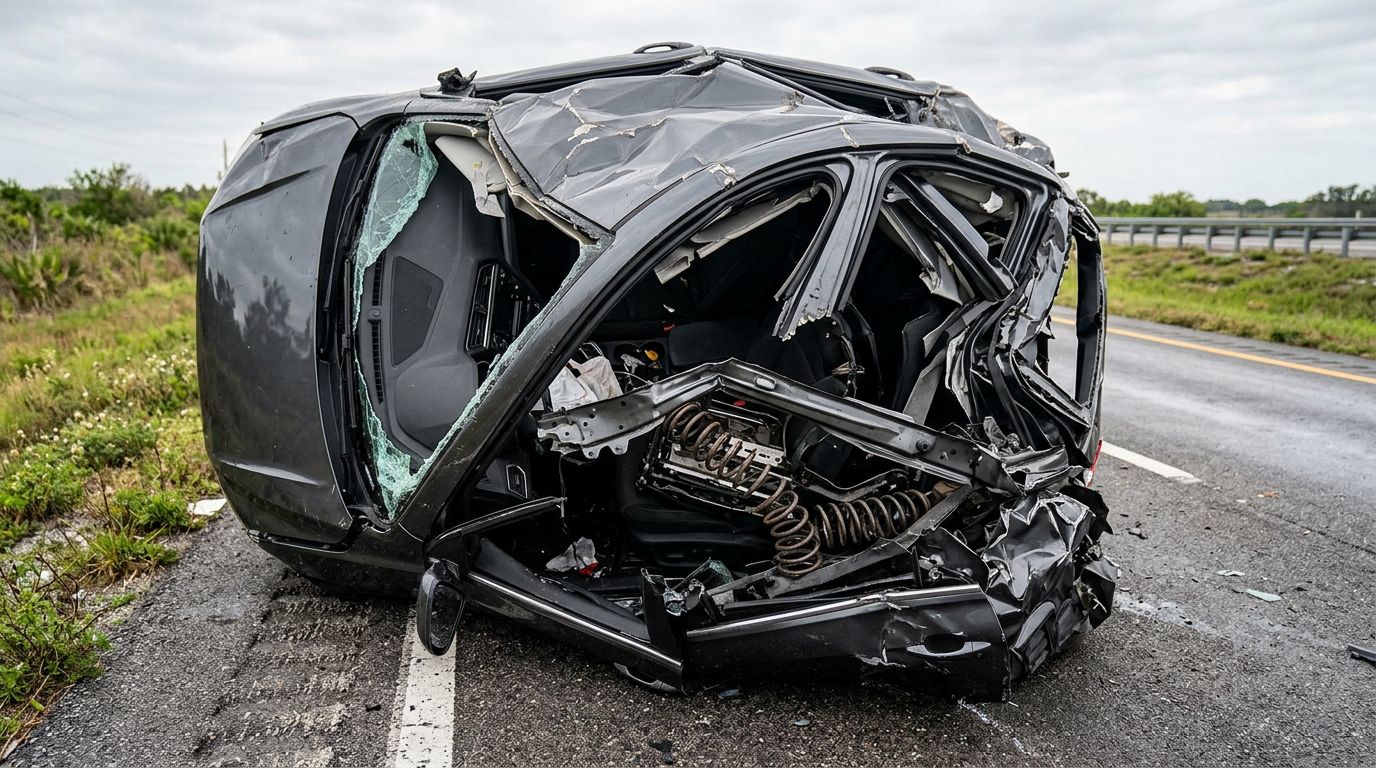
A rollover can turn an ordinary drive into a major injury case in seconds. In Florida rollover crash claims, the roof often tells the clearest part of the story, because roof crush can show how hard the cabin was hit and how much space the driver and passengers lost.
SUVs and trucks are especially exposed because of their higher center of gravity. Many rollovers start with a curb, a soft shoulder, a sudden swerve, or a tire failure, then end with serious cabin intrusion. When that happens, the evidence has to be handled fast.
Why rollover crashes often lead to severe injuries
Rollovers are different from many other crashes because the force does not stop at the first impact. When a vehicle tips, rolls, and lands on its roof, the structure above the occupants can collapse into the survival space. That is where broken necks, spinal injuries, traumatic brain injuries, and ejection risks grow.
NHTSA data shows that about 95% of single-vehicle rollovers are “tripped,” which means something like a curb, drop-off, or soft shoulder starts the rollover. About 85% of rollovers are single-vehicle crashes, so blame is not always as simple as it first looks. A driver may have overcorrected, but a road hazard, tire problem, or vehicle design can also matter.
Common triggers in Florida include:
- Speeding on roads with sharp curves or narrow shoulders
- Aggressive lane changes or emergency swerving
- Impairment from alcohol or drugs
- Worn or defective tires that fail under load
- Road drop-offs and soft shoulders, especially on rural routes
Weekend rollover crashes also appear more often in the data, which fits the pattern of heavier traffic, longer trips, and more impaired driving. On top of that, top-heavy vehicles react badly when the driver loses control. A tall vehicle can tip the way a chair does when one leg slips out.
The key point is simple. A rollover is not only about the moment the vehicle tips. It is also about what the roof does when the vehicle comes down.
Roof crush evidence can make or break the claim
Roof crush evidence matters because it shows whether the vehicle protected the people inside or failed them. The roof, pillars, windshield frame, seat belt systems, and cabin intrusion points can all tell a story that witness memories cannot.
The vehicle itself is often the most important piece of evidence, because repairs, salvage, and cleaning can erase the details that matter most.
A strong investigation usually starts with the vehicle, photographs, and records from the scene. Event data recorder downloads can show speed, braking, throttle position, and steering input. Police reports, dashcam footage, nearby surveillance video, and witness statements can fill in the crash sequence.
| Evidence | What it can show | Why it matters |
|---|---|---|
| Vehicle itself | Roof deformation, pillar buckling, weld separation | Shows how the structure failed |
| Photos and video | Roll sequence, landing position, damage pattern | Preserves details before repairs or salvage |
| EDR data | Speed, braking, steering, throttle input | Helps explain how the rollover started |
| Police report | Initial facts and crash timeline | Gives the claim a starting point |
| Witness statements | Driver behavior, swerving, lane changes | Supports fault and cause |
| Medical records | Injuries and treatment history | Links the crash to the harm |
That evidence becomes even more valuable when a crash expert inspects the vehicle. Engineers and reconstruction professionals look for roof intrusion, weakened pillars, poor welds, weak load paths, and other defects that may have made the injury worse. If the vehicle has already been repaired or destroyed, that work gets much harder.
The roof itself can also show whether the injuries came from the rollover or from a design that failed under stress. In a roof crush case, that detail can change the whole value of the claim.
Who may be responsible after a Florida rollover
Responsibility in a rollover case can extend beyond the driver who lost control. Another motorist may have forced the swerve. A tire maker may have sold a defective product. A vehicle manufacturer may have built a roof that collapsed too easily. In some cases, a road contractor or public entity may be involved because of dangerous shoulders, roadway drop-offs, or poor maintenance.
Florida fault rules matter here. Under understanding the 51 percent rule in Florida, a claimant can lose the right to recover damages if the claimant is found more than 50% at fault in a negligence case. That makes early evidence important, because fault arguments can shift quickly.
Crashworthiness claims add another layer. Even if another driver caused the rollover, a manufacturer may still face liability if the roof design increased the severity of the injury. That is sometimes called enhanced harm. The question is not only who caused the crash, but whether the vehicle protected the occupants once the crash happened.
That same issue comes up when the other side tries to blame the injured person for overcorrecting or speeding. Those facts matter, but they do not erase a possible design defect. A roof that collapses into the cabin can be part of the injury picture even when the first impact had another cause.
What to do after a rollover if you can only do a few things
The first hours after a rollover often decide how much evidence survives. If you can only handle a handful of steps, make them count.
- Get medical care right away. Some rollover injuries show up slowly, especially neck, back, and head injuries. A gap in treatment gives insurers room to argue that something else caused the pain.
- Call the police and get the report number. The report helps lock in the basic facts, including the vehicles involved, the location, and any witness names.
- Take photos if you can do it safely. Capture the roof, doors, windshield, tires, road edge, skid marks, and any objects that may have started the rollover.
- Do not authorize junking or major repairs. The roof, pillars, and restraint systems may hold the best evidence in the case.
- Save every paper and message. Keep medical bills, repair estimates, insurance letters, and text messages about the crash.
- Request the names of witnesses. A brief statement from someone who saw the swerve, the speed, or the final rest position can matter later.
If you are too hurt to gather anything, ask a family member to start preserving records. A phone photo taken the same day can be worth more than a polished report months later. The goal is to keep the claim grounded in facts before the evidence starts to fade.
Why fast legal action matters in roof crush cases
Roof crush cases often turn technical fast. That is one reason people usually need Florida car accident lawyers who know how to send preservation letters, inspect a vehicle before salvage, and line up the right experts.
A lawyer can also help sort out whether the claim belongs against one driver, multiple drivers, a tire company, or a manufacturer. That matters because each defendant may have different insurance coverage, defense strategies, and evidence problems. A claim that looks like a simple rollover can turn into a product liability case once the vehicle is examined.
A Florida personal injury law firm with crash experience can move faster than an insurance company wants to. That speed matters when the vehicle sits in a tow yard, when a salvage company is ready to dispose of it, or when the insurer pushes for a quick statement before the facts are clear. Florida personal injury law firm experience matters most when the case mixes injury proof, vehicle inspection, and liability questions.
The sooner the roof, pillars, and restraint systems are documented, the better the case stands. Once those details are gone, they rarely come back.
Conclusion
A rollover claim is often won or lost on the evidence inside the vehicle itself. Roof crush, pillar collapse, EDR data, and photos of the scene can show whether the crash was a hard but survivable event or a failure of protection.
The strongest Florida rollover crash claims usually combine medical proof, vehicle preservation, and a careful look at fault under Florida’s comparative negligence rules. When the roof tells one story and the insurance company tells another, the physical evidence should control the case.