
Florida Boardwalk Fall Claims and Rotten Plank Evidence
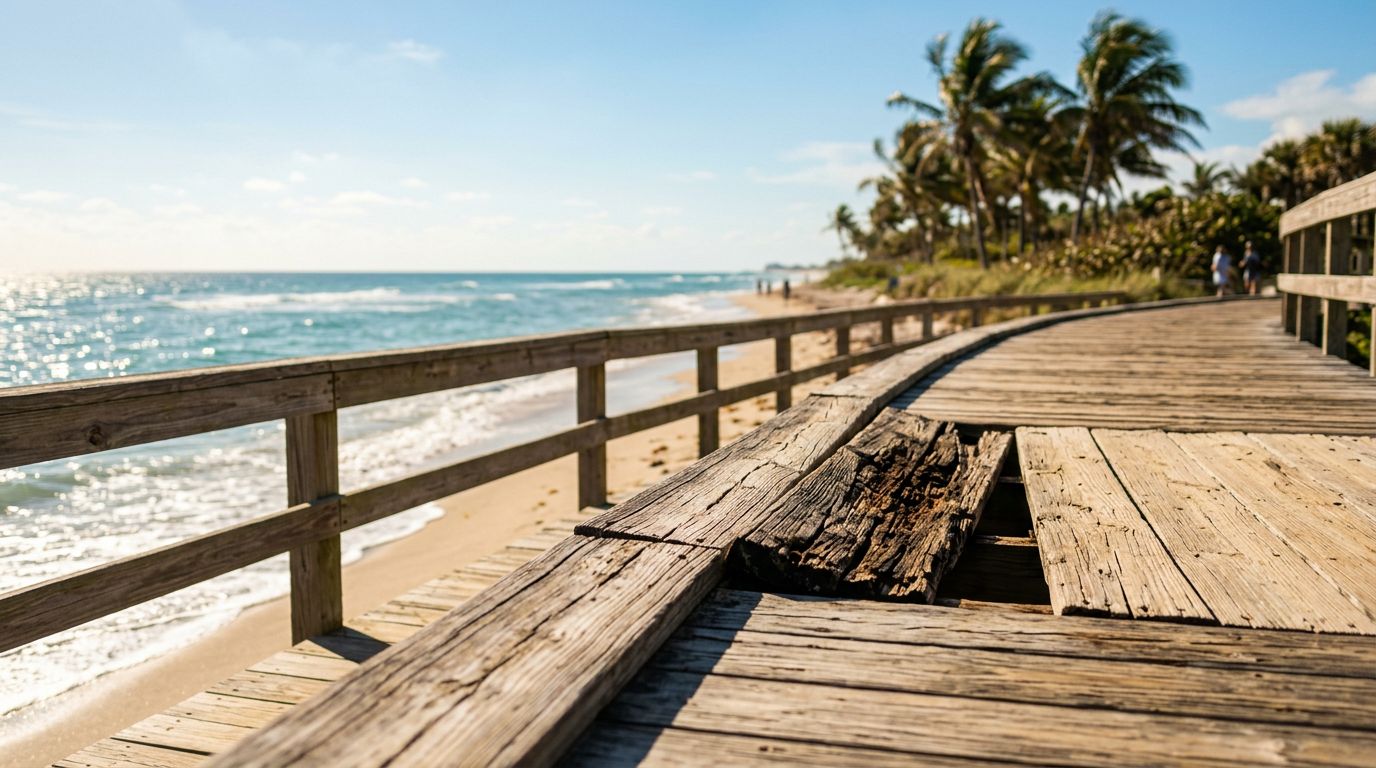
A fall on a Florida boardwalk can change everything in a few seconds. One loose board, one rotted plank, and a day at the beach turns into medical bills, missed work, and a long insurance fight.
When the wood under your feet gives way, the details matter. Rotten plank evidence can help show that the danger existed before the fall, that someone should have fixed it, and that the injury was not just bad luck.
Key Takeaways
- Rotten boards can support a claim by showing the walkway was unsafe before the fall.
- Photos, witness statements, maintenance records, and medical records all help build the case.
- Florida premises liability claims often turn on whether the owner knew, or should have known, about the hazard.
- Fault can still be disputed, so careful documentation matters from the start.
- Deadlines are short in Florida, so waiting can put the claim at risk.
Why a Rotten Board Matters in a Florida Boardwalk Fall
A boardwalk looks sturdy until it is not. In Florida, these wooden walkways face sun, salt air, rain, and heavy foot traffic. That mix wears wood down fast. Boards can split, warp, soften, or rot underneath the surface while still looking passable from a distance.
That is why a fall on a boardwalk is different from an ordinary stumble on flat pavement. A rotten plank can point to long-term neglect, not a sudden accident. If a board collapsed under normal use, the condition of that wood becomes a central issue.
Florida premises liability law often focuses on whether the property owner knew about the hazard or should have discovered it through reasonable inspection. Rotten wood can help answer that question. A board that crumbles, splinters, or shows visible decay may suggest the problem existed long enough for someone to fix it.
A claim can also turn on who controlled the boardwalk. Public beach access points, private resorts, shopping areas, and city-maintained walkways may all involve different owners or operators. That matters because the duty to inspect and repair can fall on different parties.
The injury itself may also help tell the story. A broken wrist, ankle injury, back injury, or head impact can fit with a sudden collapse beneath the feet. The physical evidence and the medical records need to line up.
A rotten plank is more than a bad piece of wood. It can be the piece of proof that connects the hazard to the fall.
What Rotten Plank Evidence Can Prove
Rotten plank evidence does more than show a board was damaged. It can help prove several parts of the claim at once.
First, it can show the boardwalk was unsafe. A rotten section may have soft spots, discoloration, mold, cracks, or missing pieces. If the wood gives way under normal walking, that is a strong sign the surface was not fit for public use.
Second, it can support notice. A board with visible decay may have been in poor shape long enough that a reasonable owner or maintenance crew should have seen it. In a premises case, that timing matters. A fresh spill and a decayed plank are not the same problem.
Third, rotten plank evidence can help fight blame-shifting. Property owners and insurers often argue that the person who fell was distracted, wearing the wrong shoes, or not watching where they stepped. Clear photos of the damaged board can narrow that argument.
A good evidence set often includes more than one type of proof:
- Close-up photos of the broken or decayed board
- Wide shots that show where the board sat in the walkway
- Pictures of nearby warning signs, handrails, or missing barriers
- Witness names and short statements
- Video from phones, security cameras, or nearby businesses
- Medical records that describe the injury and treatment
- Repair logs, inspection records, or complaint records
The strongest claims usually have a chain of proof. The board was rotten, the fall happened there, the injury followed, and the property owner failed to fix the danger in time.
How to Document the Scene Before the Evidence Disappears
Boardwalk hazards often disappear quickly. A loose board gets replaced, an area gets blocked off, and the scene changes before anyone realizes how important it is. That is why documentation should start as soon as it is safe.
If you can move, take photos before anything is cleaned up or repaired. Capture the exact plank that failed, plus the boards around it. Take pictures from several angles. A close-up may show rot, but a wider photo helps place the hazard in the walkway.
If the board broke apart, keep any pieces that are removed from your clothing or shoes, if possible. Save torn clothing, blood-stained fabric, or broken footwear. Those items may help show how the fall happened.
Get names and phone numbers from witnesses. A stranger who saw the plank break can be powerful evidence later. Their memory may fade, so the statement should be recorded early.
Then get medical care right away. Delaying treatment gives the insurer room to argue that the injury was minor or unrelated. Medical records also create a timeline. They show when the pain started and how serious it was.
If there was no police report, the claim can still move forward, but the evidence has to do more work. Florida crash claim without a police report follows a similar idea, because the file still needs proof even when no official report exists. The same principle applies to a boardwalk fall.
Keep a simple record after the incident. Write down the date, time, location, weather, and what you felt when the plank gave way. Small details can matter later when memories blur.
Who May Be Responsible for a Boardwalk Fall
Responsibility depends on who owned, leased, inspected, or maintained the boardwalk. That can include a city, county, business owner, resort, condominium association, or private landlord. Some walkways also involve contractors who performed repairs or inspections.
The legal question is usually whether the responsible party acted reasonably. Did someone inspect the wood on a schedule? Were damaged boards repaired? Did the owner know about complaints from visitors or employees? Were warning signs posted before the fall?
A rotten plank can help answer those questions, but it does not answer them alone. Maintenance records, work orders, prior complaints, and inspection notes often fill in the missing pieces. If the same board had been patched more than once, that may matter too.
Weather can complicate these cases. Florida storms, humidity, and salt exposure wear wood down faster than many people expect. Still, bad weather does not excuse a dangerous walkway. Owners have to account for the conditions their property faces.
Warning signs also matter, but they are not a free pass. A tiny sign at the entrance may not protect a boardwalk if the hazard sits farther down the path. A warning must be meaningful and placed where people can actually see the danger.
The claim may also involve comparative fault. For example, if a visitor ignored cones, stepped around a barrier, or entered an obviously closed area, the defense may try to shift some blame. Florida modified comparative negligence rules matter here because fault percentages can change the value of the claim. That makes early evidence even more important.
Deadlines and Claim Value in Florida
Time is a major issue in any injury case. Florida has strict filing deadlines, and evidence rarely gets better with age. Photos fade, witnesses move, and repair records become harder to obtain. If you wait too long, the strongest part of the case may be the part you can no longer prove.
That is why early investigation matters. A boardwalk owner may replace the rotten plank within days, sometimes sooner. If that happens before photos are taken or records are requested, the claim becomes harder to support. An attorney can send preservation letters, request maintenance files, and identify every party that may share responsibility.
The value of the claim depends on the injuries and the proof. Medical treatment, lost income, future care, pain, and any lasting limits all matter. So does the quality of the liability evidence. A clear rotten board can make the difference between a disputed claim and one that gets taken seriously.
If you were hurt on a boardwalk, the deadline may be shorter than you think. Florida injury statute of limitations explains how the filing clock works for many injury claims, and that clock can shape every other decision.
Conclusion
A Florida boardwalk fall can look simple from the outside, but the claim usually turns on details that disappear fast. Rotten plank evidence can show the walkway was unsafe, that the danger existed before the fall, and that the property owner had time to fix it.
The sooner the scene gets documented, the better the chance of preserving the proof that matters. Photos, witnesses, medical records, and maintenance history all work together.
When a board gives way under your feet, the wood itself may become the strongest witness.