
Florida Truck Blind Spot Claims With Side Camera Footage
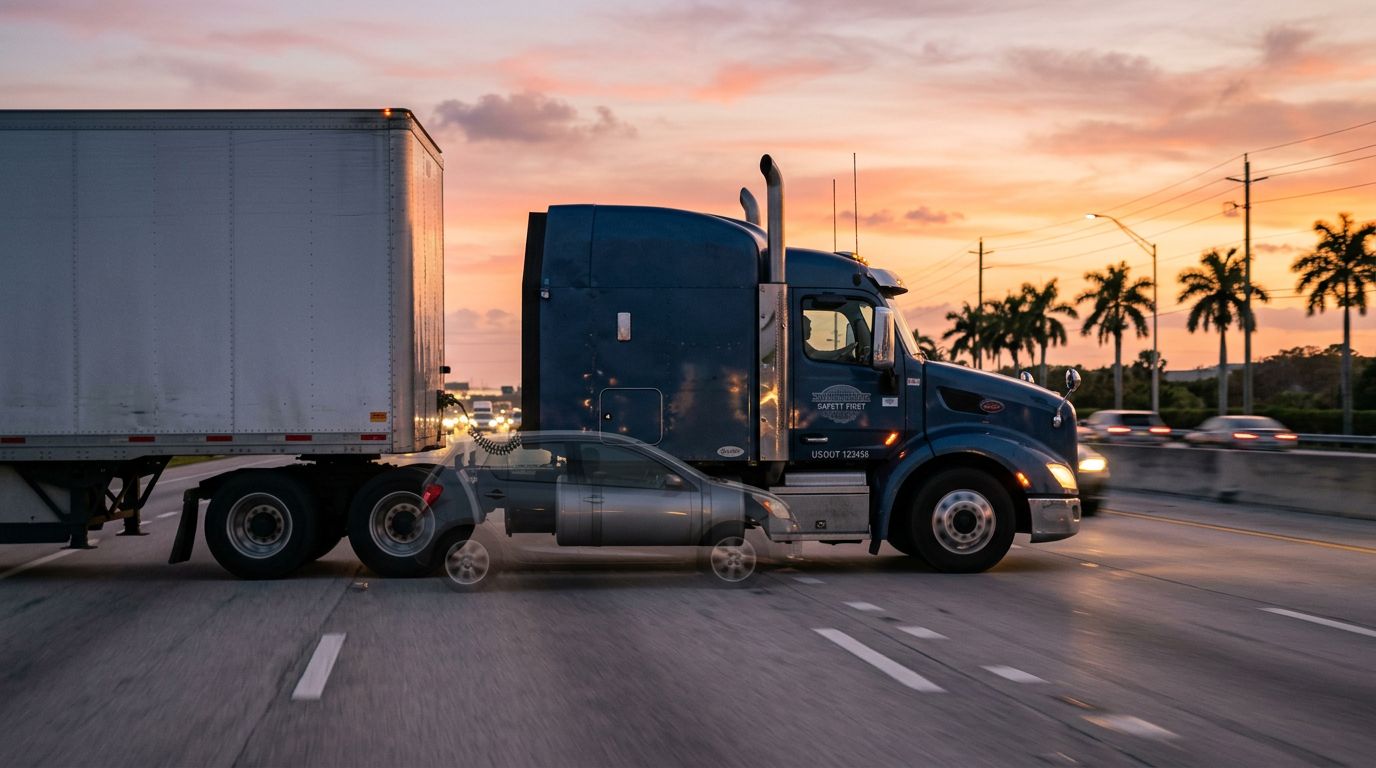
A truck sideswipe can look simple on the surface, but blind spot crashes often turn into hard-fought liability disputes. One lane change, one missed signal, or one camera angle can decide the claim.
Truck blind spot claims usually depend on what the driver saw, what the video shows, and how quickly the evidence gets preserved. Side camera footage can be the difference between a guess and a provable sequence of events.
The first hours after a crash matter more than most people expect. That is when records disappear, vehicles get repaired, and stories start to harden.
Key Takeaways
- Truck blind spots are large enough to hide a car, motorcycle, or pickup during lane changes and turns.
- Side camera footage can show lane position, turn signals, and the moment impact happened.
- Florida fault rules can reduce or bar recovery, so evidence matters early.
- Electronic data, photos, logs, and witness statements often fill gaps when video is missing.
- A preservation request can stop useful footage from being overwritten.
How blind spot truck crashes happen on Florida roads
Commercial trucks have big blind spots on both sides, plus a hidden area behind the trailer. Drivers often call these zones “no-zones” for a reason. If your car sits in one of them, the truck driver may not see it in a mirror.
That creates risk during lane changes, merges, and right turns. It also creates risk in stop-and-go traffic, where a truck may creep forward and then swing over without much warning. On busy Florida roads, that kind of movement can leave little room for a smaller vehicle.
The trailer zones drivers cannot see
A passenger car can disappear beside a trailer in seconds. The right side is especially dangerous during turns and lane shifts, because the driver may have limited sight lines. Left-side blind spots are also real, especially when the truck is changing lanes on a highway.
The geometry matters. A tall trailer blocks view, and mirrors only show part of the scene. If a car lingers near the trailer, the truck driver may need to check more than one mirror before moving.
That does not make every blind spot crash the truck driver’s fault. It does mean the driver has to act carefully. A safe move requires checking mirrors, signaling early, and waiting until the lane is clear.
Why fault is rarely one-sided
Florida truck blind spot claims often turn on timing. Did the truck move first? Did the other driver speed up into the lane? Was the car already beside the trailer when the signal came on? Those details matter.
Florida’s fault rules can also affect the claim. In many negligence cases, your recovery can be reduced by your share of fault. If you are found more than 50% at fault, recovery may be barred. That is why the exact path of each vehicle matters so much.
A truck driver may say the car sat in the blind spot too long. The injured driver may say the truck changed lanes without a proper check. Both stories can sound plausible until the video, scene photos, and vehicle data settle the issue.
Why side camera footage matters
Side camera systems can show much more than a still photograph. They may capture the truck’s lane position, turn signal use, brake lights, and the moment a vehicle enters the blind zone. Some systems also show whether the trailer drifted toward another lane before impact.
That footage can support a claim when the truck company says the crash happened because the other driver was hidden. It can also hurt a defense when the video shows a sudden lane change, a late signal, or a wide turn into a neighboring lane.
If the footage still exists, it can settle the lane-position fight fast.
The problem is speed. Many fleets overwrite footage on a short cycle. Others keep video, but only if someone asks before the system cycles again. A lawyer who handles commercial collisions can send a preservation letter quickly, and Florida truck accident attorneys often push for that evidence before it disappears.
What evidence strengthens a Florida truck blind spot claim
Florida truck blind spot claims often rise or fall on the paper trail and the video trail together. A single clip may help, but a stronger claim usually includes several pieces of proof.
| Evidence | What it can show | Why it matters |
|---|---|---|
| Side camera footage | Lane position, signal use, impact timing | Helps confirm or challenge the truck driver’s account |
| Electronic control module data | Speed, braking, throttle input | Shows what the truck was doing before impact |
| Scene photos and measurements | Damage points, debris, lane layout | Helps reconstruct where each vehicle was |
| Driver logs and dispatch records | Hours worked, route timing, breaks | Can reveal fatigue, pressure, or schedule issues |
| Witness statements | What others saw before the crash | Fills gaps when video is missing or unclear |
Taken together, these records can show whether the truck moved first, whether the car was already beside the trailer, and whether the crash was avoidable. They also help when an insurer claims the video is incomplete.
That is why early legal help matters. If you’re unsure about the timing, when to contact a truck accident lawyer in Florida is often before the carrier finishes its own review.
How insurers push back on these claims
Insurance adjusters often start with the same theme, the truck was in a blind spot, so the crash must have been caused by the smaller vehicle. That argument can sound simple, but it usually leaves out the key question, who made the unsafe move first?
Carriers also attack the footage itself. They may say the camera angle is too narrow, the timestamp is wrong, or the clip starts too late. If the full recording is missing, they may argue that no one can prove what happened before impact.
Another common defense is shared fault. The insurer may say the driver changed lanes too quickly, passed on the right, or stayed next to the trailer too long. That kind of argument matters because Florida fault rules can shrink a payout fast.
The best answer is a tight record. Side camera footage, black box data, damage analysis, and witness accounts can keep the focus on facts instead of blame-shifting.
Steps to take after a Florida truck blind spot crash
The claim starts with what you do right after the wreck. A few careful steps can protect the evidence and the injury claim.
- Get medical care right away, even if the pain feels mild at first.
- Call law enforcement and ask how to get the crash report.
- Photograph the vehicles, lane markings, debris, signs, and your injuries.
- Get the truck company name, trailer number, and any visible camera details.
- Collect witness names and phone numbers before everyone leaves the scene.
- Avoid giving a recorded statement until you know what the footage shows.
Each step helps build the record before memories fade. It also creates pressure to preserve the video and data that may matter later.
Conclusion
A blind spot crash is rarely just a mirror problem. It is usually a proof problem. The side camera footage, vehicle data, and scene evidence can show whether the truck changed lanes safely or moved into traffic without enough room.
The sooner that evidence gets preserved, the stronger the claim stays. That is the point where facts matter more than the first story told after the wreck.