
Florida Driveway Exit Crash Claims and Sight Line Photos
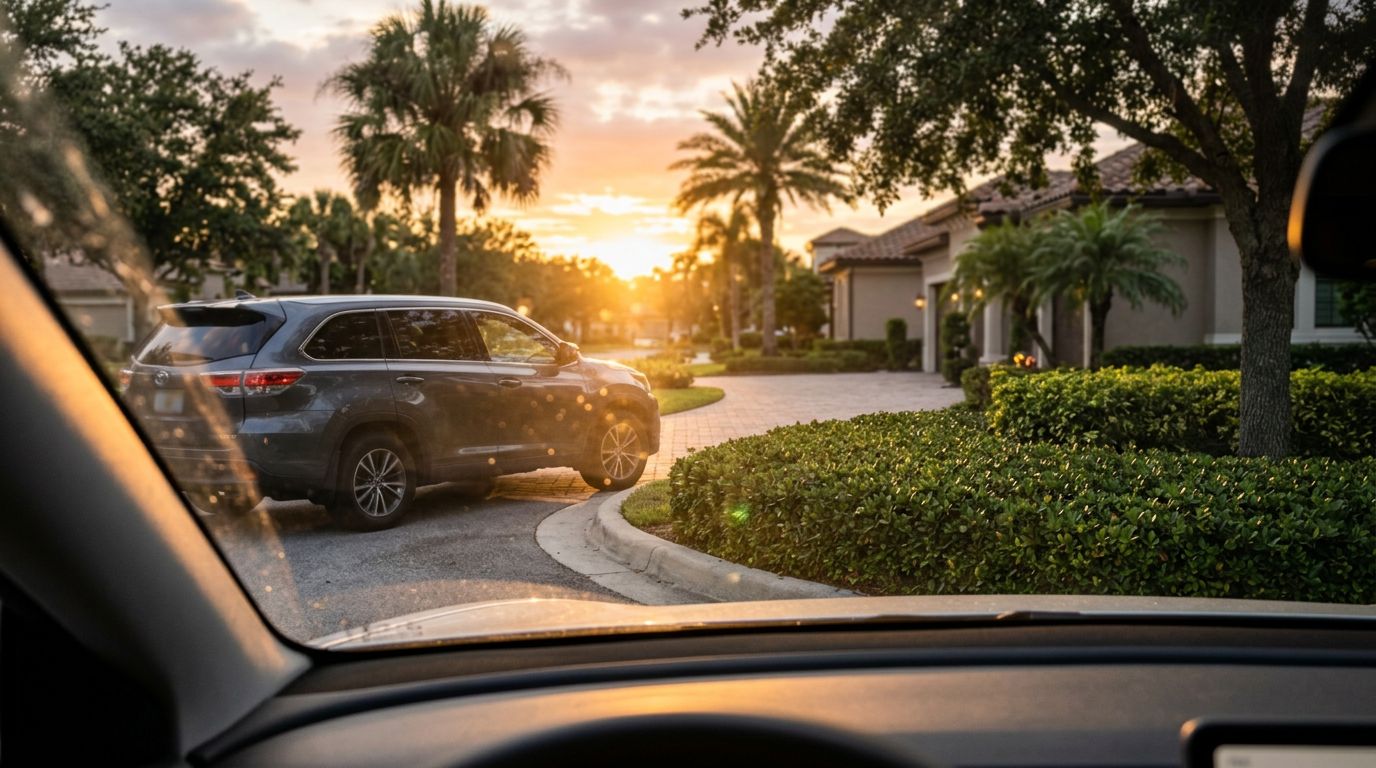
A driveway crash can look small at first and still turn into a serious fault fight. The real issue is often visibility, and the best proof may be a set of photos taken before the scene changes.
In Florida driveway exit crash claims, the details matter fast. A hedge, parked SUV, fence, curve, or glare from afternoon sun can change who had the better view and who should pay for the damage.
Sight line photos, police reports, and medical records can make the difference between a strong claim and a weak one. When the drivers tell different stories, the camera often speaks louder than memory.
Key Takeaways
- Driveway exit crashes usually turn on who could see what and when they could see it.
- Sight line photos should show the driver’s view, obstructions, lighting, and the driveway geometry.
- Florida’s fault rules can reduce compensation, and they can bar recovery if you’re more than 50% at fault.
- You should gather photos, witnesses, and medical records quickly, because evidence fades fast.
- More than one party can share fault, including a driver, homeowner, or vehicle manufacturer.
Why driveway exit crashes turn into fault disputes
Driveway collisions often happen in a split second. One driver backs out slowly, another driver comes around a bend, and both swear the other had time to stop. That is why these cases rarely stay simple for long.
Visibility sits at the center of most disputes. A driver leaving a driveway may have a legal duty to yield, but the roadway driver still must watch for hazards. If the driveway sits near a hill, a corner, or a busy road, the view may be worse than either person remembers.
Children, pedestrians, and parked vehicles add another layer. A child can be hard to see behind a truck or shrub, and a low bumper can hide in the blind spot of a backing vehicle. Those facts can push a claim in different directions.
If the other driver is already blaming you, a Florida car accident lawyer can help secure the scene evidence before it disappears. The first photos, the first statements, and the first repair estimates often shape the whole file.
What sight line photos need to show
Sight line photos should answer one simple question, what could a careful driver see from the point of exit?
The best photos show the driveway as it looked at the time of the crash, not just how it looks later in daylight. That means you need more than one angle. You need the full scene, the blocked view, and the exact spot where the driver sat or stood.
| Photo | What it should capture | Why it matters |
|---|---|---|
| Driver’s-eye view | The scene from a seated or near-seated position | Shows what a driver could actually see |
| Wide entrance shot | The full driveway, curb, and travel lane | Shows the layout and traffic approach |
| Obstruction close-up | Hedges, fences, signs, parked cars, or walls | Shows what blocked the view |
| Lighting shot | Streetlights, shadows, glare, or darkness | Shows reduced visibility |
| Roadway angle | The street in both directions | Shows whether oncoming traffic was visible |
Take some photos from standing height and some from the driver’s position. The difference can be dramatic. A driveway that looks open from the sidewalk can feel almost boxed in from the seat of a car.
The strongest sight line photo is the one that shows what the driver could see at the exact moment of entry or exit.
If the crash happened at night, photograph the scene right away and again the next day. Both sets can matter. Night shots show the actual conditions, while daylight photos help explain the layout to an adjuster, a judge, or a jury.
Florida rules that shape these claims
Florida law can change the value of a driveway crash claim fast. The state uses modified comparative negligence, which means fault gets divided by percentage. If you are more than 50% at fault, you cannot recover damages under that rule.
Reporting rules also matter. Florida requires a crash report when someone is hurt, killed, or when property damage reaches at least $500. That makes the early paper trail important, because the report may be the first official record of what happened.
Personal Injury Protection, or PIP, is another key piece. Florida drivers generally carry at least $10,000 in PIP and $10,000 in property damage liability coverage. For injury claims, medical treatment usually needs to begin within 14 days to access PIP benefits.
The clock matters too. Most negligence claims in Florida have a two-year deadline. If that deadline passes, the claim can be gone for good, even when the facts look strong.
If medical bills, missed work, and pain are part of the claim, personal injury lawyers can help connect the crash report, photo evidence, and treatment records into one clear file.
Who may share fault after a driveway crash
A driveway crash does not always point to one driver alone. Florida law can allow more than one responsible party when the facts support it.
The backing driver is often the first focus. If someone pulls out without checking traffic, that driver may carry most of the blame. Still, the roadway driver may also share fault if speeding, looking at a phone, or failing to brake when the vehicle became visible.
A homeowner or property owner can matter too. When hedges, walls, fences, or parked vehicles create a hidden exit, the property layout may become part of the case. In some situations, a dangerous sight triangle or a poor driveway design helps explain why the crash happened.
Vehicle problems can also play a role. A malfunctioning backup camera, sensor, or automatic braking system may raise product liability questions. The claim then becomes more than a simple two-car dispute.
Claims involving children can be especially hard-fought. Drivers are often held to a high standard in backover crashes, but supervision and the setup of the property can still come up in the evidence. The point is simple, fault can split in more than one direction.
What to do before the scene changes
The first hour after a driveway crash can carry more weight than the next month. Small steps make the claim stronger.
- Call 911 if anyone may be hurt, even if the injuries seem minor at first.
- Take photos of the cars, the driveway, the roadway, the damage, the lighting, and anything blocking the view.
- Get witness names and phone numbers before people leave.
- Save dashcam footage, security video, and text messages tied to the crash.
- Get medical care within 14 days if you have pain, dizziness, headaches, or other symptoms.
Do not argue fault at the scene. Do not guess about speed or blame. Let the evidence do the work. A clean photo of a hedge line, a parked truck, or a blind curve can carry more value than a long explanation.
If the other driver leaves, the response changes again. Leaving the scene of a property-damage crash can bring misdemeanor charges, and crashes with injury can lead to more serious charges. A quick police response matters when a driver disappears.
Conclusion
Driveway exit crashes turn on details that disappear fast. The direction of the street, the shape of the driveway, the lighting, and the blocked view can all change the outcome of a claim.
That is why sight line photos matter so much in Florida driveway exit crash claims. They can show what the driver saw, what the driver should have seen, and whether another party helped create the danger.
When the story is still fresh, treat the scene like evidence. The right photos, taken at the right time, can support the claim long after the cars are gone.