
Florida Apartment Gate Injury Claims and Service Logs
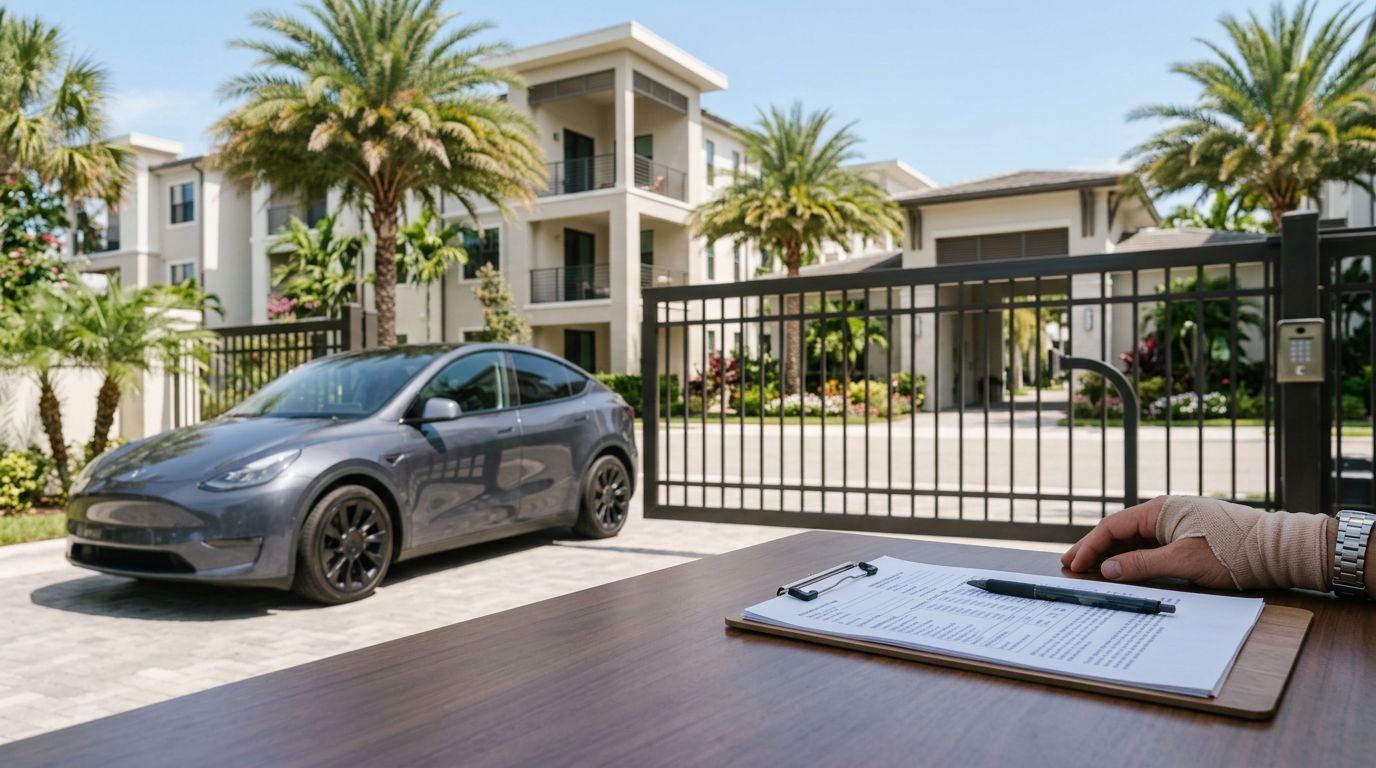
An apartment gate that closes too fast can break bones, damage a car, or trap a child in seconds. When that happens, the maintenance history often matters as much as the injury itself.
In Florida, automatic gate injury claims often turn on what the property knew, when it knew it, and how it responded. Service logs can show repeated malfunctions, rushed repairs, or long gaps between complaints and fixes.
If you were hurt at a complex, the paper trail may decide whether the claim gains traction or stalls. The records tell a story, and that story can be powerful.
Key Takeaways
- Apartment gate injuries often involve crushed hands, vehicle damage, or impact injuries from faulty sensors, broken parts, or poor upkeep.
- Service logs matter because they can show repeated complaints, ignored hazards, and whether the property reacted in time.
- Liability may fall on the apartment owner, management company, security vendor, gate contractor, or more than one party.
- After the injury, photos, medical care, witness names, and preservation requests can protect the claim.
- Florida filing deadlines are short, so waiting on records can make the case harder.
How apartment gate accidents happen
Apartment gates are supposed to control access, not create danger. When they work correctly, sensors detect movement, arms reverse, and warning lights give people a chance to react. When they fail, the result can be sudden and violent.
Faulty automatic gates can injure pedestrians, cyclists, delivery drivers, tenants, and visitors. A sliding gate may pinch fingers or trap a hand. A swing gate can strike someone who is walking through the opening. A vehicle gate can close on a car, crack a windshield, or damage a side mirror. In some cases, a gate continues moving after a sensor should have stopped it.
These incidents often trace back to worn parts, poor calibration, or missed inspections. Broken photo eyes, loose chains, damaged motors, and bad alignment can all create risk. So can bad lighting, missing warning signs, and gates that have already shown signs of trouble.
An apartment complex has a duty to keep common areas reasonably safe. That includes the entrance gates that residents use every day. If staff knew the gate was acting up and let people keep using it, that history can matter a great deal.
The injury itself may look like a one-time event, but the hazard may have been building for weeks. A gate that sticks, jerks, or fails to reverse is sending a warning long before someone gets hurt.
Why service logs matter in Florida automatic gate injury claims
Service logs are often the most useful records in these cases because they show what happened before the injury, not just after it. They can reveal whether the gate had a long repair history, whether complaints piled up, and whether the property kept using the same broken equipment.
A few records can paint a clear picture.
| Record | What it can show |
|---|---|
| Maintenance log | Routine inspections, repair dates, and repeated problems |
| Work order | When someone reported the issue and how the property responded |
| Repair invoice | What parts were replaced and who did the work |
| Inspection report | Whether the gate was checked for safety defects |
| Incident report | How staff described the injury or malfunction |
| Security footage retention note | Whether video was saved or overwritten |
If the log shows the same gate failed three times in two months, that is far more telling than a vague promise that it was “being looked at.” Missing entries matter too. Gaps in the log can suggest poor upkeep, lost records, or a repair history the property does not want to discuss.
That is why it helps to gather proof early. Photos, medical records, witness names, and repair paperwork should fit together like pieces of the same file, much like the documentation for your injury attorney that helps build a Florida claim.
A gap in records can matter as much as a repair note.
Service logs also help establish notice. If the apartment got complaints before the injury, the claim may focus on what management knew and how long it waited to act. That can be the difference between a routine accident and a preventable one.
Who may be responsible for a malfunctioning gate
Liability in an apartment gate case is not always limited to one party. In many Florida premises cases, responsibility can be shared by the owner, the management company, a security vendor, or a contractor that services the gate.
The apartment owner and property manager are often the first places to look because they control the premises. They may be responsible for keeping the gate in working order, hiring qualified contractors, and responding to complaints. If they ignored repeated warnings or delayed repairs, that can support a negligence claim.
A gate maintenance company may also share fault if it missed a defect, used the wrong part, or failed to follow the service schedule. In some cases, the company was told about the problem and did not fix it properly. A contractor’s records can matter just as much as the property’s.
Product defects can come into play too. If the gate system itself was built with a dangerous flaw, the manufacturer or installer may be part of the case. That question usually takes a closer look at the equipment, the instructions, and the repair history.
The key is to trace control. Who owned the gate, who serviced it, who logged the complaints, and who signed off on the repairs?
What to document after the injury
The first hours after an apartment gate injury can shape the whole claim. The most useful evidence is often simple, but it disappears fast if nobody saves it.
- Get medical care right away, even if the injury seems minor at first. Pain can grow later, and the medical record ties the injury to the incident.
- Take photos of the gate, the controls, warning signs, lighting, and visible damage or bruising. Wide shots and close-ups both help.
- Ask for the incident report and write down the names of staff, witnesses, and contractors who were present.
- Preserve texts, emails, app messages, and notices about prior gate problems. These details can show the property had advance warning.
- Request that any video be preserved before it is overwritten. Security footage often gets deleted on a short schedule.
Avoid talking yourself out of the claim before the records are reviewed. Delays, incomplete treatment, and casual statements to the property can hurt the case, which is why common mistakes in injury claims matter so much here.
The best evidence usually comes from a mix of sources. A photo of the gate, a doctor’s note, and a repair log can line up in a way that a single document never could.
Damages, deadlines, and why timing matters
A gate injury can lead to emergency care, surgery, therapy, missed work, and lasting pain. In a stronger claim, compensation may also cover future treatment, scarring, and reduced earning ability. Vehicle damage may be part of the case too if the gate struck a car.
Timing is a major issue in Florida. Most negligence claims filed after March 24, 2023, have a two-year statute of limitations. That sounds like plenty of time, but it passes quickly when you are healing, waiting on records, and trying to get answers from a property manager.
The evidence can vanish even faster than the deadline. Video is often overwritten. Service logs can be altered or misplaced. A contractor may stop keeping a job file after the next repair cycle. That is why the claim should start with preservation, not guesswork.
An apartment complex may try to blame the injured person for using the gate, walking too close, or ignoring a warning. Florida fault rules can affect recovery, so the earlier the evidence is gathered, the better the position you are in.
A claim built on records is harder to dismiss. When the logs, repairs, and witness statements all point in the same direction, the case becomes clearer.
Conclusion
A gate injury at an apartment can happen in a flash, but the claim usually depends on what happened before that moment. Service logs, complaints, and repair records can show whether the problem was known and ignored.
That is why automatic gate injury claims often rise or fall on the paper trail. The stronger the records, the easier it is to show fault, preserve evidence, and measure the loss.
If you were hurt, act quickly. A Florida premises injury lawyer can request the logs, preserve the video, and track down the contractor history before it disappears.