
Florida Street Racing Crash Claims and Social Media Video
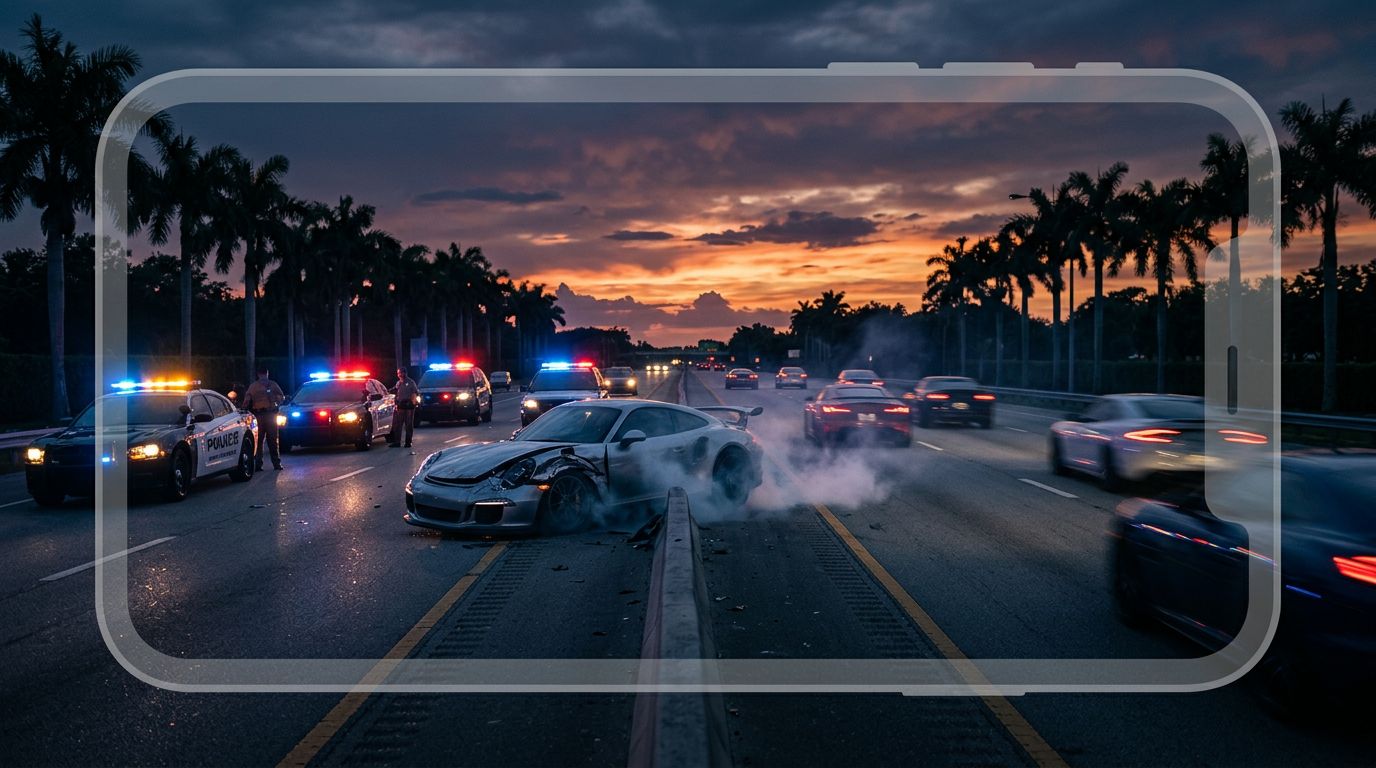
A few seconds of video can change a Florida street racing crash claim fast. A clip posted before the smoke clears may show speed, lane changes, crowd behavior, or the moment a driver lost control.
That same video can also work against you if it is incomplete, edited, or stripped of context. In a serious crash, the story often starts online, but the claim depends on evidence, timing, and fault.
The first issue is simple: who can prove what happened, and how quickly can that proof be saved?
Key Takeaways
- Social media video can help show speed, lane position, and other details that matter in a racing crash claim.
- The original file matters more than a repost, screenshot, or screen recording.
- Florida fault rules can reduce or bar recovery when a victim shares blame.
- Deleted posts, captions, and comments can matter, so fast preservation is important.
- A Florida car accident attorney can help protect the evidence before it disappears.
How a Street Racing Crash Becomes a Civil Claim
Street racing crashes usually involve high speed, sudden lane changes, and very little time to react. That is why these cases often create severe injuries, destroyed vehicles, and more than one insurance claim.
A civil claim asks a different question than a police report or criminal case. The claim looks at who caused the harm, what injuries followed, and what money is needed to cover the losses. A driver who was racing, passing aggressively, or ignoring traffic control can face liability for medical bills, lost wages, pain and suffering, and future care.
In Florida, injured people may also deal with Personal Injury Protection benefits at the start of a case. Those benefits can help with some medical costs, but they usually do not cover the full loss after a serious wreck. For that reason, many victims need a Florida personal injury attorneys review early, especially when the crash involves multiple drivers or disputed speed.
Street racing claims can also involve passengers, pedestrians, cyclists, and other motorists. The injury story can be simple, like one car striking another at high speed, or complex, with several vehicles, spectators, and a chain reaction crash. In either situation, the legal claim depends on evidence that can stand up later.
Why Social Media Video Can Help or Hurt
A phone video can be powerful because it captures motion that witnesses struggle to describe. It may show the cars lining up, the point where a race began, the road conditions, or the force of the impact. It may also show headlights, traffic signals, skid marks, and the presence of bystanders.
Still, a clip posted on TikTok, Instagram, Facebook, or Snapchat rarely tells the full story by itself. A caption can be wrong. A repost can remove the beginning of the event. A short video can miss the first driver’s actions, the second driver’s response, or the road hazard that changed everything.
A repost is useful only when the original clip is preserved too. Without the original, the post can lose timestamps, account details, and context.
The strongest version of this evidence is the source file, saved early. That file may contain metadata, and it can help show when the video was created. A screen recording or screenshot may still help, but it usually carries less detail than the original.
Social media can also hurt a claim when the comments or captions imply racing, taunting, or betting. Even casual posts can become evidence later. So can location tags, livestream chat, or follow-up posts that show who was behind the wheel. In a fast-moving case, online words can travel almost as far as the crash itself.
What to Save Before the Video Disappears
People often assume someone else will keep the evidence. That mistake can cost a case. Platforms change, accounts get deleted, and posts get shared without the original caption or time stamp.
Save as much as you can right away:
- The original post URL or account name
- Screenshots of the video, caption, comments, and date
- The original file on the phone, if you can access it
- Witness names and phone numbers
- Photos of the vehicles, injuries, and crash scene
- Repair estimates, tow receipts, and medical visit records
If the clip is on your phone, do not edit it, trim it, or re-save it in a new format unless you have to. Keep the original file intact. If you are trying to preserve a video someone else posted, take screenshots and save the link before it vanishes.
A short note about when and where you saw the post can help later. Write down the time, the account name, and any details you remember from the comments. Those small facts often matter more than people expect.
Fault, Speed, and Florida’s 51 Percent Rule
Florida fault law matters in street racing cases because more than one person may have helped cause the crash. One driver may have been racing. Another may have been blocking traffic, taking part in the run, or driving at an unsafe speed. A third person may claim they were only nearby, but the video tells a different story.
Under Florida modified comparative negligence rules, fault percentages can affect how much money an injured person can recover. If a jury decides the injured person was mostly to blame, recovery can drop sharply, and in some cases it can disappear altogether.
That is why street racing clips can become a double-edged sword. The same video that shows reckless speed may also show the injured driver weaving, chasing, or taking part in the run. Insurance companies look for those details because they can use them to argue shared blame.
The defense may also point to the comments under the post, especially if someone laughed, challenged another driver, or bragged about the race. Those comments do not decide the case on their own, but they can shape the argument around fault. The case often turns on what the video shows, what the full file contains, and what other evidence supports it.
Criminal charges can help explain the event, but they do not settle the civil claim. A reckless driving arrest or racing citation does not automatically pay the medical bills. The injury case still needs proof, and the proof has to hold up under scrutiny.
When a Florida Car Accident Lawyer Should Get Involved
Street racing crash claims move fast because the evidence moves fast. If the vehicles were towed, the video was posted online, or the insurer already started asking about racing, legal help should come early.
A Florida car accident attorney can help preserve video, contact witnesses, and push for records before they disappear. That matters when the case involves multiple cars, serious trauma, or a dispute over who started the race. It also matters when the driver who caused the crash is uninsured, underinsured, or from out of state.
Some warning signs call for immediate attention:
- The crash involved death, surgery, or long-term treatment
- A social media post shows the event or part of it
- Police reports are incomplete or conflict with witness accounts
- An insurer blames the injured person for racing
- A passenger, pedestrian, or cyclist was hit
A lawyer can also look for every available source of recovery. That may include more than one driver, a vehicle owner who allowed use of the car, or another responsible party if the facts support it. No one should guess at those issues while the evidence is still online and fragile.
Speed matters in these claims, but speed without discipline hurts more than it helps. The best cases are built from saved files, clear records, and careful statements, not from angry posts or rushed explanations.
What Matters Most After a Street Racing Crash
A street racing crash can leave behind twisted metal, serious injuries, and a clip that spreads faster than the facts. That video can help tell the truth, but only if someone saves the original evidence before it is buried, deleted, or edited.
The claim often turns on two things, fault and proof. If the video, the medical records, and the witness statements line up, the case is easier to value and harder to distort.
If you or a family member was hurt in a Florida racing crash, the safest move is to get the evidence preserved early and get legal advice before the online version of the story takes over.