
Florida Move Over Law, Crash Claims, and Camera Proof
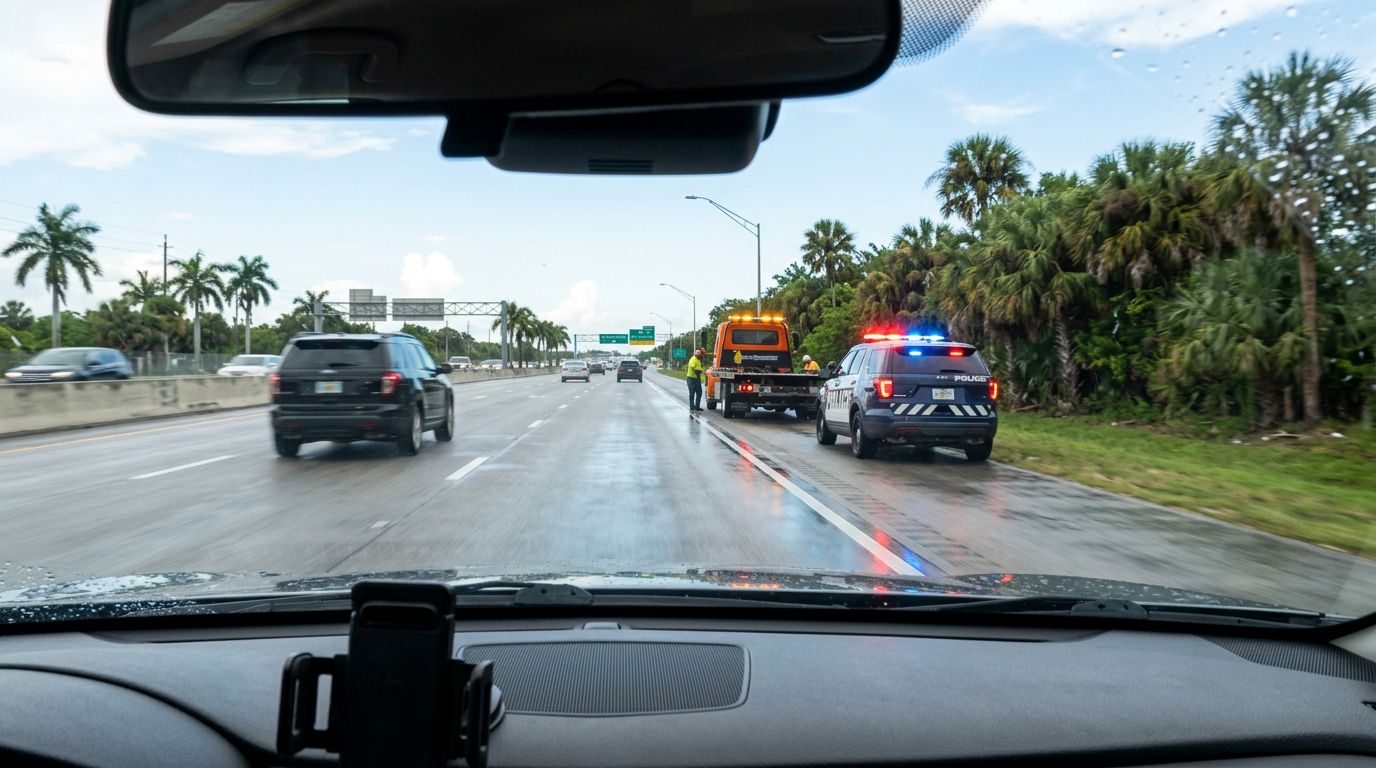
A few seconds on the shoulder can decide who pays after a crash. In Florida, the move over law gives drivers a clear duty, and that duty can shape fault, insurance claims, and courtroom arguments.
If a vehicle clips a tow truck, a deputy, or a stranded driver, the question often becomes simple: did the driver move over or slow down as required? Camera footage from a dashcam, roadside camera, or another nearby source can answer that.
That proof matters because memories fade fast. The right evidence can turn a disputed crash into a much stronger claim.
Key Takeaways
- Florida’s move over law covers emergency vehicles, tow trucks, sanitation and utility vehicles, and, since January 1, 2024, disabled vehicles with warning lights or people present.
- On two-lane roads, drivers must slow down instead of moving over when a lane change is unsafe.
- A citation can support a crash claim, but it does not automatically decide fault.
- Video that shows lane position, speed, lights, and shoulder conditions can make the facts much clearer.
What the Florida Move Over Law Requires
Florida Statute §316.217 requires drivers to move over one lane, if they can do so safely, when they approach a stopped vehicle with warning lights on a road with two or more lanes in the same direction. The law now also covers disabled vehicles with hazard lights or emergency flares and vehicles with people visibly present on the roadside.
On two-lane roads, the rule changes. Drivers must slow down instead of moving over. If the posted speed limit is 25 mph or more, they must slow to 20 mph below the limit. If the limit is 20 mph or less, they must slow to 5 mph.
| Road setup | What the driver must do |
|---|---|
| Two or more lanes in the same direction | Move over one lane, if safe |
| Two-lane road with a limit of 25 mph or more | Slow to 20 mph below the limit |
| Two-lane road with a limit of 20 mph or less | Slow to 5 mph |
Drivers still have to signal lane changes and yield to traffic that is already moving over. If moving over is unsafe, the slowdown rule controls. That safety carve-out matters, but it does not excuse careless driving.
A violation is a noncriminal traffic infraction. It can bring a fine of up to $500, three points on a license, and higher insurance costs. When a citation follows a roadside crash, Florida car accident attorneys can help separate the traffic issue from the injury claim.
How a Move Over Violation Affects a Crash Claim
A ticket does not decide the whole case. It does give an injured person strong evidence that the other driver ignored a safety duty. In many claims, that is enough to shift the fight from “did the crash happen?” to “how much harm did it cause?”
That matters on the shoulder. Tow truck drivers, police officers, firefighters, utility crews, sanitation workers, and stranded motorists all face real danger when a driver drifts into the lane closest to the shoulder. If the move over law was ignored, the injured person may have a better argument for medical bills, lost wages, pain and suffering, and property damage.
Insurance companies often push back hard. They may argue the stopped vehicle was hard to see, the lights were poor, or there was no safe way to change lanes. They may also blame the person on the shoulder for stopping in a risky spot.
That is why early evidence matters. Crash reports, witness statements, photos, and video often decide how much blame each side can shift. If the claim starts to stall, navigating the car accident claims process becomes much easier with legal help that knows what proof to request.
A roadside crash claim is not only about impact. It is about duty, visibility, and timing.
Why Shoulder Camera Proof Matters After a Roadside Crash
When people talk about shoulder camera proof, they usually mean video that captures the shoulder, the lane line, and the vehicles around the stop. That footage may come from a dashcam, a truck camera, a nearby business camera, or a traffic camera that happened to catch the scene.
Video helps because it can show what a witness might forget. Did the driver signal? Did the car move one lane away? Was there room to slow down? Were hazard lights flashing? Was the stopped vehicle partly in the travel lane?
A short clip can answer those questions better than a long argument can.
| Evidence source | What it can show |
|---|---|
| Dashcam | Lane position, turn signals, speed changes |
| Truck or commercial camera | Warning lights, the impact sequence, traffic around the stop |
| Nearby business camera | Vehicle placement on the shoulder and the timing of the crash |
| Traffic camera | Road conditions, visibility, and traffic flow |
The strongest clips show the moments before impact, not only the damage after it. They also help when the same crash creates two different stories. One driver says there was no room to move over. The video says otherwise.
Keep the original file if you can. Save backups, note the time and place, and avoid editing the clip. A small change can raise arguments about accuracy, and that can slow the claim.
Camera footage is strongest when it matches the crash report, the lighting conditions, and the damage pattern.
Even if the footage is not perfect, it can still help. A blurry view of lane position may still support a claim when the rest of the evidence fits.
Steps That Protect a Claim After a Shoulder Crash
The first hours matter. Skid marks fade, traffic moves on, and cameras overwrite old files.
- Call 911 and ask for a crash report.
- Take photos of the cars, the shoulder, warning lights, road signs, and lane markings.
- Get names and phone numbers from witnesses before they leave.
- Save every video file in its original form, including dashcam, phone, and security camera footage.
- Get medical care right away, even if the pain seems mild at first.
- Ask a lawyer to send preservation requests for camera footage, vehicle data, and records before they disappear.
This is where fast legal help can matter. Businesses often keep video for a short time, and some systems overwrite footage in days. South Florida personal injury attorneys can move quickly to ask for that evidence before it is lost.
The Bottom Line on Fault, Video, and Roadside Injuries
The Florida move over law puts a real duty on drivers, and that duty matters most when someone is stopped on the shoulder. When a crash happens there, the key questions are simple: was the driver supposed to move over, was it safe to do so, and what does the video show?
That is why camera proof can change the shape of a claim. It can confirm lane position, speed, lighting, and the exact moment a driver failed to slow down or change lanes.
If you were hurt in a roadside crash, save every piece of evidence you can. The right file, the right report, and the right legal help can make the difference between a disputed story and a clear case.