
Florida Illegal Passing Crashes and Double Yellow Line Proof
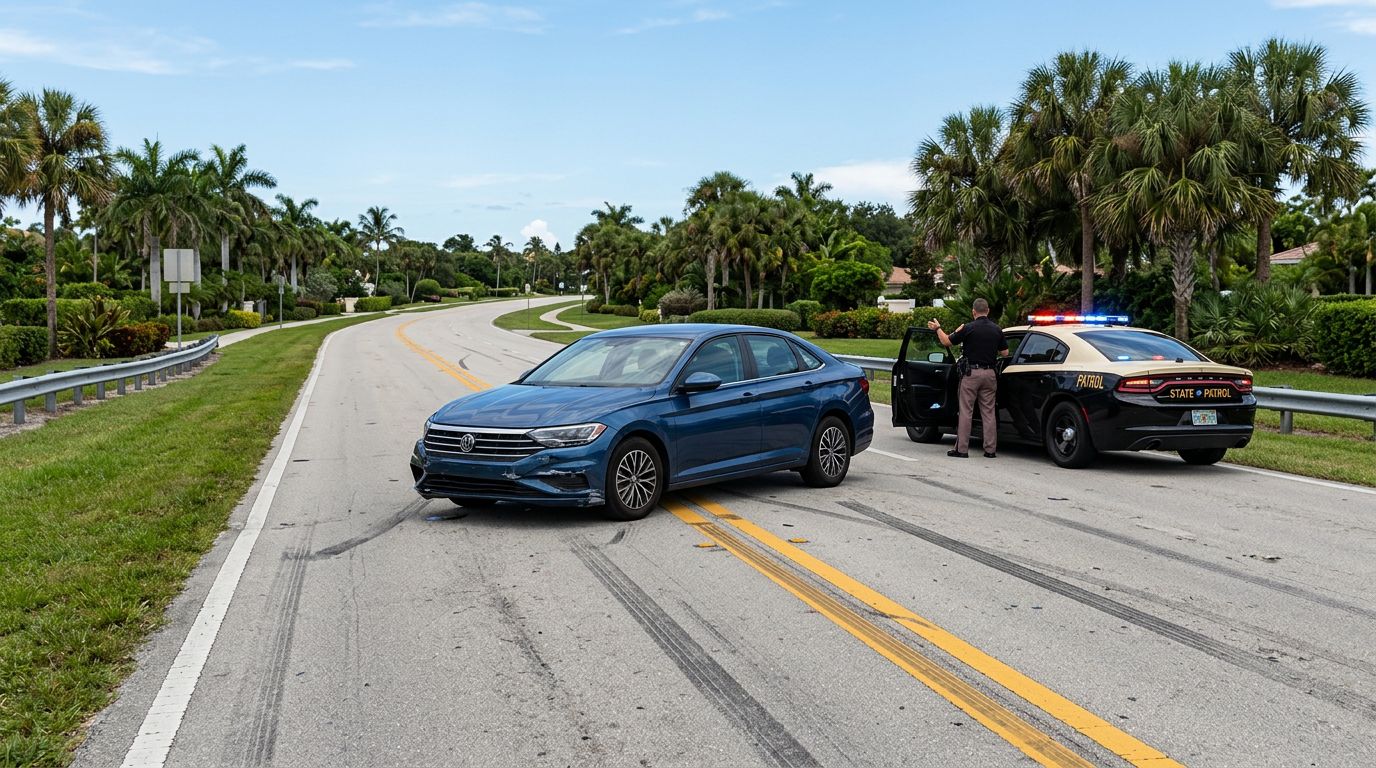
A Florida illegal passing crash can turn on one stripe of paint. A double yellow line tells drivers they are in a no-passing zone, and that small detail can shape fault, insurance talks, and any injury claim.
Yet the line is only part of the story. Drivers still argue about left turns, obstructions, or police direction, so proof matters as much as the rule itself. If you’re sorting out a crash like this, the first step is knowing what the line means and how to document it.
Key Takeaways
- Florida law treats crossing a double solid yellow line to pass as a traffic violation.
- A slow lead vehicle does not give a driver permission to pass across that line.
- Photos, witness statements, the police report, and vehicle damage can help prove illegal passing.
- A lawful exception, such as a left turn or an obstruction, does not excuse careless driving.
- Strong evidence early can make an insurance claim much easier to prove.
What Florida’s Double Yellow Line Rule Means
Florida Statute 316.0875 sets out the no-passing rule. When the pavement has a double solid yellow line, drivers are supposed to stay on their side unless a narrow exception applies. Crossing it to overtake another car is a moving violation, not a harmless shortcut.
That matters because the law is clear. A driver cannot justify the move by saying the other vehicle was too slow. Frustration on the road does not create a right to pass.
Here is a quick comparison of common situations:
| Situation | Can the driver cross? | Why it matters |
|---|---|---|
| Passing a slower car | No | This is the classic illegal passing move |
| Turning left into a driveway or side road | Sometimes | The turn must be lawful and safe |
| Avoiding an obstruction in the road | Sometimes | The driver still has to yield correctly |
| Following an officer or traffic control direction | Yes, if directed | The instruction can override the marking |
| Passing a bicycle or nonmotorized vehicle | Sometimes | Safety and roadway conditions still control |
The key point is simple. A double yellow line usually means “stay put,” but Florida law recognizes a few narrow exceptions. If the move was a turn instead of a pass, the facts change fast.
How to Prove the Other Driver Crossed Illegally
Evidence can disappear quickly after a wreck. Tire marks fade, cars get moved, and traffic starts flowing again. That is why the first photos and reports matter so much.
The strongest proof often comes from a mix of several sources, not just one item. A picture of the roadway may support a witness statement. A police report may line up with the damage on the cars. Together, they can show which vehicle crossed into the wrong lane.
| Evidence | What it can show |
|---|---|
| Photos of the road | The double yellow line, lane width, and intersection layout |
| Police report | Officer observations, citations, and driver statements |
| Witness accounts | Which car crossed and what happened right before impact |
| Vehicle damage | Point of contact and direction of travel |
| Dashcam or nearby video | The entire sequence before the crash |
Photos should show more than the damage. They should include the lane markings, the shoulder, signs, and where the vehicles stopped. If possible, take wide shots and close-ups. The wide shots help explain the scene. The close-ups help prove the line itself.
A double yellow line is strong evidence, but the scene around it often tells the rest of the story.
A lawyer who handles these cases will look for the same details. The team at Florida car accident attorneys can help preserve that evidence before it changes or disappears.
Why the Line Matters in a Claim
When a driver crosses a double yellow line to pass and causes a crash, that violation becomes powerful fault evidence. Insurance adjusters understand the rule, and they know a painted line is easy to explain to a claims reviewer.
That does not mean the case ends there. The rest of the facts still matter, including speed, braking, visibility, and whether anyone else made a mistake. Even so, the driver who crossed the line often starts the case in a weak position.
This is where a Florida illegal passing crash claim can become much easier, or much harder, depending on proof. If the road markings are clear and the other driver had no lawful reason to cross, the claim for medical bills, lost income, vehicle damage, and pain and suffering can become much stronger.
If the evidence is thin, the insurer may try to shift blame. That is why legal help can matter early. A crash attorney can compare the photos, the report, and the witness statements before memories fade. If you’re weighing that choice, this guide on whether you need a lawyer for your car accident claim is a good place to start.
Common Defenses After a Double Yellow Line Crash
The crossing driver often has a reason ready. Some defenses may be valid, while others fall apart under closer review.
- A left turn into a driveway, side road, or private entrance can be lawful if the driver signals and yields correctly.
- An obstruction in the lane can justify crossing, but the driver still has to yield to traffic with the right of way.
- A police officer, flagger, or other traffic controller can direct drivers across the line when the scene requires it.
- Passing a bicycle or other nonmotorized vehicle follows a different rule, but safety still matters.
These defenses only help when the facts support them. A driver who crosses the line without warning, cuts off oncoming traffic, or makes a rushed turn can still be at fault.
A lawful reason to cross the line does not excuse a careless move.
That distinction matters in injury claims. The question is not only whether the line was crossed. It is also whether the crossing was allowed, safe, and handled with ordinary care.
What to Do Right After the Collision
The moments after the crash can decide how easy the claim will be later. A few simple steps can preserve proof before it slips away.
- Call 911 and report the crash if anyone is hurt or the vehicles are badly damaged.
- Photograph the road, the double yellow line, the vehicle positions, skid marks, and nearby signs.
- Get the names and phone numbers of witnesses before they leave.
- Ask for the police report number and the responding officer’s information.
- Seek medical care quickly, even if your pain seems minor at first.
- Keep repair bills, medical records, and every letter from the insurance company.
If the other driver is already blaming you, or if the injuries are more than minor, the claim can get complicated fast. A lawyer can step in before the insurer shapes the story around the first version of events.
Conclusion
A double yellow line does not answer every question after a wreck, but it often gives the strongest clue about fault. When the other driver crossed it to pass, the road markings, photos, and police report can make that clear.
The best claims are built early. Once the scene changes and the memories fade, proof gets harder to gather. If a Florida illegal passing crash left you injured, treat the line as important evidence and protect the rest of the scene right away.