
VA Sleep Apnea Ratings in 2026: CPAP Evidence That Matters
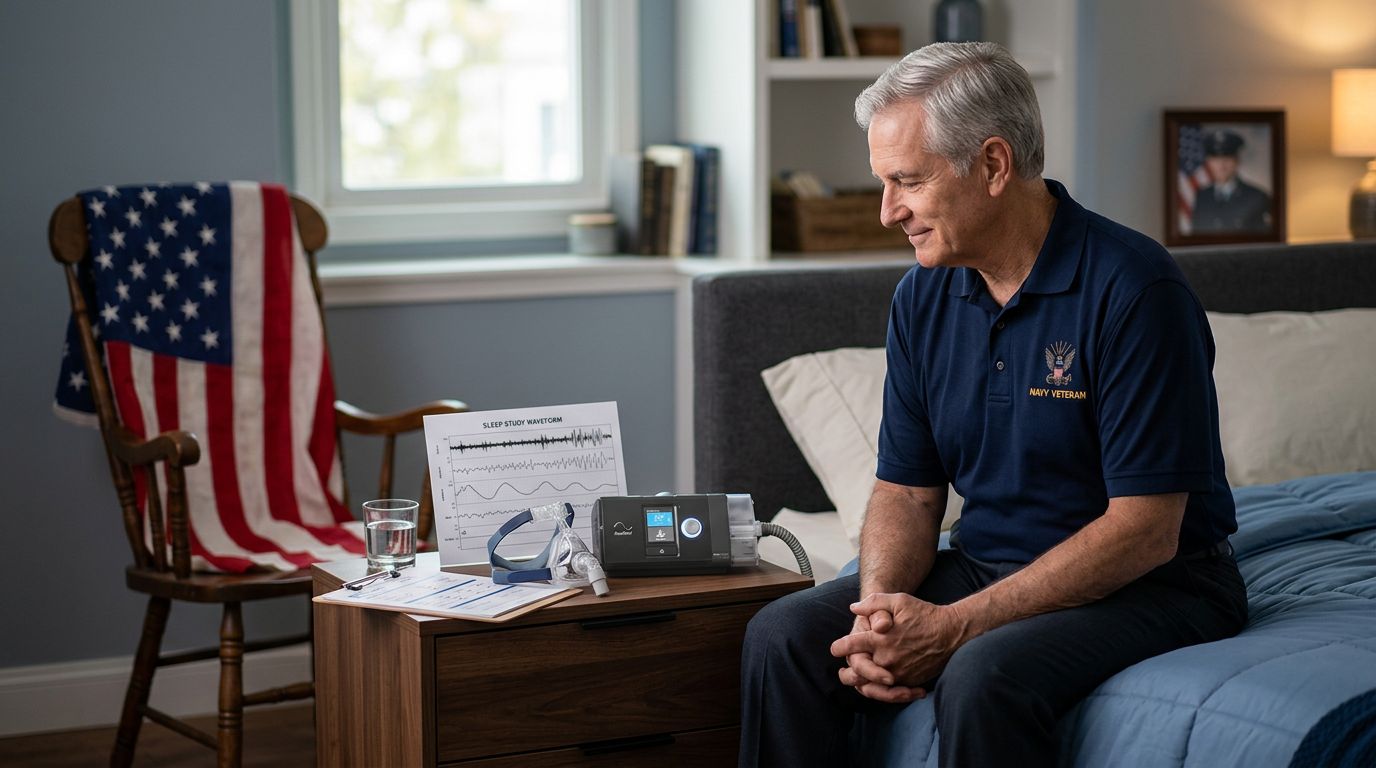
A CPAP prescription can support a 50% VA disability rating for sleep apnea, but the prescription alone may not prove service connection. Veterans also need evidence connecting the condition to military service or to an already service-connected disability.
The strongest claims combine a valid sleep study, treatment records, CPAP documentation, and a well-supported medical nexus. Understanding how the VA rates sleep apnea helps you focus on the evidence that can change your claim.
Key Takeaways
- Under the current rating schedule, CPAP treatment generally supports a 50% rating for sleep apnea when the evidence shows the device is medically required.
- A sleep study proves a current diagnosis, but it doesn’t automatically prove that military service caused the condition.
- CPAP compliance reports can strengthen a claim, but the rating schedule doesn’t list a minimum number of nightly usage hours.
- Service connection may come from direct evidence, secondary service connection, or aggravation by another service-connected condition.
- Florida veterans should review the entire record before filing, especially when the VA denied the claim for lack of a nexus opinion.
Current VA Sleep Apnea Ratings Under Diagnostic Code 6847
The VA rates obstructive sleep apnea under Diagnostic Code 6847 in the respiratory section of the Schedule for Rating Disabilities. The current criteria focus on symptoms and treatment, not only on the apnea-hypopnea index, or AHI.
The controlling regulation appears in 38 C.F.R. section 4.97. The criteria are:
| VA rating | Current requirement |
|---|---|
| 0% | Asymptomatic, with documented sleep-disordered breathing |
| 30% | Persistent daytime hypersomnolence |
| 50% | Requires use of a breathing assistance device, such as a CPAP machine |
| 100% | Chronic respiratory failure with carbon dioxide retention, cor pulmonale, or a required tracheostomy |
A sleep study’s AHI score can show the condition’s medical severity. However, the AHI does not automatically determine the VA percentage. A veteran with a high AHI does not receive a 50% rating unless the evidence also satisfies the treatment requirement in the regulation.
The 50% level is the rating most veterans associate with CPAP treatment. A medical provider’s prescription, sleep specialist records, and durable medical equipment documentation can show that CPAP is medically required. A machine purchase receipt by itself is much weaker because it doesn’t establish why the device was prescribed or whether the veteran has a diagnosed condition.
The 100% rating applies to serious respiratory complications listed in the regulation. Severe daytime fatigue, oxygen desaturation, or a high AHI alone doesn’t meet that standard. The evidence must show chronic respiratory failure with carbon dioxide retention, cor pulmonale, or a tracheostomy.
Online articles sometimes discuss proposed changes to sleep apnea ratings. A proposal doesn’t replace the regulation. Veterans should review the version of Diagnostic Code 6847 that applies to the claim’s relevant period and decision.
CPAP Evidence That Carries the Most Weight
CPAP evidence should tell a complete story. It should show the diagnosis, the medical need for treatment, the prescribed device, and the veteran’s treatment history.
A useful evidence packet often includes:
- The original in-lab polysomnography or home sleep apnea test
- A prescription from a physician or qualified sleep specialist
- CPAP titration records or an automatic positive airway pressure recommendation
- Durable medical equipment records showing the machine was issued
- Device download reports showing usage and residual AHI
- Follow-up notes about mask fit, pressure settings, leaks, and treatment response
- Records documenting side effects or difficulty tolerating the device
A sleep study is usually the foundation. It may identify obstructive sleep apnea, central sleep apnea, mixed apnea, oxygen desaturation, sleep position, and the number of breathing interruptions per hour. The report should remain in the claim file, even when later VA records summarize the diagnosis.
The prescription matters because it links the diagnosis to a treatment decision. A provider who writes “CPAP recommended” provides less detail than a record stating that the veteran requires CPAP because of confirmed obstructive sleep apnea. Treatment notes can fill in that gap.
Compliance data is also useful. A CPAP report may show the percentage of nights used, average hours per night, residual AHI, pressure range, and mask leak. Those numbers can confirm that the veteran obtained and used the device. They can also show why treatment has been difficult.
The regulation does not state that a veteran must use CPAP for a set number of hours each night to qualify for the 50% level. Still, a veteran who rarely uses the machine should explain the reason through medical records. Mask intolerance, claustrophobia, nasal obstruction, pressure problems, insomnia, or other side effects may affect use. Notes from a sleep clinic are stronger than an unsupported statement in a claim form.
A compliance report can support the treatment history, but it doesn’t replace the prescription or medical diagnosis.
Veterans who use bilevel positive airway pressure, oral appliances, or another device should submit records describing the treatment and its medical purpose. A commercial snoring product isn’t automatically the same as prescribed breathing assistance. The provider should identify the device and explain why it is necessary for the diagnosed condition.
CPAP evidence can establish the level of disability. It generally cannot establish the cause of the condition. That requires a separate service-connection analysis.
Proving Sleep Apnea Is Connected to Military Service
A VA sleep apnea claim has two separate questions. First, does the veteran have a current disability? Second, did military service cause or aggravate it?
A direct service-connection claim usually requires evidence of:
- A current sleep apnea diagnosis
- An in-service disease, injury, event, or symptoms
- A medical link between the current diagnosis and service
Military treatment records may contain complaints of fatigue, headaches, insomnia, snoring, breathing problems, or difficulty staying awake. They may also show weight changes, nasal injuries, sinus problems, or other conditions relevant to breathing during sleep.
However, an in-service sleep study is not required in every case. Sleep apnea often goes undiagnosed for years because the veteran sleeps through the breathing interruptions. A spouse, partner, roommate, or fellow service member may have observed loud snoring, choking, gasping, or pauses in breathing.
Lay statements can help establish observable symptoms. A statement should identify who observed the symptoms, when they began, how often they occurred, and whether they continued after service. A spouse who describes repeated gasping episodes during a deployment provides more useful evidence than a general statement that the veteran “had sleep problems.”
The time between separation and diagnosis also matters. A long gap can make a direct claim more difficult, but it doesn’t automatically defeat the claim. Continuous symptoms, early private treatment, statements from people who knew the veteran during service, and a sound medical opinion can address that gap.
The medical nexus opinion should consider the veteran’s actual history. It should discuss service treatment records, the timing of symptoms, relevant risk factors, the sleep study, and post-service records. A conclusory opinion that says sleep apnea “is related to service” without reasoning may receive little weight.
A VA examiner may focus on the absence of an in-service diagnosis. That is one reason the veteran should submit lay evidence and a private medical opinion when the service records don’t tell the whole story. The VA’s evidence guidance describes the types of information that can support a disability claim.
Secondary Service Connection and Aggravation
Many veterans pursue sleep apnea as secondary to a service-connected condition. The theory may be that the service-connected disability caused sleep apnea or made it permanently worse.
Commonly discussed conditions include:
- PTSD and other mental health conditions
- Chronic sinusitis or allergic rhinitis
- A deviated nasal septum
- Asthma or other respiratory conditions
- Medication-related weight gain
- Orthopedic conditions that limit activity and contribute to weight gain
A connection isn’t automatic because two conditions occur together. The claim needs medical reasoning that explains the relationship in the veteran’s case.
For example, an opinion might address whether medication prescribed for a service-connected psychiatric condition caused weight gain, whether that weight gain contributed to obstructive sleep apnea, and whether the sleep apnea would have developed without those factors. The opinion must address the actual medical record rather than rely on a general article about PTSD or obesity.
Obesity can sometimes function as an intermediate step between a service-connected disability and another condition. The VA General Counsel addressed that issue in VAOPGCPREC 1-2017. The opinion doesn’t create automatic service connection for sleep apnea. Instead, it provides a framework for claims in which a service-connected condition caused obesity, and obesity then caused or aggravated the claimed disability.
Aggravation is another possible theory. The evidence must show that a service-connected condition permanently worsened sleep apnea beyond its natural progression. A medical opinion should identify the baseline severity and explain how the service-connected disability changed the condition. Without a baseline or supporting explanation, an aggravation claim may fail even when the veteran has a current diagnosis.
A nexus opinion should also distinguish correlation from causation. Many people have sleep apnea without PTSD, rhinitis, or service-related weight gain. The opinion must explain why the veteran’s particular records support the connection.
Building a Strong Evidence File Before Filing
A well-organized record makes it easier to identify missing evidence. Begin with the sleep study and work forward through diagnosis, prescription, equipment issuance, and follow-up care.
Request copies of both VA and private treatment records. VA records may include sleep clinic notes, primary care visits, CPAP orders, equipment records, and compliance reports. Private providers may hold the original sleep study or the notes that explain why treatment was prescribed.
The file should also include relevant service records. Look for respiratory complaints, sinus treatment, nasal trauma, sleep complaints, fatigue, and reports from fellow service members. If a record uses a different term, such as “snoring” or “tired during the day,” it may still support the history.
A personal statement should use dates and concrete observations. Explain when symptoms started, what other people saw, whether the symptoms continued after discharge, and when a provider first recommended testing. Avoid guessing at medical conclusions. Describe the facts and let the medical opinion address causation.
A claim may become harder when the veteran submits only a current CPAP prescription. That document can support a 50% rating, but it doesn’t answer why the veteran has sleep apnea or when it began. The claim should address both the percentage and service connection.
The VA may schedule a compensation and pension examination. Bring a clear history and identify all relevant treatment. Tell the examiner about the original symptoms, current CPAP use, problems with the mask, and other conditions that may relate to the claim. Do not minimize symptoms because the device helps. Treatment can control a condition without eliminating the underlying disability.
If the VA requests private records, respond promptly and provide complete provider information. Veterans can also submit records directly. The VA Form 21-526EZ information page explains the form used for an original disability claim and related submission requirements.
What to Do After a Denial or Low Rating
A denial may involve service connection, the rating percentage, or both. Read the decision carefully and identify the exact reason. One decision may concede a current diagnosis but deny a nexus. Another may grant service connection at 0% while overlooking evidence that CPAP is medically required.
The next step depends on the error and the available evidence. A supplemental claim can be appropriate when new and relevant evidence is available, such as a private nexus opinion, a missing sleep study, or CPAP records. Higher-Level Review asks a senior VA reviewer to examine the existing record without adding new evidence. A Board appeal may be appropriate when the dispute involves legal interpretation, conflicting medical opinions, or a serious duty-to-assist error.
The VA generally requires a review option to be selected within one year of the decision notice to protect the earliest possible effective date. Read the notice because the deadline and procedural details control. The VA’s decision review options explain the available lanes.
A low rating may also require a different strategy than a denied claim. If service connection is already established at 0% and the veteran later receives a CPAP prescription, the issue may be an increased-rating claim. If VA assigned 30% based on daytime hypersomnolence but the record shows a required breathing assistance device, the evidence should focus on that treatment requirement.
Effective dates require separate attention. A later CPAP prescription may support an increased rating, but the effective date depends on the claim history, the date of the increase, and the evidence. An attorney or accredited representative can review prior decisions, medical records, and appeal deadlines together.
Choosing Help With a Florida VA Claim
VA disability claims are federal matters, even when the veteran lives in Florida. The state of residence doesn’t change Diagnostic Code 6847, but local access to records, medical providers, and an attorney can affect how efficiently a claim is prepared.
Look for a representative who understands both VA disability law and medical evidence. A lawyer should be able to separate the rating issue from the nexus issue, identify whether direct or secondary service connection fits the facts, and review unfavorable examination opinions.
VA accreditation matters. Veterans should confirm that an attorney or representative is authorized to assist with VA claims before signing a fee agreement. A case review should address the evidence already available, the missing records, and the procedural deadline.
Sleep apnea cases often turn on a small sentence in a treatment record. “CPAP discussed” may leave questions. “CPAP required for diagnosed obstructive sleep apnea” may provide much stronger rating evidence. The complete file shows which statement appears in the record and whether the medical connection has been established.
Conclusion
VA sleep apnea ratings in 2026 still depend on the criteria in Diagnostic Code 6847. A required CPAP device generally supports the 50% level, while the diagnosis, service records, lay observations, and medical nexus determine whether the condition is service connected.
A CPAP machine can document the severity of the disability, but it cannot prove its cause by itself. The strongest claim connects those two parts with clear medical records and a reasoned explanation of how sleep apnea relates to military service or a service-connected condition.