
Florida Red-Light Crash Claims and Camera Evidence
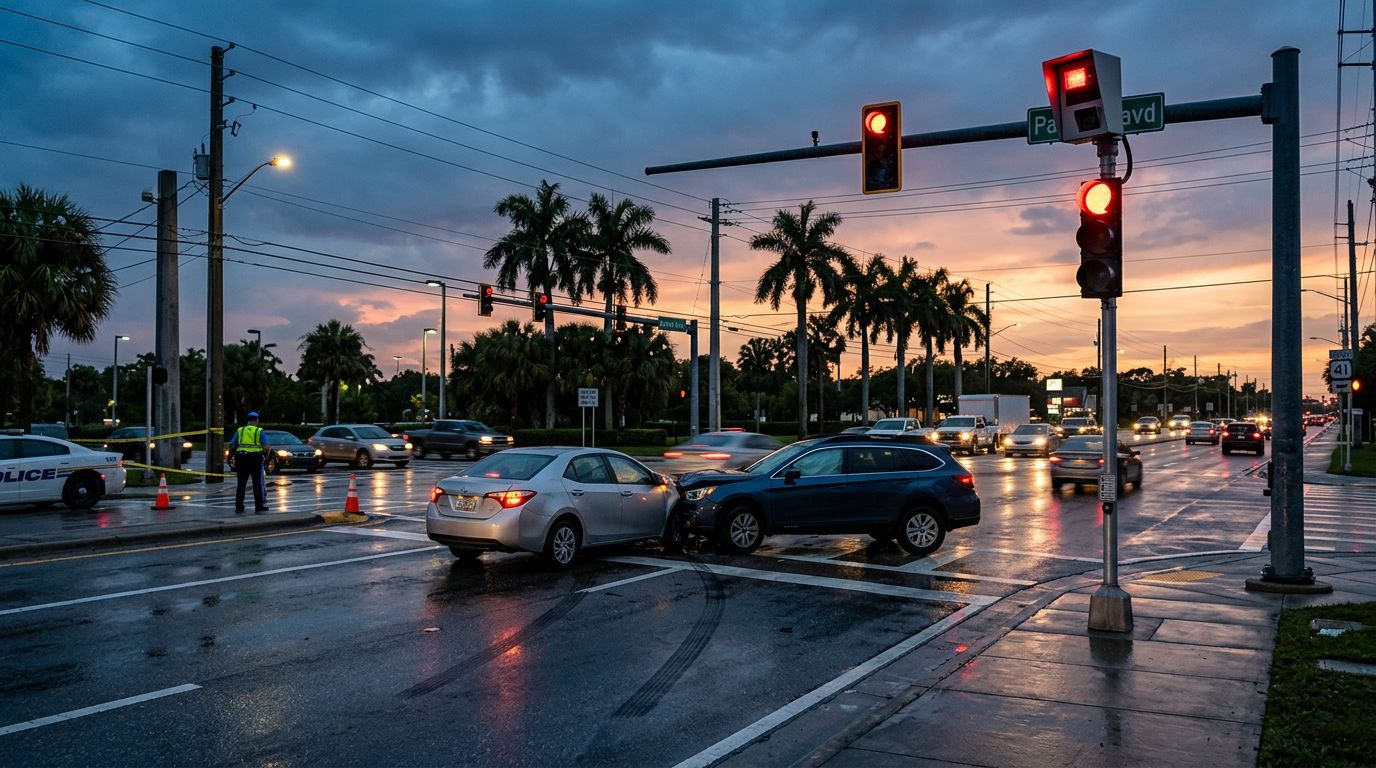
A red light can change a Florida injury claim in seconds. A camera may show the signal, the vehicle, and the moment of impact, but it rarely answers every legal question by itself.
If you were injured at an intersection, preserve camera evidence quickly. Traffic footage may be deleted, overwritten, or stored by more than one agency. Florida law also treats a red-light camera citation differently from negligence in a personal injury case.
Understanding what the footage proves, what it misses, and how it fits with other evidence can protect your claim.
Key Takeaways
- A red-light camera citation is not automatic proof that the driver caused your injuries.
- Camera footage can show signal timing, vehicle movement, and impact details that witnesses may miss.
- Request original video, still images, signal records, maintenance logs, and related reports quickly.
- Florida’s no-fault insurance rules usually require an injured person to use PIP benefits first.
- Most Florida negligence claims must be filed within two years, subject to exceptions and transition rules.
How Florida Red-Light Camera Evidence Works
Florida law permits local governments to use traffic infraction detectors under the state red-light camera statute. These systems typically capture still photographs or video when a vehicle enters an intersection against a steady red signal.
The equipment may record the vehicle before it crosses the stop line, while it enters the intersection, and after the violation. Some systems also capture the traffic signal and a timestamp. That information can help establish whether the light was red at the relevant point.
However, the camera usually identifies the vehicle, not the person driving it. A ticket issued to the registered owner may not prove who operated the car during the crash. The owner may also have a legal defense if someone else drove the vehicle or if the vehicle had been sold, stolen, or leased under circumstances covered by the statute.
A camera citation is also separate from a civil injury claim. The government must prove a traffic violation under the rules for that citation. An injured person must prove negligence, causation, and damages in a personal injury case. Those cases involve different parties, standards, and evidence.
The timing matters. A vehicle that crossed the stop line legally and remained in the intersection while the light changed may not have run the red light. The key issue is often when the vehicle entered the intersection, not when the collision occurred.
What Intersection Footage Can Prove
A well-preserved recording can answer several questions that become disputed after a crash.
It may show:
- The traffic signal color when each vehicle approached
- Whether a vehicle stopped before entering the intersection
- The vehicle’s lane, direction, and speed changes
- Whether a driver turned right or left against the signal
- The position of vehicles before and during impact
- Whether another vehicle entered the intersection first
- Whether pedestrians, bicycles, or obstructions affected visibility
- The location of debris and the direction of travel
Camera evidence becomes stronger when it matches other records. A police report, 911 call, vehicle damage, witness statement, event data recorder, and cellphone video can help establish the sequence of events.
For example, a red-light camera may show that a vehicle entered the intersection after the signal changed. A collision recording may then show that the injured driver’s vehicle had already entered legally. Together, those records can support a clear liability argument.
Still, footage often has limits. A fixed camera may face the wrong direction, miss the signal for another lane, or record only a few seconds. Glare, rain, darkness, traffic, and image compression can affect visibility. A timestamp may also require comparison with the signal controller’s records.
The original file matters. Screenshots sent by text or copied from social media may omit metadata and surrounding frames. Investigators and attorneys generally need the original recording, the system’s operating information, and testimony or records that establish how the system captured and stored it.
How to Preserve Camera Evidence After a Crash
Don’t assume the police report automatically preserves every recording. A city, county, police department, toll agency, transportation department, or private business may control different pieces of evidence.
Start by identifying every camera near the intersection. Look for traffic signal cameras, red-light enforcement equipment, police vehicle cameras, nearby business cameras, apartment security systems, and doorbell cameras. A business camera may capture the crash even when the official traffic camera does not.
Send a written preservation request to the agency or property owner as soon as possible. The request should identify the intersection, date, approximate time, direction of travel, and vehicles involved. Ask the custodian to preserve the original files and related records, including footage from several minutes before and after the collision.
A request may also seek:
- Still photographs and full-length video
- Signal phase and timing data
- Camera timestamps and time-zone settings
- Equipment inspection, calibration, and maintenance records
- Notices of violation and supporting photographs
- Traffic signal plans and controller logs
- Reports about malfunctions, outages, or repairs
- Communications about the intersection or crash
Florida’s public records law may allow a person to request records from a government agency. The agency may charge permitted fees, and some records may be exempt or subject to redaction. A public records request is not a substitute for litigation discovery, but it can help identify what exists.
Private camera owners aren’t always required to retain footage for a particular period. A preservation letter can put the owner on notice that the recording may be relevant to a pending claim. If the owner refuses to preserve it, an attorney may evaluate additional legal steps.
Keep your own evidence intact. Save original cellphone videos, photographs, dashcam files, vehicle data, and messages. Don’t edit, crop, filter, or overwrite the only copy. Write down what you remember before reviewing other accounts, because later conversations can affect a witness’s memory.
How Lawyers Evaluate a Red-Light Crash Claim
A lawyer doesn’t review a camera clip in isolation. The analysis usually begins with the traffic signal and the vehicle’s movement, then expands to causation and damages.
Florida law requires a negligence claim to connect the other driver’s conduct to the injury. Running a red light may establish a traffic violation, but the claim still must address whether that violation caused the collision. A driver who entered on red may argue that another vehicle was speeding, changed lanes suddenly, or failed to avoid a crash.
Comparative negligence can affect compensation. Under Florida’s comparative negligence statute, a person’s damages generally are reduced according to that person’s percentage of fault. A claimant found more than 50 percent at fault for a negligence action generally can’t recover damages.
The evidence may need to establish more than a driver’s failure to stop. It can also address:
- Whether the signal worked correctly
- Whether the yellow interval complied with applicable standards
- Whether a turn was permitted after stopping and yielding
- Whether construction, vegetation, or a large vehicle blocked the signal
- Whether the driver had time to see and respond to the light
- Whether the injured person used a seat belt and followed traffic rules
A traffic engineer may review signal timing, sight distances, roadway markings, and crash reconstruction evidence. The engineer’s opinion can matter when the video doesn’t clearly show the signal or when the parties dispute the vehicle’s speed and point of entry.
Insurance, Injuries, and Florida Filing Deadlines
Florida’s no-fault system usually requires a motor vehicle accident victim to seek benefits through personal injury protection, or PIP, coverage. PIP may pay 80 percent of reasonable medical expenses and 60 percent of lost income, subject to policy limits and statutory conditions. The policy often provides $10,000 in coverage, although the available amount and medical benefit level can vary.
Initial medical treatment generally must occur within 14 days to qualify for PIP benefits. Prompt care also creates a medical record connecting symptoms to the collision. Delayed treatment gives an insurer an argument that the injury came from another cause, even when that argument is wrong.
PIP doesn’t cover every loss. A seriously injured person may pursue the at-fault driver for amounts beyond available PIP coverage, including additional medical expenses, lost earnings, property damage, and pain and suffering when Florida’s injury threshold is met. The threshold includes conditions such as a permanent injury, significant and permanent loss of an important bodily function, significant permanent scarring or disfigurement, or death.
Keep records of medical visits, prescriptions, missed work, mileage, vehicle repairs, and communications with insurers. Don’t give a recorded statement about fault before understanding what the insurer is asking and how the statement may be used.
For most Florida negligence claims arising on or after March 24, 2023, the personal injury deadline is two years under Florida’s statute of limitations. Older crashes may involve different transition rules. Wrongful death claims and claims against government entities can have separate requirements and deadlines.
Waiting can cost more than time. A camera may be overwritten, a vehicle may be repaired, and a witness may become difficult to locate. Early legal review helps identify the correct records and preserve evidence before those problems arise.
Common Problems With Camera Evidence
A recording can appear convincing while leaving important questions unresolved. The camera may show a red signal but not the vehicle’s position when the light changed. It may show impact without showing which driver had the right of way.
Other disputes involve timestamp accuracy, missing video, system settings, camera angle, and whether the recording is complete. An insurer may rely on a short clip while leaving out the seconds that show the other vehicle’s approach.
A red-light camera ticket also doesn’t prove the driver’s identity in every civil case. The registered owner, vehicle operator, and person responsible for the collision may be different people. The ticket may support the claim, but additional evidence usually matters.
The strongest intersection claims combine video with timing records, vehicle data, witness accounts, and medical documentation.
A Florida personal injury attorney can request records, compare conflicting accounts, assess comparative fault, and determine whether the available evidence supports settlement or litigation. Early action is especially important when a government agency or private business controls the footage.
Conclusion
Florida red-light crash claims often turn on timing. Camera evidence may show when a vehicle entered, but the full case depends on signal records, witness accounts, physical evidence, medical proof, and each driver’s conduct.
Request the original footage quickly, preserve your own files, seek medical care promptly, and track the applicable deadline. When a short camera clip becomes the center of a dispute, the surrounding evidence often determines what the recording actually proves.