
Florida Bile Duct Injury Claims After Gallbladder Surgery
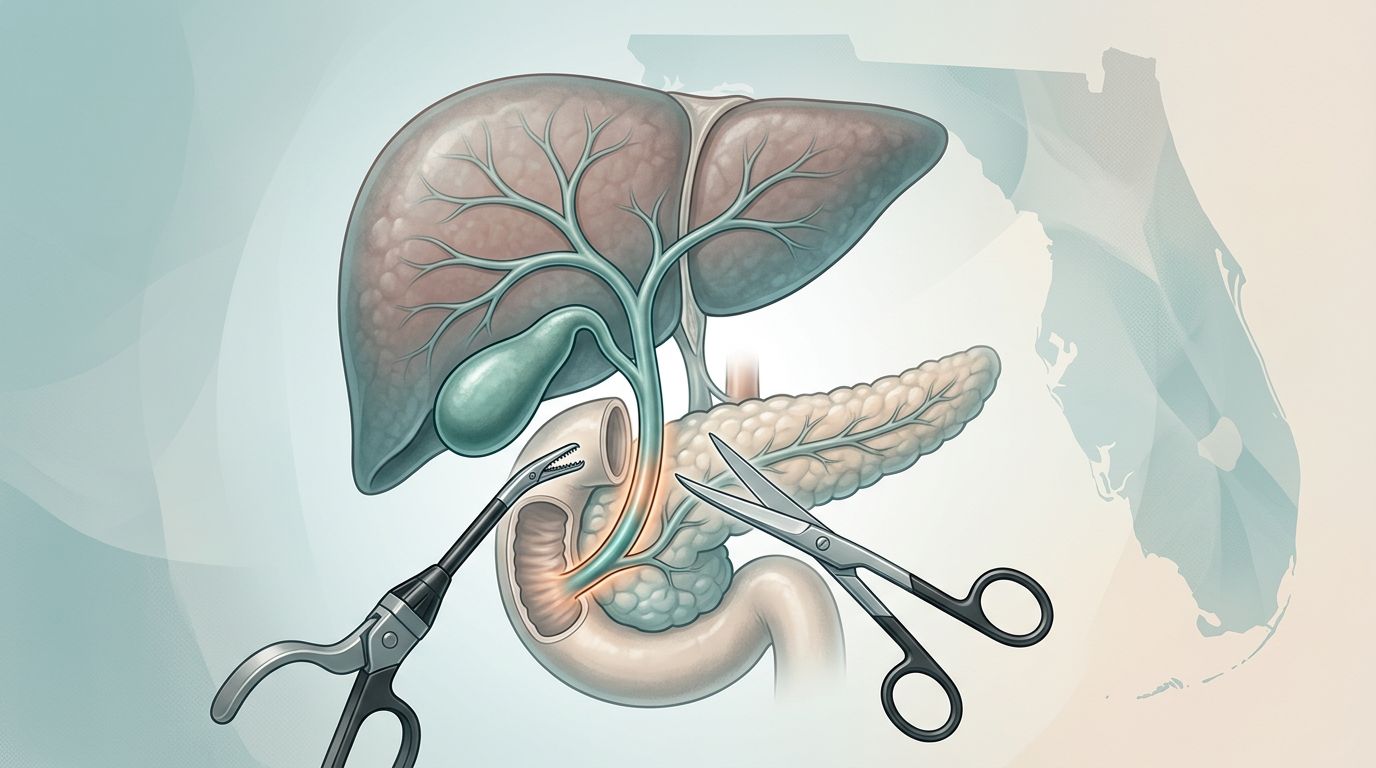
A gallbladder operation can leave a patient with a serious bile duct injury that requires emergency treatment, additional surgery, and months of recovery. When the injury resulted from a surgeon’s failure to meet Florida’s medical standard of care, the patient may have grounds for bile duct injury claims.
The difficult question is often whether the injury was a recognized surgical complication or the result of preventable negligence. Medical records, imaging, operative details, and opinions from qualified surgeons can help answer that question. Florida’s deadlines also make early legal review important.
Key Takeaways
- A bile duct injury may involve a cut, puncture, leak, obstruction, burn, or mistaken clipping during gallbladder surgery.
- The injury alone doesn’t prove malpractice. A claim must connect the surgeon’s conduct to a violation of the applicable standard of care.
- Florida generally requires a medical malpractice presuit investigation before filing a lawsuit.
- The usual deadline is two years after discovering, or when you should have discovered, the injury, subject to Florida’s four-year statute of repose and limited exceptions.
- Compensation may include additional medical care, lost income, reduced earning ability, pain, disability, and other documented losses.
How Bile Duct Injuries Happen During Gallbladder Surgery
The bile ducts carry bile from the liver and gallbladder to the small intestine. During a cholecystectomy, the surgeon removes the gallbladder after identifying and dividing the cystic duct and cystic artery. The common bile duct lies close to these structures, so a mistake can interrupt the flow of bile or cause bile to leak into the abdomen.
A surgeon may injure the duct by cutting it, clipping the wrong structure, applying excessive heat, or failing to recognize damage before closing the surgical site. Some injuries happen during laparoscopic surgery, while others occur during an open procedure or a later attempt to repair the original injury.
Common types include:
- Transection, meaning the duct is partly or completely cut.
- Laceration or perforation, which can allow bile to escape.
- Thermal injury, caused by electrosurgical equipment.
- Misplaced clips, which block or narrow the duct.
- Stricture, a scar-related narrowing that develops after surgery.
- Failure to identify an injury, allowing symptoms to worsen after discharge.
An injury may also involve the hepatic duct, common hepatic duct, cystic duct remnant, or nearby blood vessels. The damage can lead to bile peritonitis, infection, jaundice, liver problems, and repeated procedures.
The presence of an injury doesn’t automatically establish negligence. Bile duct damage is a known risk of gallbladder surgery. A legal claim depends on whether the surgeon acted as a reasonably careful surgeon would have acted under similar conditions and whether that failure caused the patient’s losses.
Florida’s medical negligence statute sets out the standard used in professional negligence cases. A lawyer must examine the actual circumstances rather than rely on the result alone.
Signs That a Bile Duct Injury May Have Occurred
Symptoms can appear during surgery, shortly afterward, or weeks later. Some patients first learn about the problem after returning to an emergency department with worsening abdominal symptoms.
Warning signs may include:
- Increasing pain in the upper right abdomen
- Fever, chills, or a fast heart rate
- Yellow skin or yellowing in the whites of the eyes
- Dark urine and unusually pale stools
- Abdominal swelling or tenderness
- Nausea and vomiting that don’t improve
- Fluid draining from an incision
- A bile collection, called a biloma
- Abnormal liver function tests
- Repeated infections or episodes of pancreatitis
A delayed diagnosis can make the injury harder to treat. Bile may collect in the abdomen, cause infection, or scar the ducts. Some patients need an endoscopic retrograde cholangiopancreatography, commonly called ERCP, to place a stent or remove an obstruction. Others need percutaneous drainage, reconstructive surgery, or long-term monitoring.
Seek immediate medical attention for severe pain, fever, jaundice, confusion, fainting, or repeated vomiting. Emergency treatment comes first. Medical records created during that care may later help show when symptoms began, what providers observed, and whether the surgical team responded appropriately.
Keep discharge instructions, test results, medication lists, and bills. Write down the dates of symptoms and the names of every facility involved. Those details can matter when the timing of the injury is disputed.
When a Florida Bile Duct Injury May Support a Malpractice Claim
A medical malpractice case generally requires proof of four connected points:
- The surgeon or medical provider owed the patient a professional duty.
- The provider failed to meet the applicable standard of care.
- That failure caused the bile duct injury or made it substantially worse.
- The patient suffered legally compensable damages.
The standard of care may involve careful anatomical identification, proper use of surgical instruments, appropriate response to unexpected bleeding, and recognition of an injury before the procedure ends. A qualified expert must assess what a competent surgeon would have done under similar conditions.
Examples that may support a claim include a surgeon cutting the common bile duct after misidentifying it, failing to investigate an unexplained bile leak, ignoring abnormal postoperative findings, or discharging a patient without responding to warning signs. A separate claim may arise if a provider delays a needed referral or fails to arrange follow-up after recognizing a possible injury.
Still, an unfavorable outcome doesn’t prove that the surgeon acted negligently. A surgeon may encounter unusual anatomy, severe inflammation, scar tissue, or bleeding that increases the risk of injury. The legal analysis focuses on the conduct and the medical evidence surrounding it.
The claim may involve more than one provider. Potential defendants can include the surgeon, a surgical group, a hospital, an ambulatory surgery center, or another clinician who failed to diagnose and treat the injury. Each defendant’s role requires separate analysis. A hospital may not be responsible for every act of an independent physician, so the employment and agency relationships matter.
Proving Negligence and Causation
Causation is often the most contested part of bile duct injury claims. The defense may argue that the injury was an unavoidable complication, that the patient’s anatomy created unusual risks, or that a later provider caused the worsening condition.
Medical experts review the operative report, images, laboratory results, pathology, and treatment timeline. They may compare the surgeon’s actions with accepted surgical practice. They also examine whether earlier recognition would have reduced the patient’s recovery time, treatment needs, or permanent damage.
For example, a duct leak identified during the original surgery may require a different treatment plan than a leak discovered after infection and abdominal inflammation develop. A delayed diagnosis can increase medical expenses and lead to a more extensive repair. The evidence must connect the delay to a measurable injury.
The medical record should tell a consistent story. Important documents may include:
- The informed consent form and surgical risk disclosures
- Preoperative imaging and laboratory results
- The operative report and anesthesia record
- Intraoperative cholangiography or other duct imaging
- Nursing notes and discharge instructions
- Emergency department and hospital records
- ERCP, drainage, and reconstructive surgery reports
- Follow-up records from gastroenterologists and hepatobiliary surgeons
- Wage records and documentation of missed work
Patients should request a complete copy of their records, not only a discharge summary. The operative report may reveal whether the surgeon identified the duct anatomy, noticed bile leakage, used imaging, or documented an unexpected event.
Florida medical malpractice law usually requires a corroborating medical expert opinion before suit. A lawyer will often send the records to a qualified specialist for review. The expert must have the appropriate knowledge and experience to address the procedure, the alleged error, and the resulting harm.
Florida’s Medical Malpractice Presuit Process
Florida generally requires a claimant to complete a presuit investigation before filing a medical negligence lawsuit. The process is governed by Chapter 766 of the Florida Statutes, including section 766.106.
The investigation usually begins with collecting records and consulting a qualified medical expert. The lawyer must determine whether reasonable grounds exist to believe that medical negligence occurred and caused the injury.
If the claim has support, the claimant sends each prospective defendant a notice of intent to file a medical negligence action. The notice identifies the general nature of the claim and includes required supporting information. It must be handled carefully because an incomplete or improperly served notice can create problems.
After receiving the notice, the prospective defendant has a statutory period to investigate and respond. The response may reject the claim, admit liability, offer a settlement, or propose another resolution. Florida law also tolls the statute of limitations during part of the presuit process.
The parties may exchange information during this period. A defendant can request authorization for relevant medical records, and the claimant may need to participate in an interview or provide additional materials. Presuit discussions don’t replace the need to protect filing deadlines.
A lawsuit may follow if the parties don’t resolve the claim. At that stage, the complaint must identify the negligent conduct, explain how it caused the injury, and state the damages sought. The defendant may raise issues involving causation, comparative fault, informed consent, the statute of limitations, or the status of the physician’s relationship with a hospital.
Because presuit rules have technical requirements, a patient shouldn’t wait until the deadline is close before seeking legal advice. Records can take time to obtain, and qualified experts need time to review complex surgical evidence.
Florida Deadlines for Bile Duct Injury Claims
Florida’s medical malpractice deadline often depends on when the patient discovered, or should have discovered, the injury and its possible connection to medical care. Under the Florida statute of limitations, the general period for medical negligence is two years after discovery or when discovery should have occurred.
A separate four-year statute of repose can limit a claim even if the patient didn’t discover the injury earlier. The repose period usually runs from the date of the negligent act. Florida law contains limited exceptions, including certain cases involving fraud, concealment, or misrepresentation.
The date of discovery isn’t always the date of surgery. A patient may initially believe that pain is part of recovery and later learn that a bile duct was damaged. The relevant facts can include when symptoms appeared, what doctors told the patient, what imaging showed, and when a provider connected the condition to the operation.
Several facts can affect the calculation:
- The patient may be a minor.
- The provider may have concealed information.
- The defendant may be a government entity with separate notice rules.
- The claim may involve a wrongful death.
- A presuit notice may toll the deadline for a limited period.
- The patient may have received treatment from several providers.
A lawyer must calculate the deadline using the facts and the applicable statute. Filing a notice or starting settlement talks doesn’t automatically preserve every claim forever. Waiting can also make witness interviews and expert review more difficult.
Compensation in a Florida Medical Malpractice Case
A bile duct injury can create losses well beyond the initial hospital bill. Treatment may include emergency admission, diagnostic imaging, ERCP, drainage, antibiotics, follow-up procedures, and reconstructive surgery. Some patients need continuing care for strictures, liver problems, digestive symptoms, or chronic pain.
Potential economic damages may include:
- Past medical expenses
- Future medical and rehabilitation costs
- Prescription and medical equipment expenses
- Lost wages
- Reduced future earning ability
- Travel costs for specialized treatment
- Household services needed during recovery
Non-economic damages may include pain and suffering, emotional distress, disability, disfigurement, and loss of normal activities. The value of these damages depends on the evidence, the duration of symptoms, the need for future treatment, and the effect on daily life.
A spouse may have a separate loss of consortium claim in some circumstances. If the patient dies, surviving family members may pursue damages under Florida’s wrongful death law, including section 768.21.
Insurance payments, health care liens, disability benefits, and workers’ compensation benefits can affect the amount available after settlement. A settlement also needs to account for future treatment, not only bills already received. Once a claim is resolved, the patient may lose the ability to seek additional compensation for the same injury.
Florida law doesn’t assign a fixed value to every bile duct injury. Two patients with similar procedures can have different outcomes, treatment needs, work losses, and long-term limitations. A careful damages review should include medical opinions about future care and financial evidence concerning employment.
Choosing a Florida Attorney for a Bile Duct Injury Case
Medical malpractice cases require more than a general description of what went wrong. Look for a Florida attorney who handles medical negligence claims and understands presuit requirements, expert review, hospital liability, and damages involving long-term medical care.
During an initial consultation, ask how the firm evaluates the medical records and whether it has experience with surgical injury claims. A lawyer should explain the likely costs, the contingency fee agreement, possible case expenses, and the risks of litigation in clear terms.
Bring whatever records you have, along with a written timeline. Include the surgery date, the first signs of trouble, each hospital visit, subsequent procedures, and the effect on work and daily activities. You don’t need to prove the entire case before meeting with a lawyer.
Avoid contacting the surgeon or hospital to accuse anyone before receiving legal advice. Don’t post detailed statements about the treatment or claim on social media. Preserve messages, photographs, appointment notices, and bills. If a hospital or insurer asks you to sign a broad release, have the document reviewed first.
A lawyer may decline a claim if the records don’t support negligence or if the filing deadline has expired. That assessment protects the patient from spending years on a case that lacks the required medical proof. When the evidence supports a claim, early action gives the attorney time to identify experts and preserve records.
Conclusion
A bile duct injury after gallbladder surgery can require extensive treatment, but the injury alone doesn’t establish malpractice. The central questions are whether the provider violated Florida’s standard of care, whether that conduct caused the injury or worsened it, and what losses followed.
Because Florida requires presuit investigation and applies strict filing deadlines, gather your records and seek a case review as soon as possible. Prompt legal analysis can clarify whether the injury was a recognized complication, a preventable surgical error, or a delayed-diagnosis claim.