
Florida Tow Truck Crash Claims: Dispatch Records and Proof
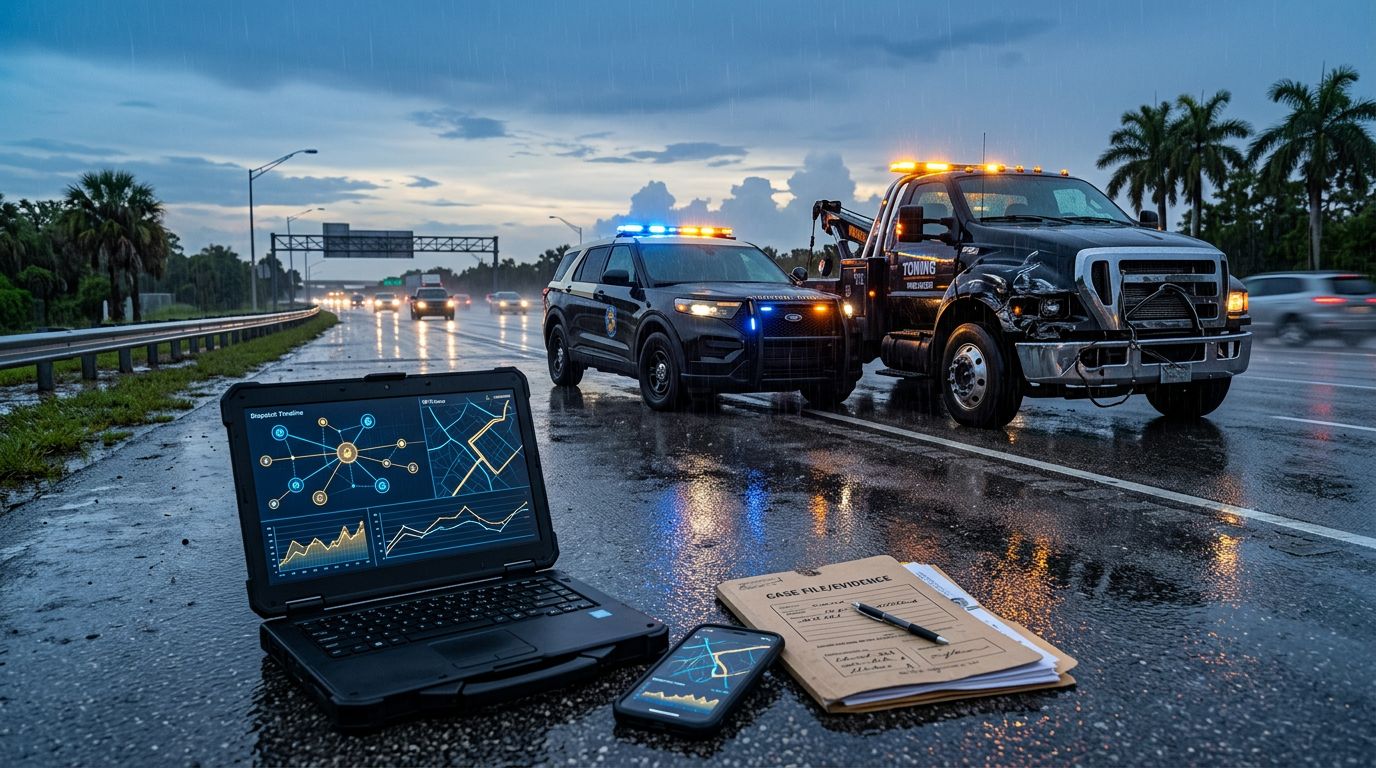
A tow truck crash can turn a roadside emergency into a complicated injury claim. The strongest evidence may sit inside a dispatch system, not at the accident scene.
Dispatch records can show when a tow company received the call, where it sent the driver, what instructions the driver received, and how long the truck remained at the scene. Those details may confirm or challenge the driver’s version of events.
If you were injured by a tow truck in Florida, preserve evidence quickly. The company may have dispatch data, GPS history, dashcam footage, driver logs, and maintenance records that can disappear or change.
Key Takeaways
- Dispatch records can establish the tow truck’s timeline, location, assignment, and communications.
- Florida tow truck claims may involve driver fatigue, unsafe positioning, poor warnings, speeding, equipment failures, or negligent towing practices.
- Send a written preservation request quickly because electronic records may be overwritten under routine company policies.
- Driver logs, ELD data, GPS information, CAD entries, photographs, and the Florida crash report may work together to prove fault.
- Florida generally gives injured people two years to file a personal injury lawsuit, but exceptions and shorter deadlines can apply.
Why Dispatch Records Matter After a Florida Tow Truck Crash
A dispatch file often provides the clearest timeline of a tow truck’s workday. It can show when the company accepted a call, when the driver acknowledged the assignment, and when the driver arrived at the location.
That timeline matters because a tow truck may be involved in several events during one shift. The driver might respond to a disabled vehicle, transport another car, wait at a storage yard, and then travel to a second roadside call. Dispatch data can place the truck at each location.
The records may also show whether the driver received instructions about traffic, lane closures, hazards, or the vehicle being moved. A dispatcher might direct the driver to an unsafe shoulder or tell the driver to use warning equipment. Those communications can help determine whether the company or driver acted reasonably.
GPS information adds another layer. Location data may reveal the truck’s speed, route, stopping points, and position before the collision. When the driver says the truck arrived moments earlier, GPS timestamps may show that it had been at the scene longer.
A dispatch record doesn’t prove negligence by itself. Instead, it becomes valuable when compared with other evidence, including:
- The driver’s statement and testimony
- The Florida Highway Patrol or local police crash report
- Witness accounts
- Vehicle damage and debris patterns
- Dashcam or traffic-camera footage
- Driver logs and electronic logging device data
- Tow tickets, authorization forms, and storage records
The more sources that agree, the stronger the timeline becomes. If the records conflict, the inconsistency may affect the driver’s credibility and the insurance company’s evaluation of the claim.
Tow truck cases often involve a secondary collision. A disabled car may already be stopped when the tow truck arrives. The truck could then block a travel lane, lack proper warning lights, extend equipment into traffic, or strike another vehicle while loading or moving the disabled car.
In other cases, the tow truck causes the first crash. Speed, distraction, fatigue, poor vehicle maintenance, or an unsafe lane change may lead to the collision. Dispatch evidence can help show what the driver was doing before either type of crash.
Which Tow Truck Records Should Be Preserved?
A tow company may maintain records across several systems. Some belong to the dispatch office, while others come from the truck, driver, or customer. A preservation request should identify each category instead of asking only for “the file.”
Computer-Aided Dispatch and Call Records
Computer-Aided Dispatch, often called CAD, may include the original call, assignment number, time stamps, driver notifications, status changes, and closing information. It may also record the location provided by the customer or a law enforcement agency.
Important fields can include:
- Time the call was received
- Time the driver accepted the assignment
- Dispatcher’s notes
- Assigned truck and driver
- Arrival and departure times
- Customer instructions
- Requests from police, highway patrol, or a roadway agency
- Status codes such as “en route,” “on scene,” or “clear”
- Reassigned calls or canceled assignments
Phone recordings and text messages may provide more detail than the CAD screen. A caller may have warned the company about a dangerous shoulder, disabled vehicle, poor visibility, or heavy traffic.
The company may also use a mobile application that tracks driver status. Those app records can show when the driver opened the assignment, received directions, uploaded photographs, or completed the tow.
GPS, ELD, and Vehicle Data
GPS data may come from a fleet tracking device, the tow truck’s navigation system, or a driver’s mobile device. The company may retain route history, speed information, idling time, and geofence entries.
An electronic logging device, or ELD, can show duty status and driving time when federal or Florida commercial motor carrier rules require it. An ELD file may also include edits, annotations, login information, and the identity of the person who changed an entry.
Some commercial vehicles contain an event data recorder, often called a black box. Depending on the vehicle, it may preserve information about speed, braking, throttle position, seat-belt use, and crash forces. The available data varies by manufacturer and vehicle model.
Black box information can disappear after a short period. Repairs, battery disconnection, module replacement, or ordinary system activity may overwrite it. A prompt preservation demand can prevent the company from treating the data as routine maintenance.
Driver and Company Files
Driver records may reveal whether the person had proper training and qualifications for the assigned truck. Depending on the facts, relevant materials may include the driver’s license status, training records, safety history, prior collisions, and drug or alcohol testing records.
The company may also hold:
- Vehicle inspection reports
- Repair and maintenance records
- Tire and brake records
- Equipment checklists
- Load or cargo information
- Tow authorization forms
- Photographs taken during the tow
- Customer complaints
- Internal incident reports
Tow tickets and storage documents can establish when the truck handled a vehicle and who authorized the work. They may also show the vehicle’s location, identification number, condition, and movement before or after the crash.
For incidents involving Florida Highway Patrol activity, the FHP wrecker policy addresses wrecker operations and related documentation. The details in a particular case depend on the agency, location, and type of tow.
Florida Hours-of-Service Rules and Tow Truck Driver Logs
Fatigue can support a negligence claim when a driver stays awake too long, drives beyond permitted limits, or fails to follow required duty-status rules. Dispatch records can help compare the driver’s claimed work hours with the actual assignments completed.
Tow truck operations don’t all follow the same logging requirements. The answer may depend on the truck’s weight, whether the operation is interstate or intrastate, the distance from the reporting location, and whether a short-haul exception applies.
Some drivers qualify for a short-haul exception when they operate within a limited radius and return to the normal reporting location within the required period. Even then, the employer may need to keep time records. If the driver goes beyond the exception’s limits, formal duty-status records may become necessary.
Florida’s commercial vehicle rules incorporate federal hours-of-service requirements in many situations. The Florida commercial vehicle hours-of-service rules provide official guidance, but the correct rule depends on the specific vehicle and operation.
A tow company may claim that the driver was working only a short shift. Dispatch records can test that claim. A sequence of early-morning calls, long-distance assignments, and late-night recoveries may show a longer workday than the company reports.
ELD records also require careful review. An attorney may examine not only the final log but also edits, rejected edits, login times, location data, and gaps between duty-status entries. A clean-looking record can still conflict with GPS or dispatch information.
A driver log does not automatically establish liability. A technical violation must connect to the crash and injury. For example, proof of excessive hours becomes more significant when the driver missed a warning sign, drifted across a lane, or failed to react to stopped traffic.
The company may have a separate record of driver assignments. Comparing that record with the log can reveal whether the driver completed work that never appeared in the official duty-status entry.
How Attorneys Use Dispatch Evidence to Prove Fault
A tow truck crash claim usually depends on more than one document. The evidence must show what happened, why it happened, and how the collision caused the injury.
Dispatch records can answer the first part by establishing the sequence of events. GPS and vehicle data may address the driver’s speed, route, or braking. Photographs and witness testimony can show the truck’s position and visibility at the crash site.
Consider a roadside collision involving a truck stopped on the shoulder. The tow company may state that the truck had warning lights activated and remained outside the travel lane. Dispatch and GPS records could show the arrival time, while photographs may show that the truck’s equipment extended into traffic.
A camera recording might reveal whether cones, flares, or an arrow board were present. The tow ticket could show whether the driver was loading a vehicle when the impact occurred. Together, those records may provide a more reliable account than either driver’s memory.
Fault may involve several forms of unsafe conduct, including:
- Driving while distracted or fatigued
- Speeding or following too closely
- Changing lanes without a safe gap
- Stopping in an unsafe location
- Failing to use required lights or warning devices
- Leaving equipment unsecured
- Operating a truck with defective brakes, tires, or steering
- Loading a vehicle without adequate protection from traffic
- Failing to follow police or roadway safety instructions
The physical scene still matters. Take photographs of lane markings, shoulder width, lighting, skid marks, broken parts, debris, and the truck’s position if you can do so safely. Ask witnesses for contact information. Keep the tow bill, repair estimate, insurance correspondence, and every medical record.
A crash report is useful, but it isn’t the final word on fault. Officers often arrive after vehicles move or after weather and traffic alter the scene. Dispatch timestamps, video, and physical evidence can correct an incomplete report.
Florida’s modified comparative negligence rule also makes evidence important. Under Florida Statute 768.81, an injured person assigned more than 50 percent of the fault generally can’t recover damages. If the person’s share of fault is 50 percent or less, the damage award is reduced by that percentage.
For example, an insurer may argue that a driver was speeding before striking a tow truck. The tow company may still face responsibility if it left an unlit vehicle in a travel lane. Evidence can support a division of fault based on what each person did.
Who May Be Liable for a Tow Truck Collision?
The tow truck driver is one possible defendant, but the investigation shouldn’t stop there. The employer may be responsible for conduct within the scope of employment. The company may also face separate allegations involving hiring, training, supervision, maintenance, or dispatch decisions.
The truck owner could differ from the towing company. A fleet operator might lease the vehicle, while another business employs the driver. Maintenance may be handled by a separate contractor. Each relationship can affect insurance coverage and legal responsibility.
A public agency or roadway contractor may become involved when the tow was requested for a crash, lane closure, or traffic-control operation. Government claims often have special notice rules and procedural requirements. Those cases need early legal review.
A parts manufacturer or repair provider might bear responsibility if a defective brake, tire, winch, light, or securing device caused the crash. The evidence must connect the defect or repair work to the collision.
Insurance coverage can also involve more than one policy. Potential policies include the tow company’s commercial auto policy, the truck owner’s coverage, the injured person’s uninsured or underinsured motorist coverage, and other applicable policies.
Insurers may request a recorded statement or a broad medical authorization soon after the crash. You can provide basic claim information, but avoid guessing about speed, fault, prior medical conditions, or the full extent of your injuries. Early statements can become evidence later.
People seeking help can review Florida personal injury attorneys who handle accident-related claims and injury litigation. A lawyer can identify the companies involved, send preservation demands, and determine which records require a subpoena.
Preserving Evidence After a Florida Tow Truck Crash
Electronic records often remain in a system only as long as the company’s retention policy requires. A dispatch platform may overwrite call audio, GPS history, or status data after a set period. The exact period varies by provider and company.
Send a written preservation demand to the tow company, its insurer, the truck owner, and other involved entities. The request should identify the crash date, approximate time, location, truck description, driver, and records that must be preserved.
Ask the recipient to retain:
- CAD records and dispatch notes
- Call recordings and text messages
- GPS and telematics data
- ELD files, edits, and audit history
- Dashcam and body-camera footage
- Vehicle event data
- Inspection, repair, and maintenance records
- Driver qualification and training files
- Tow tickets and authorization forms
- Internal reports and photographs
A preservation letter doesn’t guarantee cooperation. If a lawsuit is filed, formal discovery can require production of the records. In some situations, counsel may seek a subpoena or court order before ordinary discovery begins.
Destroying or altering relevant evidence can lead to sanctions under Florida law, but a court must examine the facts. The party seeking relief generally must show that the evidence should have been preserved, that it was lost or destroyed, and that the loss caused prejudice.
You should also preserve your own evidence. Keep the damaged vehicle in its post-crash condition until photographs, inspection, and other documentation are complete. Don’t authorize repairs that destroy important parts without giving the responsible parties a chance to inspect the vehicle.
A personal injury lawyer can help you understand how to choose a Florida personal injury attorney when the case involves commercial records, multiple insurers, or disputed fault.
Deadlines for Florida Tow Truck Injury Claims
Florida generally allows two years to file a negligence-based personal injury lawsuit under Florida Statute 95.11(4)(a), for causes of action accruing after the 2023 statutory change. The deadline may differ for wrongful death, claims involving a government entity, minors, or other special circumstances.
Property damage claims generally have a four-year limitations period under Florida law. Waiting can still harm a case even when the filing deadline appears distant. Witnesses forget details, video disappears, vehicles get repaired, and dispatch systems delete old data.
The claim process should begin with medical care and evidence preservation. Follow treatment instructions and keep records of appointments, prescriptions, mileage, bills, work absences, and changes in daily activities.
Use this sequence after the crash:
- Call 911 or request law enforcement assistance when appropriate.
- Get emergency medical care and follow-up treatment.
- Photograph the scene, vehicles, equipment, signs, lights, and injuries.
- Collect witness names and the tow company’s identifying information.
- Obtain the crash report when it becomes available.
- Notify your insurer without guessing about fault.
- Send preservation requests or contact a lawyer promptly.
- Avoid signing a final release before understanding your injuries and damages.
Medical documentation connects the crash to the claimed injuries. Gaps in treatment may give an insurer an argument that the condition came from another cause. Tell medical providers when symptoms began and describe changes accurately.
Damages may include medical expenses, future treatment, lost income, reduced earning capacity, pain, disability, and property loss. The value depends on the evidence, the injury, liability, insurance coverage, and the effect on your life.
Conclusion
Dispatch records can turn a disputed tow truck crash into a documented timeline. CAD entries, GPS data, driver logs, video, tow tickets, and vehicle records may show what happened before the impact and whether company policies played a role.
Preserve those records quickly, protect your medical and property evidence, and don’t assume the first insurance account is complete. In Florida tow truck crash claims, the evidence often determines whether fault remains a dispute or becomes provable fact.