
Florida Melanoma Malpractice: When a Delayed Diagnosis May Support a Claim
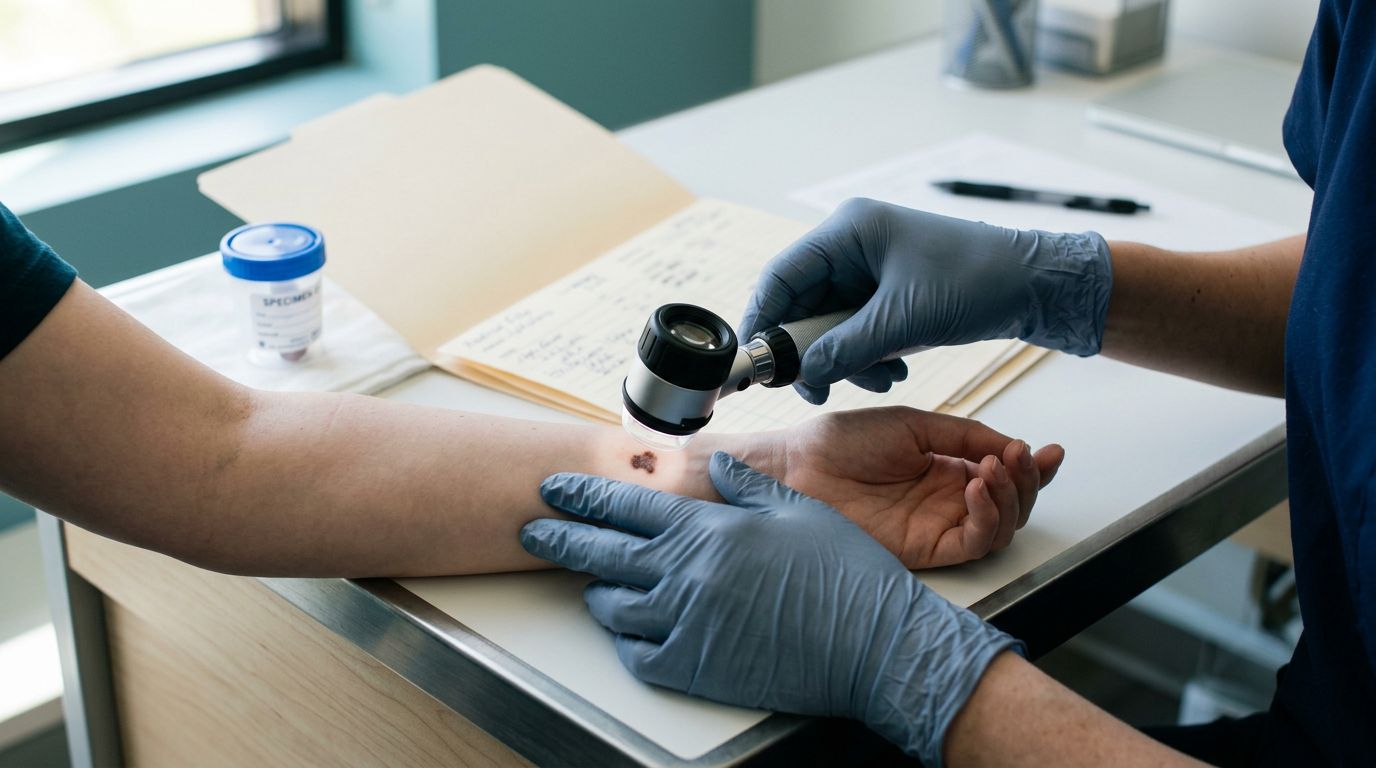
Melanoma can progress from a small skin change to advanced cancer while a patient waits for answers. A melanoma misdiagnosis or skin cancer misdiagnosis may delay early detection, leading to more extensive treatment and lasting harm. A Florida melanoma malpractice claim may be possible if medical negligence caused that additional injury.
Florida law doesn’t treat every missed diagnosis as medical malpractice. A patient must show that the provider departed from the accepted standard of care, that the departure caused harm, and that the claim meets strict pre-suit and filing rules. The medical record often holds the answer, so the first step is understanding what should have happened.
Key Takeaways
- A delayed melanoma diagnosis may support a Florida medical malpractice claim when a provider departed from the applicable standard of care and the delay caused additional harm.
- A melanoma misdiagnosis is not automatically malpractice. Medical experts must evaluate whether a biopsy, referral, pathology review, communication, or follow-up should have occurred sooner.
- Causation requires evidence that a timely diagnosis probably would have led to a better outcome, such as less extensive treatment, improved disease control, or a longer life expectancy.
- Florida medical malpractice claims require pre-suit investigation, a qualified expert opinion, notice of intent, and compliance with a 90-day screening period and strict filing deadlines.
- Patients should promptly gather complete medical records, pathology materials, photographs, treatment records, financial documents, and a timeline before consulting a Florida malpractice lawyer.
How a delayed melanoma diagnosis can become a malpractice case
A skin cancer misdiagnosis can begin with a skin change that doesn’t look dramatic. The CDC’s guidance on skin cancer symptoms identifies new growths, sores that don’t heal, and changes in an existing mole, especially a suspicious mole, as common warning signs.
A skin cancer misdiagnosis isn’t automatically malpractice
A doctor doesn’t guarantee a correct diagnosis in every case. The legal question is whether the provider acted as a reasonably careful healthcare professional would have acted under similar circumstances.
A melanoma misdiagnosis may involve a primary care doctor who failed to refer a patient, dermatologists who monitored a changing lesion without appropriate follow-up, or a pathologist who misinterpreted a biopsy. A healthcare provider may also be responsible for failing to communicate an abnormal result or arrange a timely re-examination.
The appearance of melanoma can vary. A lesion may resemble a benign mole, irritation, or another form of skin cancer, such as basal cell carcinoma or squamous cell carcinoma. A medical expert must review the facts before anyone can determine whether the provider’s judgment fell below the standard of care.
Why amelanotic melanoma is easy to overlook
Amelanotic melanoma lacks the dark brown or black pigment many people associate with melanoma. It may appear pink, red, or flesh-colored. This clinical presentation can make visual examination more difficult, but unusual coloring doesn’t automatically excuse a failure to investigate.
In a melanoma misdiagnosis or skin cancer misdiagnosis case, biopsy timing often becomes central to the review. The National Cancer Institute’s melanoma treatment guidance recommends biopsy, preferably by local excision, for suspicious lesions and warns against shaving them off. Patient symptoms, lesion history, and examination findings inform the review, along with biopsy results, pathology communication, and follow-up instructions. These details help determine whether a biopsy or referral should have occurred sooner.
What a Florida melanoma malpractice claim must prove
Duty and breach of the standard of care
The provider generally owes a duty once a doctor-patient relationship exists. Florida’s medical negligence statute measures liability against the standard of care that applies to similar professionals under similar circumstances. That standard of care helps define whether medical malpractice occurred. The requirements appear in Florida Statute 766.102.
The evidence in a possible skin cancer misdiagnosis case may include the patient’s complaints, photographs, examination notes, referrals, appointment dates, biopsy orders, pathology reports, and follow-up instructions. A dermatologist may need to explain whether the lesion’s appearance and history called for a biopsy. A pathology expert may need to determine whether the tissue was read correctly, including whether melanoma was distinguished from basal cell carcinoma. In some cases, an oncology expert can address the effect of the delay.
Causation must connect the delay to additional harm
Showing that a doctor made a diagnostic error isn’t enough to establish causation. A melanoma misdiagnosis or skin cancer misdiagnosis claim must show that a timely diagnosis would probably have led to a better outcome.
Experts may compare the melanoma’s likely stage at the earlier date with its actual stage when diagnosed. Pathology reports can provide details about tumor thickness, ulceration, margins, and involvement of the lymph nodes. Those facts may help establish whether the melanoma misdiagnosis led to additional surgery, more difficult treatment, fewer treatment options, reduced disease control, economic damages from added care, or an earlier death. Population-level survival rates may offer context about stage and prognosis, but they don’t prove what would have happened to this patient.
In these cases, causation is often the most contested issue. Melanoma can spread even when clinicians act appropriately. A case requires medical evidence that separates the harm caused by the disease from the harm caused by the delay.
Florida pre-suit requirements before filing
Florida requires a documented pre-suit investigation before a claimant files a medical malpractice lawsuit. The process can apply when a melanoma misdiagnosis or skin cancer misdiagnosis is alleged. It covers claims against doctors, hospitals, clinics, pathology groups, and any other healthcare provider.
The expert affidavit for the pre-suit investigation
Under Florida Statute 766.203, the claimant’s attorney must investigate the potential claim. The attorney must determine whether reasonable grounds exist to believe that medical negligence occurred and caused injury.
The attorney generally relies on a written opinion from a qualified medical expert. An expert affidavit, also called a corroborating medical opinion, isn’t a formality. It must address the particular alleged error. That may include a failure to examine or biopsy a lesion, interpret pathology, communicate findings, or follow up.
The appropriate expert depends on the alleged error. Dermatologists, pathologists, surgeons, and oncologists may each have a different role. A general medical opinion may not address every part of a delayed claim.
Notice of intent and the 90-day screening period
After completing the investigation, the claimant must serve a notice of intent to sue on each prospective defendant. Florida Statute 766.106 provides that a lawsuit generally cannot be filed for 90 days after the notice is delivered.
During that period, the provider and insurer can investigate the allegations and respond. The notice must identify the claim and satisfy Florida’s legal requirements. Failing to identify the correct provider or serving defective notice can create serious problems.
Because the pre-suit process takes time, patients shouldn’t wait until the filing deadline is near. A Florida medical malpractice notice of intent requires planning, record review, and expert coordination.
Filing deadlines for delayed melanoma diagnosis claims
The two-year rule and four-year statute of repose
Florida’s medical malpractice statute of limitations generally requires an action within two years after the incident is discovered. The period may run from when it should have been discovered through reasonable diligence, and tolling or statutory exceptions may affect the calculation. A four-year statute of repose generally runs from the incident or omission. Florida Statute 95.11 contains the relevant limitation rules.
The discovery date isn’t always the date of the final melanoma diagnosis. A skin cancer misdiagnosis may emerge through earlier records, a second pathology opinion, or an uncommunicated biopsy report. That timing can affect when the statute of limitations begins, although narrow exceptions may apply for fraud, concealment, or misrepresentation.
Florida’s medical malpractice timeline can involve overlapping deadlines and tolling rules. An attorney should calculate the dates using the actual records, not a general online estimate.
Fatal cases require separate timing analysis
If a delayed diagnosis leads to death, eligible survivors may bring a wrongful death claim through the decedent’s personal representative. The applicable deadline is often measured from the date of death, but required pre-suit steps still apply.
The date of a melanoma misdiagnosis, the date the family learned of possible negligence, and the date of death may all differ. Families should review Florida wrongful death filing deadlines promptly rather than assume one deadline controls every part of the case.
Compensation in a delayed melanoma diagnosis case
Losses tied to a melanoma misdiagnosis may grow when a delay leads to more extensive care.
Economic damages and non-economic damages
Economic damages may include past medical bills, future treatment costs, lost wages, reduced earning capacity, travel expenses, and home assistance. A skin cancer misdiagnosis may increase these losses when advanced melanoma requires additional surgery, oncology care, medication, or monitoring. Medical records and financial documents should document the economic damages.
Non-economic damages may include pain and suffering, mental anguish, scarring, disfigurement, disability, loss of enjoyment of life, and emotional effects from a more serious diagnosis. In a skin cancer misdiagnosis case, these harms may be more severe and lasting.
Settlement value has no reliable fixed amount. It depends on liability evidence, the medical effect of the delay, future care, lost income, insurance coverage, non-economic damages, and other facts.
Florida Statute 766.118’s online text lists limits on damages in certain medical injury cases, with different provisions for practitioners and nonpractitioners. The text lists $500,000 per claimant for practitioner defendants and $750,000 per claimant for nonpractitioner defendants, with separate aggregate provisions when negligence results in death or permanent vegetative state. Review the current statutory damages provisions carefully. Current law and court decisions can affect how these provisions apply. No claimant should rely on a cap figure without current legal analysis.
Wrongful death damages after a fatal delay
When melanoma proves fatal, qualifying survivors may seek damages for lost support and services, loss of companionship and protection, mental pain, and other losses allowed under Florida law. The estate may also have claims for medical expenses, funeral expenses, or losses the decedent experienced before death.
The personal representative usually files the action for the benefit of eligible survivors and the estate. Available damages depend on the survivor’s relationship to the decedent, the family’s financial circumstances, and medical proof linking the delay to the death.
What to gather before speaking with a Florida malpractice lawyer
Use the time before a legal consultation to organize evidence related to a possible skin cancer misdiagnosis:
- Request records from every provider involved, including primary care, dermatology, urgent care, pathology, surgery, and oncology. These records help an attorney and medical expert assess what each person observed, ordered, documented, and communicated.
- Create a timeline showing when the lesion appeared, when symptoms changed, every appointment, biopsy, pathology finding, referral, and diagnosis. This timeline can clarify whether a possible melanoma misdiagnosis involved a missed follow-up, delayed referral, or another concern for review.
- Keep photographs of the lesion, copies of the biopsy results, bills, insurance statements, wage records, future-care documentation, and written communications. These materials help evaluate economic damages and show how the delay affected finances and care.
- Continue recommended cancer treatment and preserve records showing how the delay affected care, work, daily activities, and family responsibilities.
Don’t alter medical records or rely on a provider’s verbal explanation alone. An attorney and medical expert need the complete record, including the full pathology file and original materials when appropriate, to evaluate what happened and whether the delay contributed to harm.
Frequently Asked Questions
Is every delayed melanoma diagnosis medical malpractice?
No. A claim generally requires proof that the provider failed to meet the applicable standard of care and that the failure caused additional injury. An expert must evaluate the lesion, medical records, pathology, timing, and resulting harm.
What evidence may support a Florida melanoma malpractice claim?
Important evidence may include examination notes, photographs, biopsy orders, pathology reports, referrals, communications, appointment dates, and follow-up instructions. Records showing a later stage, more extensive treatment, increased expenses, or reduced treatment options may help address causation and damages.
How long do I have to file a delayed melanoma diagnosis claim in Florida?
Florida generally applies a two-year medical malpractice limitations period and a four-year statute of repose, subject to tolling and narrow statutory exceptions. The correct deadline depends on when the negligence was discovered or should have been discovered and on the specific facts, so prompt legal review is important.
What must happen before filing a Florida malpractice lawsuit?
The claimant generally must complete a pre-suit investigation supported by a qualified medical expert and serve a notice of intent to sue on each prospective defendant. A lawsuit usually cannot be filed until the 90-day screening period after notice has ended.
Protecting your rights after a delayed diagnosis
A melanoma misdiagnosis or other skin cancer misdiagnosis may support a Florida medical malpractice claim when a clinician fails to examine, biopsy, interpret, communicate, or follow up appropriately. The case generally requires medical evidence linking that failure to a specific change in treatment, prognosis, expenses, or quality of life.
Florida’s expert review, pre-suit notice, 90-day screening period, and filing deadlines make prompt evaluation important. When a lesion was overlooked, the record should be reviewed before memories fade and the statute of limitations expires. A lawyer can assess potential legal recourse and whether available compensation may include economic damages and non-economic damages, but recovery depends on the records and qualified medical review.