
Florida Loss of Consortium After a Serious Crash
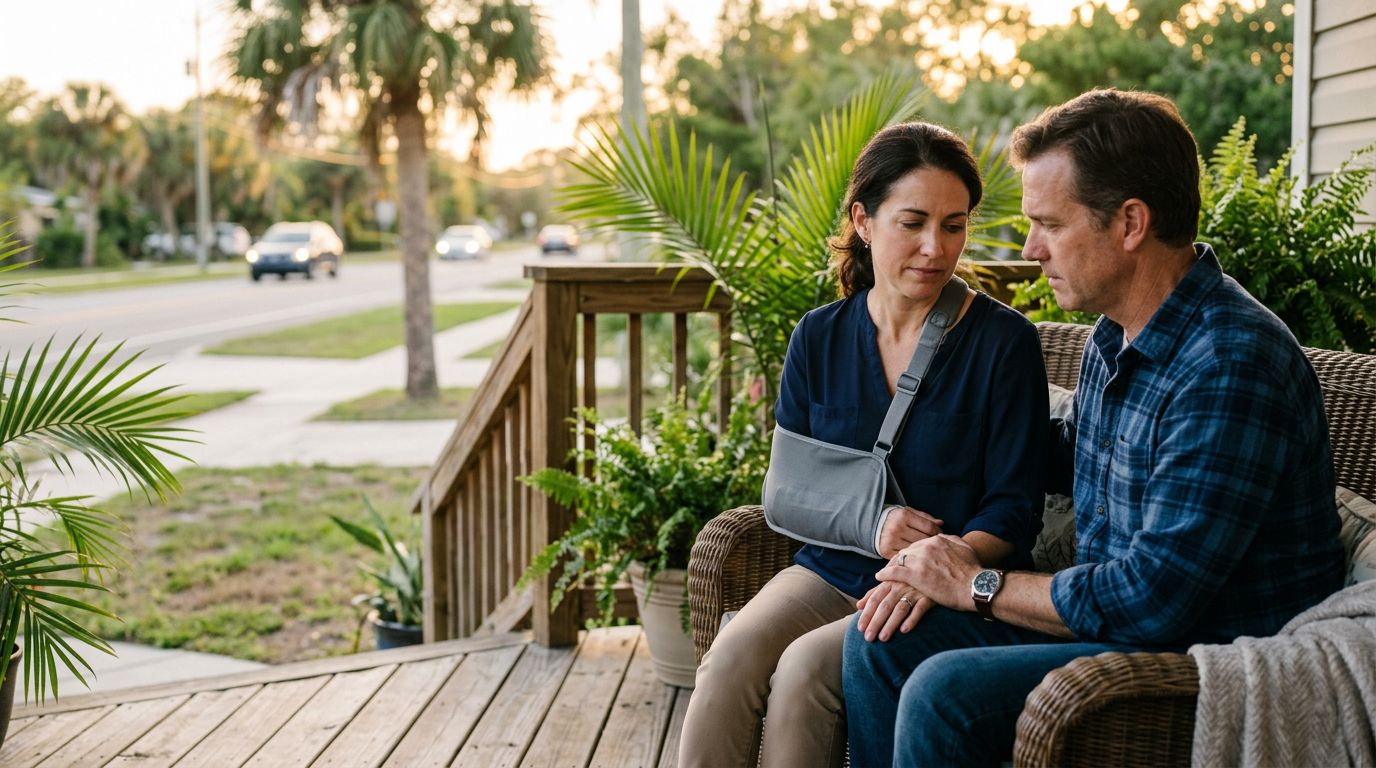
When spouses search for Florida loss consortium, they usually want to know whether an injured person’s partner can recover for changes in their marriage after a serious crash. The answer is often yes, but the claim has strict requirements and depends on the injured spouse’s underlying case.
A loss of consortium claim doesn’t compensate medical bills or vehicle damage. It addresses the harm a serious injury causes to companionship, affection, intimacy, household support, and shared family life. Understanding the rules early can help protect both spouses’ rights.
Florida loss consortium claims: who can file
Florida generally recognizes a loss of consortium claim for the spouse of an injured person. The spouse bringing the claim doesn’t need to have suffered physical injuries in the collision.
A spouse’s claim is tied to the injured spouse’s case
The claim is derivative, which means it depends on the injured spouse proving a valid negligence claim against the at-fault party. The spouse must show that another person’s negligence caused a serious injury and that the injury damaged the marital relationship.
Although the claim belongs to the uninjured spouse, both claims usually arise from the same crash. They may be presented together in one lawsuit or included in the same settlement negotiations.
If the injured spouse has no viable claim against the defendant, the consortium claim generally fails as well. A settlement should also identify and resolve the spouse’s consortium claim instead of releasing only the injured person’s damages.
The relationship must have existed when the injury occurred
Florida law generally requires the parties to be legally married when the injury happened. A fiance, dating partner, friend, or other household member usually can’t bring a common-law consortium claim based on a Florida car crash.
The spouse doesn’t need to prove that the marriage ended. Instead, the case focuses on how the injury changed the relationship and what losses followed.
What makes a crash serious enough for a claim?
Florida’s no-fault system usually sends initial medical and wage-loss claims through Personal Injury Protection, or PIP. PIP doesn’t pay compensation for pain and suffering or loss of consortium.
For an injured person to pursue certain non-economic damages against the at-fault driver, the injury generally must meet Florida’s serious injury threshold. Examples include a permanent injury, significant and permanent loss of an important bodily function, significant and permanent scarring or disfigurement, or death. See this guide to Florida’s serious injury threshold for more information about the medical proof involved.
Medical proof supports the underlying claim
A spouse’s claim cannot succeed based only on a description of marital hardship. The underlying injury must be documented through medical records, diagnostic testing, physician opinions, treatment history, and evidence about the expected future effects.
Spinal cord injuries, traumatic brain injuries, amputations, severe burns, paralysis, and permanent orthopedic injuries can support serious injury claims. However, the diagnosis alone doesn’t decide the case. The medical evidence must connect the crash to the permanent impairment.
For a broader review of insurance and liability issues, see Florida car accident claims.
The spouse must show a real change in the marriage
A Florida loss consortium claim requires evidence that the injury affected actual parts of the marital relationship. The spouse may describe changes in daily life, but the testimony must connect those changes to the crash-related injury.
For example, a spouse may have stopped providing childcare, preparing meals, driving, handling household tasks, or participating in family activities. An injury may also affect communication, emotional support, physical affection, and sexual relations.
The claim doesn’t require a perfect marriage before the crash. It requires a fair comparison between the relationship before the injury and the relationship afterward.
What damages can a spouse recover?
Consortium damages are non-economic. They compensate for personal relationship losses that don’t come with receipts or a fixed market price.
A spouse may seek damages for the loss of:
- Companionship and society
- Affection and emotional support
- Marital intimacy
- Household services and assistance
- Shared activities and family participation
- Comfort, protection, and guidance
The injured spouse may separately pursue medical expenses, lost income, physical pain, disability, and other individual losses. The consortium claim belongs to the other spouse and focuses on the effect of the injury on the marriage.
There is no simple damages formula
Florida doesn’t assign a standard dollar amount to each lost activity or period of reduced intimacy. A jury may consider the seriousness of the injury, the length of the impairment, the spouse’s prognosis, the parties’ age, their daily responsibilities, and the extent of the relationship changes.
A permanent injury that prevents a spouse from walking, working, communicating, or caring for family members may affect the marriage for decades. A temporary injury may support a claim for a shorter period, depending on the medical evidence and recovery.
Ordinary personal-injury consortium claims generally don’t have a fixed statutory cap. Still, the amount must be supported by credible evidence rather than speculation.
Evidence should show life before and after the crash
Strong evidence often comes from both spouses. Their testimony can explain routines, responsibilities, affection, intimacy, social activities, and the injured person’s role in the household before the collision.
Useful records may include:
- Medical and rehabilitation records
- Statements from family members or close friends
- Photos and videos from before and after the crash
- Records showing disability or restricted activities
- Evidence of changed childcare or household responsibilities
- Counseling records, when relevant and available
A written record of major changes can help preserve details that become harder to recall over time. The spouse should also avoid exaggerating or minimizing the injury’s effect. Consistent, specific testimony is more persuasive than broad statements that the marriage is “different.”
A consortium claim often depends on ordinary details, such as who drove the children, prepared meals, managed appointments, or provided emotional support before the injury.
Deadlines and fault can decide recovery
The value of a consortium claim matters only if the claim is filed and supported within Florida’s legal deadlines. Insurance companies may also challenge fault, causation, and the seriousness of the injury.
The filing deadline is generally two years
Florida Statutes section 95.11 generally gives two years to file an action founded on negligence. The Florida two-year negligence deadline can apply to a crash lawsuit and the related consortium claim.
A Florida loss consortium claim is a separate cause of action for timing purposes, even though it depends on the injured spouse’s case. Therefore, the spouse shouldn’t assume that filing or negotiating the injured person’s claim automatically preserves the spouse’s rights.
Exceptions can affect the deadline. Government defendants, unusual facts, and changes in the law may require a separate review. Waiting for the injured spouse to finish treatment can also create a filing problem, so legal advice should begin well before the deadline.
Comparative fault can reduce or eliminate recovery
Florida uses a modified comparative negligence system. Under the current rule, a claimant who is more than 50% at fault for the injury generally can’t recover damages. A claimant who is 50% or less at fault may recover a reduced amount based on the assigned percentage.
Because consortium is derivative, a finding that reduces the injured spouse’s recovery can reduce the spouse’s related claim. If the underlying negligence claim is barred, the consortium claim generally cannot survive against that defendant.
Review Florida’s 51% fault rule to understand how fault allocation can affect a crash case. The defense may rely on traffic evidence, witness statements, vehicle damage, phone records, or accusations that the injured person failed to use reasonable care.
Insurance limits create another practical concern. The injured person’s damages, the spouse’s consortium damages, and claims from other injured people may compete for the available liability coverage. Uninsured or underinsured motorist coverage may also matter, depending on the policies and household circumstances.
Fatal crashes and injured parents follow different rules
A serious crash may cause a death instead of a permanent injury. Florida uses different legal rules in that situation.
A fatal crash uses wrongful death law
When a spouse dies from crash injuries, the surviving spouse generally pursues companionship, protection, support, and mental pain damages through a wrongful death action. The claim is not treated as an ordinary stand-alone consortium case.
The Florida Wrongful Death Act identifies damages that survivors may seek. Wrongful death claims generally have a two-year filing period, although the facts and possible exceptions still require legal review.
Survivors should avoid signing an insurance release before identifying every person’s potential claim. One release can affect the family’s ability to pursue compensation from the available policy limits.
A child’s claim is narrower
Florida provides a separate statutory claim for an unmarried dependent child when negligence causes a parent to suffer significant permanent injury resulting in permanent total disability. The statute allows damages for the permanent loss of the parent’s services, comfort, companionship, and society.
The Florida parent-injury statute is narrower than a spouse’s ordinary consortium claim. A child must meet the statute’s requirements, so the existence of a serious injury alone may not be enough.
Steps to protect a consortium claim
After a crash, both spouses should treat the relationship impact as part of the case record. They should also protect the underlying injury claim.
- Obtain prompt medical care and follow treatment instructions.
- Keep the crash report, photographs, witness information, medical records, and insurance documents.
- Record specific changes in household duties, parenting, transportation, communication, and shared activities.
- Avoid discussing fault or relationship details on social media.
- Don’t sign a release or accept a final settlement before an attorney reviews all claims and insurance coverage.
- Speak with a Florida personal injury attorney before the two-year deadline becomes urgent.
A lawyer can investigate liability, identify available coverage, coordinate the spouses’ claims, and gather evidence about permanent relationship losses. The sooner that review begins, the less likely important records and testimony will be lost.
Protecting both spouses’ rights after a serious crash
A Florida loss consortium claim gives an injured person’s spouse a way to seek compensation for damage to the marriage. The claim usually requires a qualifying injury, proof of negligence, a valid marriage at the time of injury, and evidence showing how the relationship changed.
The deadline is generally two years, and fault findings can affect both the injured spouse’s recovery and the derivative claim. When a crash causes death or permanent total disability to a parent, Florida’s wrongful death and parent-injury statutes may control instead. Early legal review helps the family identify the correct claim before an insurance release or filing deadline closes the door.