
Florida Pool Drowning Claims: Evidence That Matters
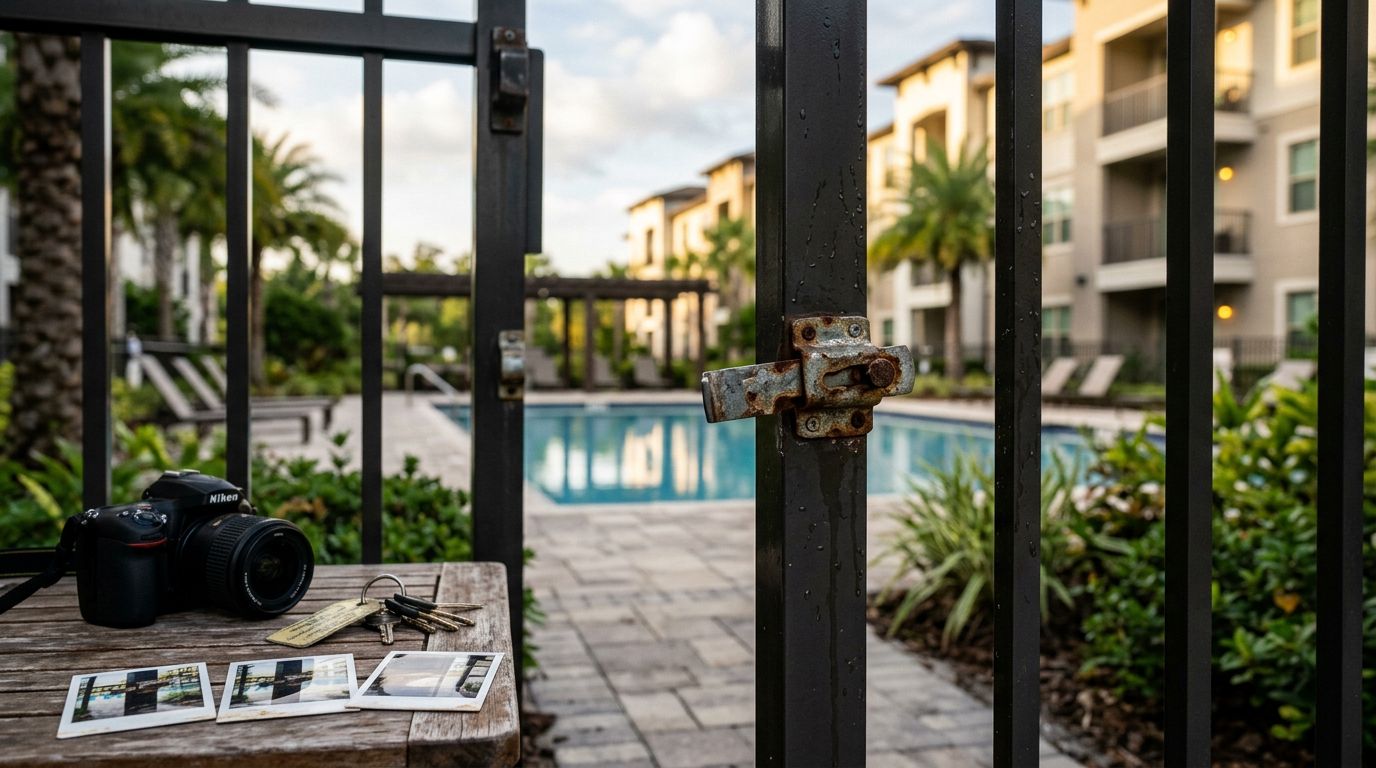
A pool gate can look closed and still fail when a child pushes it, climbs nearby equipment, or reaches an improperly placed latch. When families pursue Florida pool drowning claims after an apartment accident, the central questions often involve access, supervision, and control of the pool area.
Photos, surveillance video, maintenance records, and staffing documents can show whether the drowning resulted from a sudden accident or a preventable safety failure. Evidence can disappear quickly, so families should understand what to preserve before repairs or routine record deletion changes the facts.
What Florida pool drowning claims must prove
A drowning claim involving an apartment pool usually falls under premises liability and negligence law. The injured person or family generally must connect four facts: a legal duty, a safety failure, a causal connection to the drowning, and measurable harm.
The apartment owner may not be the only party involved. A property manager, maintenance company, security contractor, pool service provider, or staffing company may have controlled part of the safety system.
Apartment pools and private pools follow different rules
Florida law generally treats apartment-complex pools as public swimming or bathing facilities because residents and authorized guests use them with the owner’s consent. The applicable requirements often come from Chapter 514’s public pool provisions, along with Florida Department of Health rules and the facility’s permits.
A single-family residential pool is analyzed differently. Chapter 515 addresses residential swimming pool safety features and barriers. That distinction matters because a lawyer should identify the pool’s legal classification before relying on a particular regulation.
The Florida Department of Health’s public pool guidance also provides information about public pool operation and safety requirements. However, a regulation alone doesn’t answer every liability question. The investigation must still show who had control and whether that party failed to act reasonably.
Liability follows control, notice, and causation
An apartment owner may have a duty to inspect the pool area, maintain access controls, follow applicable safety rules, and correct known hazards. A management company may have accepted those duties under its contract. A pool vendor may have been responsible for inspecting or repairing the gate.
The case often turns on notice. Did someone report that the gate failed to latch? Did an employee see residents propping it open? Did an inspection identify a broken closer? Were prior complaints ignored?
Florida premises liability analysis focuses on the property controller’s duty and knowledge. Florida’s premises liability duty of care may help explain why ownership and day-to-day control don’t always belong to the same party.
Gate evidence can reveal how a child reached the water
A pool gate is not safe merely because it exists. Investigators must examine whether the entire barrier system worked as intended on the date of the drowning.
Inspect the gate, barrier, and access route
The condition of the gate should be documented before anyone repairs, replaces, or removes it. Important details include:
- Whether the gate opened outward, away from the pool.
- Whether the gate closed without assistance every time.
- Whether the latch engaged fully or stopped short.
- Whether the release mechanism was too low or reachable through a gap.
- Whether hinges, strike plates, closers, locks, or screws were loose, damaged, rusty, or missing.
- Whether the fence had gaps underneath or between its vertical members.
- Whether furniture, planters, trash containers, air-conditioning equipment, or other objects created a climbing aid.
- Whether a door, window, ladder, or unsecured aboveground-pool step provided another route to the water.
Section 515.29 sets detailed requirements for residential pool barriers, including a four-foot height, restricted openings, and self-closing, self-latching gates. The official residential pool barrier statute is useful when comparing the physical condition of a barrier with Florida’s stated safety standards.
An apartment pool may fall under Chapter 514 instead of Chapter 515. Therefore, a violation of section 515.29 doesn’t automatically establish liability in every apartment case. Still, the statute’s physical details can help investigators identify how a barrier failed. Additional requirements may come from health regulations, permits, local codes, lease rules, or the property’s own policies.
For more detail about preserving this type of proof, see Florida near-drowning pool gate evidence.
Use records to prove notice
A defective latch may have existed for days or weeks before the drowning. Maintenance records can show when the problem began and who had the opportunity to correct it.
Useful records include work orders, inspection checklists, pool contractor invoices, repair requests, resident emails, text messages, violation notices, and records of earlier incidents. The property’s gate-testing schedule also matters. A form that says “gate checked” provides less information than a detailed entry showing the latch failed and someone made a repair.
Contracts can identify responsibility. For example, a management agreement may assign daily inspections to the property manager while a separate vendor handles mechanical repairs. Those documents help establish which party had the power to inspect, warn, repair, or close the pool.
Supervision evidence answers who was watching
A pool can have a working gate and still present a supervision issue. The investigation should examine the facility’s posted rules, advertised services, staffing practices, and actual response procedures.
Lifeguard assumptions can mislead
Florida law doesn’t require a lifeguard at every apartment pool under every circumstance. The answer may depend on the pool’s classification, applicable health requirements, posted notices, permit conditions, and the operator’s own representations.
If the complex advertised lifeguard service, assigned an employee to watch swimmers, or maintained a written supervision policy, those facts can create important evidence. Obtain schedules, time records, training documents, certifications, opening and closing logs, and written rescue procedures.
A facility may also have required an employee to conduct periodic pool checks. In that situation, investigators should compare the required inspection intervals with what actually happened. A missing log entry, unexplained gap, or employee statement may help establish that the policy wasn’t followed.
A sign stating that swimmers use the pool at their own risk doesn’t automatically eliminate an owner’s duty. Its wording, placement, visibility, and relationship to the facility’s conduct all matter.
Video, witnesses, and emergency records build the timeline
Surveillance footage may show when the child entered the pool area, whether the gate closed, how long the child remained in the water, and when anyone noticed the emergency. Request footage from pool cameras, clubhouses, entrances, parking areas, elevators, and access-control systems.
Video systems often overwrite files on a short cycle. A written preservation request should identify the incident date, approximate time, all potentially relevant cameras, and the need to preserve footage in its original format.
Witnesses may describe a propped-open gate, a missing attendant, a prior complaint, or delays in rescue. Their statements should focus on what they personally saw or heard. Speculation about events outside their view can weaken the record.
Obtain 911 recordings, dispatch notes, fire-rescue reports, EMS records, hospital records, and incident reports. These documents can establish the timing of discovery, CPR, rescue equipment use, transport, and medical treatment.
A rescue timeline can be as important as the gate itself. Video and 911 records may show whether a delayed response increased the injury.
Preserve evidence before the scene changes
Apartment owners and vendors may repair a latch, replace a fence section, clean the deck, or change pool access procedures after a drowning. Those actions may improve safety, but they can also remove evidence of the original condition.
Send a written preservation request quickly
A preservation letter should go to the apartment owner, property manager, insurer, pool vendor, security company, and any other party that may possess records. It should request preservation of:
- Surveillance and access-control video.
- Gate, fence, lock, and pool equipment.
- Maintenance and inspection records.
- Employee schedules, training records, and incident reports.
- Resident complaints and electronic communications.
- Pool policies, permits, inspection results, and closure records.
- 911, EMS, and emergency-response documentation.
The request should cover records created before and after the incident. Post-incident repairs, internal messages, and revised policies may show what the property believed needed correction.
Families shouldn’t dismantle the gate or conduct their own repairs. A lawyer or qualified investigator can arrange inspection, measurements, photographs, testing, and preservation in a way that protects the evidence.
Create an independent record of the scene
Take photographs and video from both sides of the gate. Include the latch, hinges, fence openings, ground clearance, nearby objects, signs, lighting, pool deck, doors, windows, and the route between the residence and pool.
Record measurements with a ruler or tape when possible. Note whether the gate was open or closed, whether it latched automatically, and whether any object could help a child climb. Preserve original files and record when, where, and by whom each image was taken.
Also document weather, rain, darkness, power outages, and lighting conditions. Medical records should include emergency care, hospitalization, rehabilitation, neurological treatment, and any continuing needs after a nonfatal drowning.
Deadlines and damages require prompt legal review
Two-year deadlines need careful calculation
For negligence claims accruing on or after March 24, 2023, Florida’s general limitations period is generally two years. The deadline appears in Florida Statutes section 95.11.
A wrongful death action generally must be filed within two years after the date of death. Different rules may apply depending on the defendant, claim type, date of injury, and statutory exceptions. A claim involving a government entity can also have separate notice requirements.
The deadline for a surviving victim’s personal injury claim isn’t always identical to the deadline for a later wrongful death action. Families should have a Florida attorney review the facts promptly instead of relying on a general date found online.
Potential parties and losses vary by case
The responsible party may be the property owner, management company, maintenance contractor, pool service company, security provider, or another entity with control over the pool area. Insurance coverage and contracts can affect which parties must receive notice.
If the drowning was fatal, Florida’s Wrongful Death Act controls the types of damages that may be available to the estate and survivors. Section 768.21 addresses wrongful death damages, including losses that may depend on the survivor’s relationship with the deceased.
A nonfatal drowning may involve emergency treatment, hospitalization, rehabilitation, lost income, pain, and future medical care. Fatal cases may also involve funeral expenses, lost support, and other statutory losses. The facts and the victim’s condition determine the proper claims.
Conclusion
Strong Florida pool drowning claims usually depend on a clear timeline and preserved evidence. The gate, latch, barrier, surveillance footage, inspection records, supervision policies, and emergency reports may show who controlled the pool and whether a preventable failure caused the drowning.
Families should preserve the scene, avoid signing releases before legal review, and seek advice before evidence disappears. A careful investigation can turn a confusing apartment-pool accident into a documented account of access, notice, supervision, and responsibility.