
Florida Hit-and-Run Claims When the Driver Vanishes
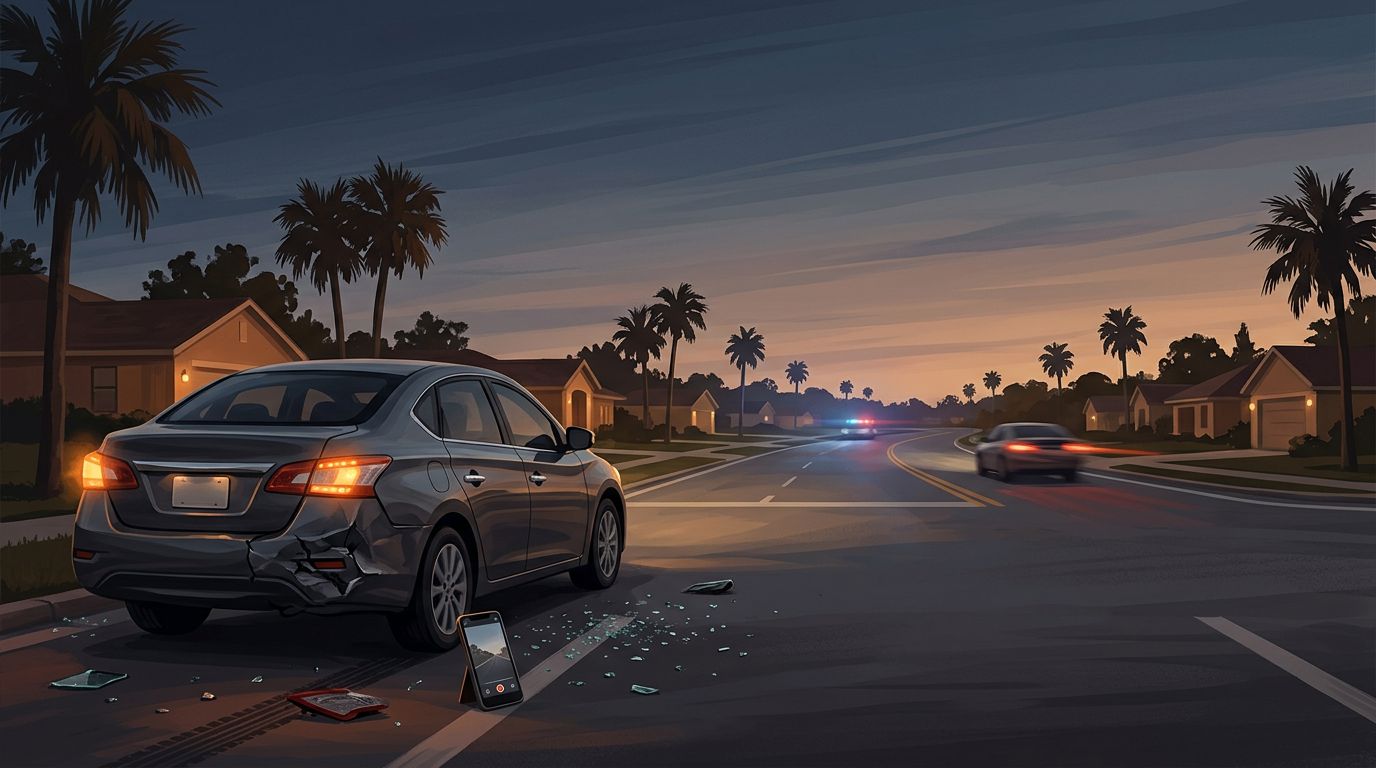
When the other driver disappears, your case doesn’t disappear with them. Florida hit-and-run claims often depend on your own insurance policy, the crash report, and evidence collected before video or vehicle traces vanish.
Florida law may provide personal injury protection (PIP) and uninsured motorist (UM) benefits, but each covers a different part of your losses. Report the crash, seek medical care, preserve evidence, and review your policy as soon as possible. Start with the coverage that may apply and the proof that makes your claim credible.
How Florida hit-and-run claims work when the driver is unknown
An unidentified driver creates two separate questions: can you prove another vehicle caused the crash, and what insurance can pay? Florida’s no-fault system usually starts with your own PIP policy. If you purchased UM coverage, your insurer may also handle a bodily injury claim connected to the fleeing driver.
Florida Statute 627.727 governs uninsured and underinsured motorist coverage. The policy endorsement still matters because it may contain notice, cooperation, and proof requirements.
UM coverage may fill the missing driver’s role
UM is a first-party claim against your own insurance company. It may cover losses caused by an uninsured vehicle, including some hit-and-run crashes where the driver is never identified.
Depending on the policy and facts, UM benefits may address medical expenses, lost income, pain and suffering, and lasting impairment. UM generally covers bodily injury rather than ordinary vehicle repair costs. Collision coverage or uninsured motorist property damage coverage may address damage to your car.
Don’t assume UM coverage was included. Review the declarations page, any UM selection or rejection form, and all policy endorsements. Limits may be stacked or nonstacked. A household member’s policy may also affect available benefits. Avard Law provides information about Florida hit-and-run claims and UM coverage.
Physical contact may matter in phantom vehicle cases
Some policies require physical contact with the unidentified vehicle or your vehicle before treating a crash as a covered hit-and-run UM loss. This issue often arises when a car cuts you off, forcing you into another lane, a barrier, or another vehicle without making contact.
Florida law and the policy language must be read together. Contact isn’t always required under every policy, but it can become a major coverage dispute. Paint transfer, broken vehicle parts, debris, witnesses, and video can help prove what happened.
A crash report supports the claim, but the insurer may still ask how you know an unknown vehicle caused the impact.
Report the crash before evidence disappears
A prompt report gives investigators and insurers a consistent account of the event. It also creates a record identifying the other vehicle as unknown at the time of the crash.
Call law enforcement and describe the hit-and-run
Under Florida Statute 316.065, a crash involving an injury, death, or apparent property damage of at least $500 requires immediate notification to law enforcement.
Call 911 from the scene when possible. Tell the dispatcher that the other driver left, then provide the vehicle’s description, direction of travel, license plate details, and any identifying features. Don’t guess. If you aren’t sure about the color, model, or plate, say so.
When police investigate, Florida law governs the written crash report process. If no officer investigates, Florida Statute 316.066 may require a written report within 10 days. The Florida Highway Safety and Motor Vehicles crash report page explains how to obtain an official report.
Preserve scene proof immediately
Video systems overwrite footage quickly. Ask nearby businesses, apartment managers, homeowners, and transportation authorities to preserve recordings from the crash time. A lawyer may later send formal preservation requests or subpoenas.
Save photographs of the roadway, vehicle damage, debris, skid marks, traffic signs, lighting, and surrounding businesses. Also record:
- Witness names, phone numbers, and descriptions of what each person saw.
- The unknown vehicle’s direction, lane position, make, model, color, and visible damage.
- Dashcam, phone, doorbell, or security footage.
- Medical records, repair estimates, towing documents, and the 911 call information.
Avoid repairing or washing the vehicle until you photograph the damage. If the police collect physical evidence, request the report or property receipt.
Deadlines that can affect Florida hit-and-run claims
A missing driver doesn’t remove the deadlines connected to your own benefits or a later injury lawsuit. Some deadlines begin within days, so waiting for an investigation can put coverage at risk.
PIP has a 14-day treatment deadline
Florida PIP coverage is governed by Florida Statute 627.736. To preserve PIP eligibility, an injured person generally must receive initial medical services within 14 days after the crash.
PIP commonly pays a portion of covered medical expenses and lost income, subject to statutory limits and policy conditions. The available amount can depend on whether a medical provider diagnoses an emergency medical condition. A day-15 appointment may create a serious PIP problem, so seek medical evaluation promptly even when symptoms seem manageable.
Notify your carrier about the injury and request the forms needed to open a PIP claim. Keep copies of bills, explanations of benefits, prescriptions, referrals, and work restrictions.
Injury lawsuits generally have a two-year limit
For negligence claims accruing on or after March 24, 2023, Florida’s general personal injury limitation period is two years under Florida Statute 95.11. That period may apply if investigators later identify the driver and you pursue a lawsuit.
This deadline is different from a UM claim against your own insurer. Insurance policies may impose prompt notice requirements, cooperation duties, and deadlines for filing suit against the carrier. Ask an attorney to review the policy early, especially when the driver remains unidentified.
Build proof when no driver is available
The insurer won’t evaluate only the severity of your injuries. It will also examine whether another vehicle caused the crash and whether the medical treatment connects to that event.
Show that another vehicle caused the crash
Direct contact creates useful evidence, such as paint transfer, a damaged mirror, broken lights, or matching debris. Photograph those details before repairs begin and preserve damaged parts when possible.
A phantom vehicle claim requires additional proof because the other car may never touch yours. Independent witnesses, traffic video, dashcam footage, skid marks, roadway debris, vehicle positions, and the immediate police report can establish the vehicle’s presence and movement. Avard Law discusses proof in Florida phantom vehicle crash claims.
Consistency also matters. Give the same basic account to the officer, medical providers, and insurer. If you later remember a detail, explain when you remembered it. Avoid adding facts to make the story sound more certain than it is.
Connect the crash to measurable losses
Medical records should identify your symptoms, affected body parts, diagnosis, treatment, and the reported cause of the injury. Gaps in care can give an insurer an argument that the condition came from another event.
Keep every bill and insurance statement. Save mileage logs, prescription receipts, wage records, employer notes, work restrictions, photographs of visible injuries, and repair estimates. Serious injuries may also involve future treatment, reduced earning capacity, permanent limitations, or scarring.
What to do after filing Florida hit-and-run claims
Opening a claim is only the first step. Your insurer may request a recorded statement, medical authorization, crash report, vehicle inspection, and information about other insurance policies.
Notify your insurer without guessing
Report the crash to every potentially relevant insurer as soon as possible, including your auto carrier and any policy covering a household vehicle. Give the date, location, injuries, property damage, and known facts about the unknown vehicle.
Ask for the claim number, policy copy, UM limits, and written explanation of any coverage decision. Cooperate with reasonable requests, but don’t speculate about speed, distance, vehicle details, or medical history. Review a recorded statement with an attorney when the injuries are serious or the carrier questions whether another vehicle caused the collision.
Don’t sign a broad release before your treatment and losses are understood. A settlement may affect future UM benefits, PIP disputes, or claims under another policy.
When legal help is useful
An attorney can help when the vehicle never made contact, surveillance footage must be obtained, witnesses are difficult to locate, or the insurer disputes UM coverage. Legal review is also useful when injuries require ongoing care, multiple policies may provide stacked benefits, or lost income forms a significant part of the claim.
A Florida personal injury lawyer can compare the policy language with the crash evidence, communicate with the carrier, calculate current and future losses, and pursue the claim if negotiations fail. Bring the policy, crash report, photographs, medical records, bills, witness information, and insurer correspondence to the consultation.
Conclusion
A driver who leaves the scene can make a claim harder, but the available evidence and insurance coverage still matter. PIP may provide the first benefits for medical care, while UM coverage may address bodily injury caused by the unidentified motorist.
Report the crash promptly, obtain treatment within the PIP deadline, preserve video and physical evidence, and review every applicable policy. Strong Florida hit-and-run claims begin with an accurate account and a well-documented link between the unknown vehicle, the crash, and your losses.