
Florida Motorcycle Passenger Injury Claims After a Crash
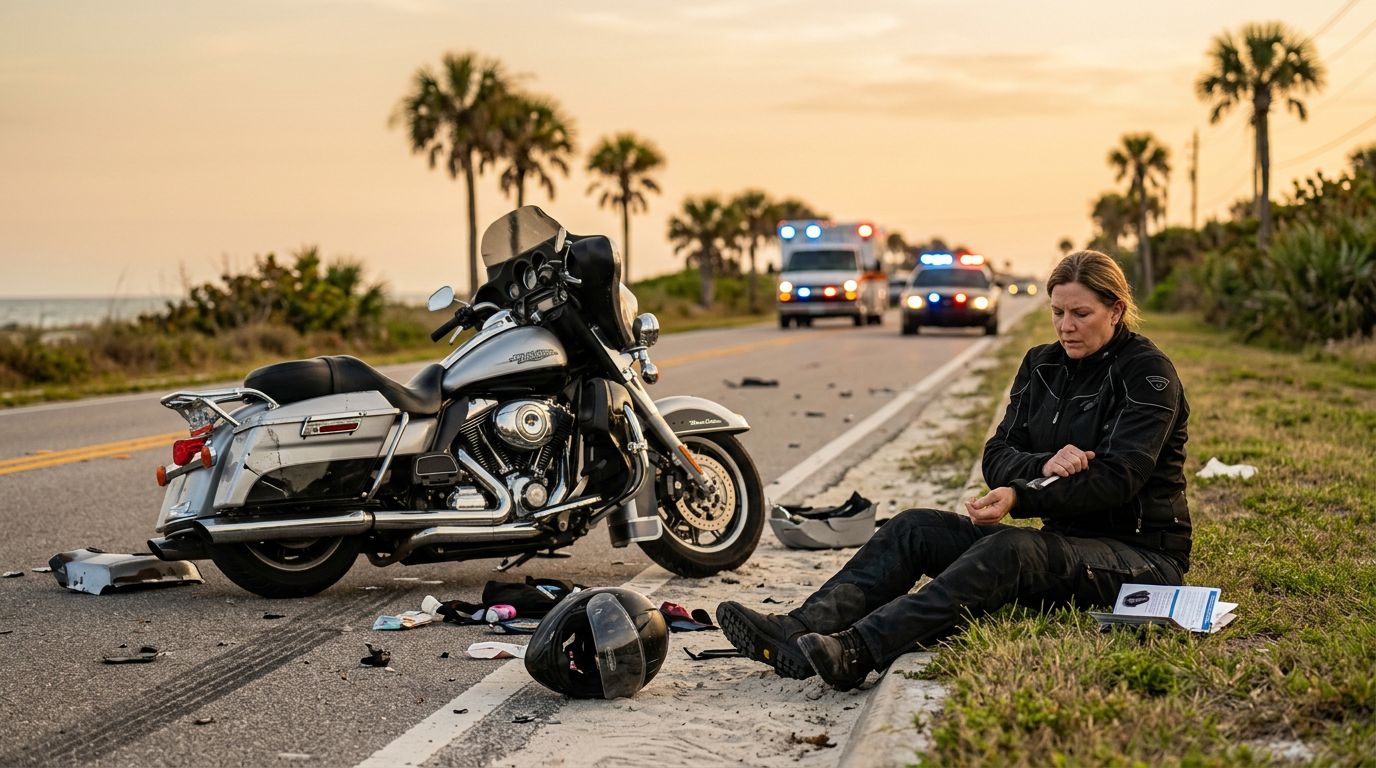
A motorcycle passenger can suffer severe injuries in a crash without touching the handlebars or causing the collision. Motorcycle passenger injury claims often involve different insurance rules than ordinary car accident claims, especially because motorcycles generally fall outside Florida’s no-fault PIP system.
You may have a claim against the driver who caused the wreck, the motorcycle operator, or another responsible party. However, insurance coverage, comparative fault, medical documentation, and Florida’s filing deadline can affect how much compensation you recover. Understanding these issues early can protect your rights.
Why motorcycle passenger injury claims work differently in Florida
Passengers often assume the motorcycle operator’s insurance will automatically pay their medical bills. That assumption can create problems when the policy has limited coverage or excludes certain losses.
The passenger has a separate legal claim
A passenger’s claim is separate from the motorcycle driver’s claim. You may pursue compensation even when the operator was injured in the same collision, and you don’t lose your rights merely because you accepted a ride.
For example, a passenger may bring a claim against a driver who made an unsafe left turn, changed lanes into the motorcycle, followed too closely, or ran a traffic signal. The passenger may also have a claim against the motorcycle operator if careless operation contributed to the injuries.
You can review more about injured motorcycle passenger rights in Florida when evaluating the facts of your crash.
The claim usually follows negligence law
Florida motorcycle passenger injury claims typically proceed as negligence claims rather than ordinary no-fault claims. You must generally show that another person owed you a duty of reasonable care, violated that duty, and caused your injuries.
A passenger doesn’t need to prove that the motorcycle itself was defective or that the rider caused the crash. The evidence may instead show that another motorist failed to see the motorcycle, misjudged its speed, or violated a traffic law.
Florida’s PIP statute provides benefits for certain people injured while occupying covered motor vehicles. Because motorcycles generally are outside that no-fault framework, a passenger may need to pursue liability insurance and other coverage sources directly.
Who may be responsible for the passenger’s injuries
Identifying every potentially responsible party matters. Insurance companies often focus on one version of the crash, even when several people or businesses may share responsibility.
The driver who caused the collision
The most common defendant is the driver of a car or truck. A driver can be negligent by speeding, texting, driving while impaired, failing to yield, opening a door into traffic, or making a turn without checking for motorcycles.
Evidence can include the crash report, traffic-camera footage, vehicle damage, witness statements, cellphone records, and photographs from the scene. In some cases, accident reconstruction can help establish vehicle positions, speed, visibility, and the timing of the impact.
The driver’s bodily injury liability policy may pay damages if the evidence supports your claim. However, the policy limit may be lower than the full value of your medical care and long-term losses.
The motorcycle operator, owner, or another party
The motorcycle operator may share fault if they sped, drove while impaired, followed too closely, or operated the motorcycle carelessly. A motorcycle owner may also face liability if they knowingly allowed an inexperienced or unsafe driver to use the motorcycle.
Other possible claims can involve a defective motorcycle part, poor maintenance, or a dangerous roadway. These cases require proof that the defect, maintenance failure, or roadway condition caused or contributed to the crash.
You don’t need to decide every possible legal theory before seeking help. Prompt investigation can identify evidence that may disappear, including surveillance footage and witness memories.
Insurance and medical bills after a motorcycle crash
Medical treatment often begins before anyone determines fault. A passenger may need emergency care, surgery, physical therapy, medication, or follow-up visits while the insurance claim remains unresolved.
Why PIP often doesn’t solve the problem
Florida’s PIP system usually doesn’t provide a simple payment source for injuries suffered on a motorcycle. The motorcycle itself generally doesn’t carry ordinary PIP coverage, so the passenger shouldn’t assume that the operator’s auto policy will pay medical bills first.
A separate auto policy held by the passenger or a resident relative may require review, but coverage depends on the policy language and statutory definitions. Owning a car doesn’t automatically mean PIP covers every injury suffered on a motorcycle.
The injury claim may instead depend on health insurance, medical-payments coverage, the at-fault driver’s bodily injury policy, or uninsured/underinsured motorist coverage. These sources can have different rules, limits, liens, and reimbursement rights.
For more detail about medical bills after a Florida motorcycle crash, consider how treatment costs will be handled before accepting a settlement.
Liability and uninsured motorist coverage
The at-fault driver’s bodily injury policy is often the main source of compensation. It may cover medical expenses, lost income, pain and suffering, and other legally provable damages.
If the driver has no insurance or carries too little coverage, your own uninsured/underinsured motorist policy may help. A resident household member’s policy may also matter, depending on the policy terms. UM coverage isn’t automatic in every situation, and exclusions can affect whether it applies.
Health insurance can help pay treatment costs while the claim proceeds. Still, the health insurer may assert a lien or reimbursement claim after settlement. Before resolving the case, calculate the bills, future care, outstanding balances, and any repayment rights.
How Florida fault rules can change recovery
A passenger may feel certain that another driver caused the crash. The insurer may still argue that the motorcycle operator or passenger contributed to the injuries.
A passenger can have a fault dispute
Florida uses modified comparative negligence. Under section 768.81 of the Florida Statutes, a claimant’s damages can decrease according to the claimant’s percentage of fault. A person found more than 50 percent responsible for their own harm generally cannot recover damages.
Passenger fault is usually less common than driver fault, but it can arise. An insurer might argue that the passenger distracted the operator, rode in an unsafe position, failed to use available safety equipment, or knowingly used a motorcycle that wasn’t designed to carry a passenger.
The insurer must support its position with evidence. A passenger isn’t responsible simply because they were present, accepted a ride, or didn’t control the motorcycle.
Helmet and passenger equipment allegations
Florida law requires motorcycle riders and passengers under 21 to wear protective headgear. A person over 21 may ride without a helmet only when the required qualifying medical-benefits coverage is in place. Eye protection requirements also apply.
The Florida motorcycle helmet statute should be reviewed when helmet use is part of the dispute. A violation doesn’t automatically eliminate a claim, but an insurer may argue that it increased the severity of a head injury.
A motorcycle carrying a passenger must also have appropriate passenger equipment. Florida’s passenger footrest requirements can matter if the passenger fell because the motorcycle lacked proper footrests or seating. Preserve photographs of the motorcycle before repairs or modifications.
Damages a Florida motorcycle passenger may recover
The value of a claim depends on the injuries, available coverage, responsibility for the crash, and quality of the evidence. A quick settlement may look helpful while treatment is still incomplete, but it can leave future expenses unpaid.
Economic losses need documentation
Economic damages can include reasonable and necessary medical expenses, hospital care, surgery, rehabilitation, prescriptions, transportation to appointments, and future treatment. Severe injuries may require years of therapy, additional procedures, mobility equipment, or home assistance.
You may also seek compensation for lost wages and reduced earning capacity. A passenger who cannot return to the same job may need vocational evidence, employer records, tax documents, or testimony about future work limitations.
Keep records of bills, mileage, missed work, damaged clothing, medical equipment, and other out-of-pocket costs. Medical expenses paid by health insurance still count as part of the claim, although reimbursement rights may affect the final distribution.
Pain, impairment, and future harm
Noneconomic damages can address physical pain, emotional distress, scarring, disfigurement, inconvenience, loss of mobility, and reduced ability to enjoy ordinary activities. A spinal injury, traumatic brain injury, fracture, nerve injury, or permanent scar can affect daily life long after the emergency treatment ends.
Medical records should describe more than a diagnosis. They should show how the injury affects sleep, work, household tasks, relationships, movement, and personal care. A treating physician’s opinion about permanent restrictions or future treatment can carry significant weight.
If the passenger dies, surviving family members may have a wrongful death claim. Those cases involve different damages and procedures, so families should obtain legal advice promptly.
Evidence that supports a passenger injury claim
Insurance adjusters assess liability and damages through documents, statements, photographs, and medical records. Evidence gathered weeks later may not answer basic questions about how the crash occurred.
Preserve crash evidence
Report the collision and seek medical care promptly. If you’re physically able, photograph the road, traffic controls, vehicle positions, motorcycle damage, visible injuries, helmet, clothing, and passenger footrests.
Obtain the crash report and identify witnesses. Ask nearby businesses or homes whether cameras recorded the collision, because video systems may overwrite footage quickly. Don’t discard or repair damaged safety gear until it has been documented.
Avoid guessing when speaking with an insurer. State what you know, but don’t speculate about speed, fault, or whether you are fully recovered. A recorded statement can later become part of the insurer’s evaluation.
Information about video evidence in motorcycle accident claims can help you understand why early preservation matters.
Build medical proof
Follow the treatment plan and tell each provider that the condition resulted from the motorcycle crash. Explain new symptoms, worsening pain, sleep problems, memory changes, and limits on movement or work.
Gaps in care can give an insurer an argument that the injury healed, came from another event, or wasn’t as serious as claimed. If you cannot attend an appointment, document the reason and reschedule as soon as possible.
Maintain a simple claim file with medical records, bills, wage information, photographs, correspondence, and a daily symptom journal. Notes about activities you can no longer perform can help show the crash’s effect on your life.
Deadlines and the right time to get legal help
A valid injury claim can fail if the lawsuit is filed too late. Insurance negotiations don’t reliably protect the filing deadline.
The two-year filing period
For most negligence claims, Florida Statutes section 95.11 provides a two-year limitations period. The crash date, type of claim, defendant, and any statutory exception can affect the calculation.
Don’t wait until treatment ends before asking about the deadline. A settlement discussion, unanswered demand letter, or adjuster’s promise to review the claim usually isn’t a substitute for filing a lawsuit.
Government defendants, wrongful death claims, minors, and other special circumstances may involve different rules. A Florida attorney can calculate the deadline based on the actual facts.
When legal counsel becomes especially important
Consider obtaining legal advice before giving a recorded statement or signing a release if you have serious injuries, disputed fault, multiple insurance policies, no clear liability coverage, or permanent limitations.
An attorney can investigate the crash, identify available coverage, organize medical proof, address liens, and negotiate without treating an early offer as the final value of your claim. Legal help is also important when the motorcycle operator is a friend or relative, because personal relationships can make insurance decisions harder.
Conclusion
Florida motorcycle passenger injury claims usually depend on negligence proof, available liability or UM coverage, medical documentation, and the passenger’s share of fault. The motorcycle’s lack of ordinary PIP coverage can make payment for treatment more complicated, so reviewing every possible policy matters.
Preserve evidence, follow medical advice, avoid premature settlement, and protect the two-year filing deadline. A passenger may have a strong claim even without controlling the motorcycle, and the right recovery often begins with proving what happened and documenting what the injuries changed.