
Florida Surgical Fire Claims After an Operating Room Burn
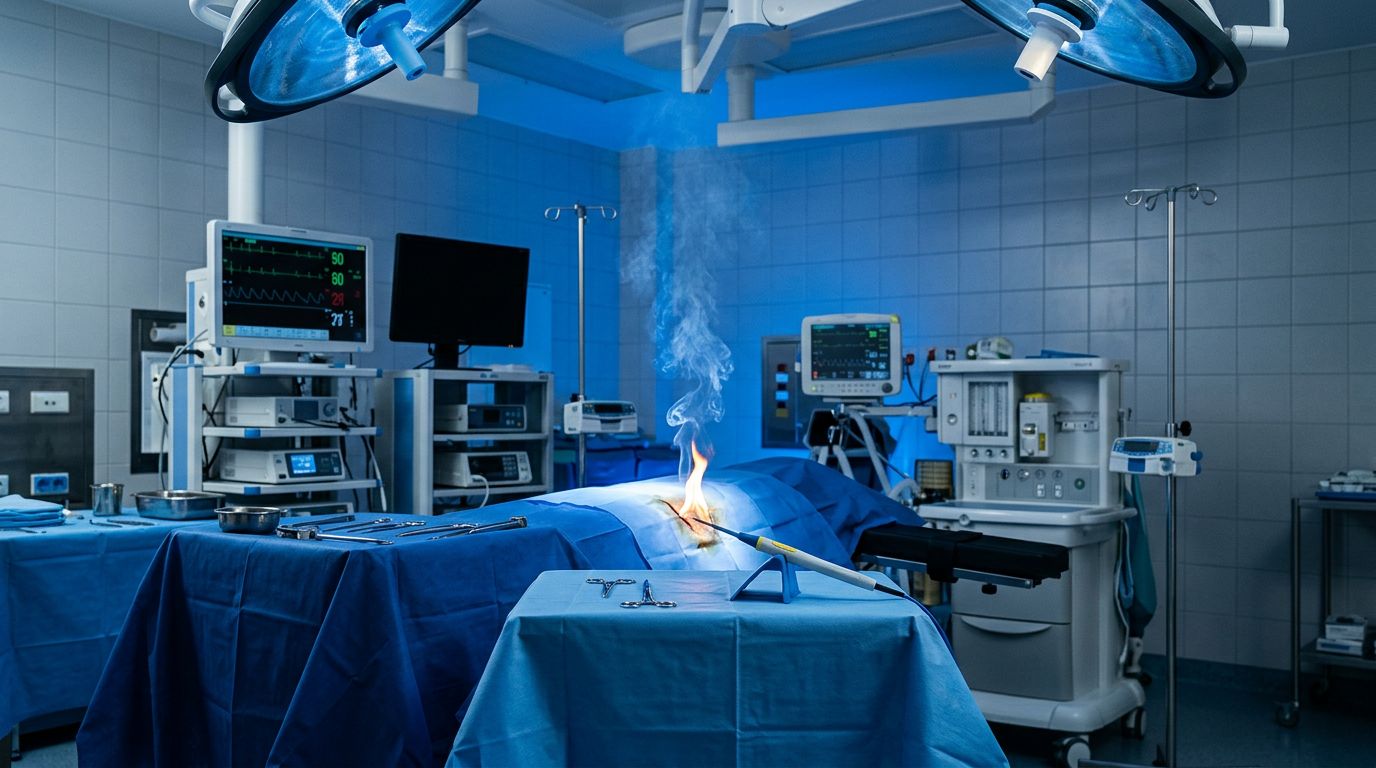
A surgical fire can start in less than a second, yet a burn injury may require years of treatment. Florida surgical fire claims often involve facial burns, airway damage, scarring, emotional trauma, and additional surgeries after a procedure that should have been carefully controlled.
These fires happen when a heat-producing device meets fuel in an oxygen-enriched atmosphere. The legal question is whether someone failed to follow the accepted standard of care and whether that failure caused the patient’s injuries. Understanding the surgical fire triangle, fire risk assessment, responsible parties, evidence, and Florida filing deadlines is the first step.
What Causes a Surgical Fire in the Operating Room?
Operating room fires require three conditions at the same time. Medical professionals call this combination the surgical fire triangle.
The fire triangle
The first element is an ignition source. Common examples include an electrosurgical unit, cautery device, laser, fiberoptic light, drill, saw, or defibrillator.
The second element is an oxidizer, usually supplemental oxygen or nitrous oxide. Oxygen doesn’t burn by itself, but it helps other materials ignite faster and burn more intensely. An open oxygen source near the patient’s face, neck, or chest can create an oxygen-enriched atmosphere. Oxygen near the airway can also create an airway fire when it contacts an active heat source.
The third element is fuel. Alcohol-based skin preparation, surgical drapes, gauze, sponges, hair, surgical gowns, and other materials can catch fire when vapors or liquid remain near an active device or heat source.
A fire can occur when all three elements are present, even if the team never sees a visible pool of liquid. Alcohol vapors may collect beneath drapes or around skin folds.
How common are operating room fires?
Surgical fires are rare, but no single database provides a complete annual count. Reporting practices vary, and some events may be recorded as burns, equipment failures, or complications rather than surgical fires.
Frequently cited estimates place the national number near 650 fires per year and identify 125 reported fires in Florida over a five-year period. Those figures are estimates, not a complete census. A 2023 analysis of U.S. surgical fires from 2000 through 2020 also shows why researchers study reports across many years.
Rarity doesn’t make these events unavoidable. A fire may point to failures in oxygen management, skin preparation, communication, equipment handling, or emergency response.
Prevention Steps That Matter Before Ignition
Fire prevention begins before the incision. The team must identify the surgical fire triangle during planning, then remove or control at least one of its elements.
Manage oxygen near the surgical site
Open oxygen delivery, especially of 100% oxygen, should be avoided when clinically possible during surgery above the xiphoid process, the lower portion of the breastbone. The risk is especially serious during procedures involving the face, head, neck, chest, or airway.
Anesthesia professionals may adjust oxygen delivery, pause supplemental oxygen before activating the device, or use a secured airway when clinically appropriate. A National Institutes of Health review of surgical-fire prevention explains why this practice creates special risks above the upper chest.
The patient’s medical condition still controls anesthesia decisions. A patient who needs oxygen may not be able to stop receiving it. That situation requires additional safeguards and direct communication between the surgeon and anesthesia professional.
Allow alcohol-based prep to dry
Alcohol-based skin preparation can fuel a fire when it pools under the patient or remains wet beneath drapes. The FDA advises allowing at least three minutes for most alcohol-based products to dry, while recognizing that hair, skin folds, and larger treatment areas may require more time.
Staff should prevent pooling, remove alcohol-soaked materials, and confirm that the skin is dry before draping. The FDA’s surgical-fire education materials address drying time, oxygen, and other preventable risks.
A team may need to use towels or absorbent materials to keep prep solution away from the patient’s body and equipment. Surgical drapes should not trap wet solution close to a cautery device or laser.
Complete a fire risk assessment during the time-out
The surgical time out should address three practical questions:
- Is a flammable prep solution or other flammable material present?
- Is open oxygen or nitrous oxide being used, or is the procedure near the head, neck, chest, or airway?
- Will the team use an ignition source such as cautery, a laser, fiberoptic light, or a drill?
When the answers identify a high-risk combination, the team should document the checklist and fire risk assessment before starting. The team should then follow documented prevention protocols and discuss added precautions. Some facilities use a formal surgical fire risk score, including tools based on the Silverstein scale.
The surgical time out gives every team member a chance to raise a concern. Speaking up during this process is an important patient safety measure. A nurse, anesthetist, or surgical technician may recognize that prep solution remains wet or oxygen is flowing near the planned device.
Florida Surgical Fire Claims and the Medical Malpractice Test
A serious burn injury after surgery doesn’t automatically prove negligence. Surgery carries known risks, and a claim must connect the injury to a preventable violation of the standard of care.
What a patient must prove
A Florida medical malpractice claim generally requires proof of four points:
- A provider owed the patient a professional duty.
- The provider breached the applicable standard of care.
- The breach caused the surgical fire or made the resulting injury worse.
- The patient suffered legally recognized damages.
For example, the evidence may show that a team used cautery near wet alcohol prep while open oxygen flowed across the patient’s face. The medical opinion must explain why the conduct fell below accepted practice and how it caused the burn.
The analysis may involve several decisions made seconds apart. Who approved the oxygen delivery? Who confirmed the prep was dry? Who controlled the electrosurgical unit? Who saw the warning sign and had authority to stop the procedure?
Patients can review the elements of a claim in this Florida medical malpractice law guide.
A bad outcome isn’t enough
A fire may occur despite reasonable precautions, especially when a patient has unusual anatomy, urgent medical needs, or a procedure with special risks. The injury itself doesn’t establish negligence.
However, a fire involving wet alcohol prep, an unrecognized oxygen hazard, poor communication, or an improperly maintained device may support a malpractice case. Expert review must assess those facts, explain what the surgical team should have done, and connect that conduct to the injury.
Who May Be Liable After an Operating Room Ignition?
Responsibility often extends beyond the person holding the cautery device. Florida surgical fire claims require an examination of the entire chain of care.
Surgeons and anesthesia professionals
A surgeon may face liability for using an ignition source without addressing a known fuel or oxygen hazard. The surgeon may also fail to coordinate with anesthesia before beginning work near the airway or face.
An anesthesiologist or CRNA may be involved when oxygen delivery, airway management, or communication about oxygen levels contributed to the fire. A surgical fire can also raise questions about how quickly the provider stopped oxygen, removed the ignition source, and managed the airway after ignition.
Nurses and surgical technicians may share responsibility if they applied prep incorrectly, failed to remove saturated materials, placed drapes in a dangerous position, missed a time-out warning, or delayed the response.
These possibilities don’t mean every team member is liable. Each person’s role, knowledge, authority, and conduct must be examined.
Hospitals, surgery centers, and manufacturers
Hospital liability may arise from negligent training, inadequate staffing, unsafe fire policies, poor supervision, equipment maintenance failures, or employee conduct. Neither a hospital nor an ambulatory surgery center is automatically liable, and the facility’s own role must be examined.
For procedures performed at an outpatient facility, a separate review of Florida surgery center malpractice claims may help identify the facility issues that need investigation.
A defective electrosurgical unit, laser, oxygen device, or other product may support a separate product defect claim. That claim requires different proof, including evidence about the product’s design, warnings, manufacturing, and maintenance.
Evidence That Can Make or Break a Surgical Burn Claim
The operating room may look different by the time a patient or family asks what happened. Equipment may be cleaned, discarded, repaired, or returned to service. Early evidence preservation matters.
Records to request and preserve
Important evidence may include:
- The operative report, anesthesia record, nursing notes, and surgical time-out documentation.
- Oxygen flow rates, airway records, medication records, and notes about the patient’s response.
- The name and lot number of the skin preparation product.
- Electrosurgical unit, laser, light source, or other device records.
- Equipment inspection, maintenance, calibration, and repair documents.
- Hospital or surgery center fire policies, training records, and incident reports.
- Photographs of burns, damaged equipment, surgical drapes, gowns, and the operating room.
- Statements from family members, staff, first responders, and other witnesses.
- Burn center records, transfer records, follow-up notes, and treatment plans.
A lawyer may also seek video, electronic device logs, staffing records, and communications about the event. The availability of each item depends on the facility and the facts.
A patient’s description of the fire may matter, but the anesthesia record and time-out documentation can show what the team knew before ignition.
Request complete medical records promptly. Keep copies of bills, photographs, prescriptions, travel expenses, and written notes about pain, sleep problems, work restrictions, and daily limitations.
Proving long-term harm
A burn injury can require debridement, grafting, reconstructive surgery, scar treatment, respiratory care, therapy, and psychological treatment. Second and third degree burns may require more intensive care, including grafting, reconstruction, respiratory treatment, or prolonged therapy.
Facial or airway injuries may affect appearance, speech, breathing, eating, sleep, or employment.
The claim should account for both past losses and reasonably expected future care. Lost wages and reduced earning ability may matter when treatment prevents work or leaves permanent restrictions. Scarring, disfigurement, pain, emotional distress, and loss of normal activities may also support damages under Florida law.
Florida Deadlines and the Presuit Process
A patient shouldn’t wait for a final treatment outcome before investigating a possible claim. Medical malpractice deadlines can expire while burns are still healing.
The two-year deadline isn’t the only rule
Florida medical malpractice claims generally fall under a two-year limitations period. The period usually runs from when the patient discovered, or should have discovered, the injury and a reasonable possibility that malpractice caused it.
Florida also has a four-year statute of repose in most cases. That outer deadline generally runs from the negligent act, even when the injury is discovered later. Exceptions may apply for fraud, concealment, intentional misrepresentation, and certain claims involving minors.
The exact calculation depends on dates, records, and the facts surrounding discovery. Review the Florida medical malpractice statute of limitations as soon as possible, but don’t rely on a general deadline to calculate a specific case.
The pre-suit process comes before a lawsuit
Florida requires a presuit process before filing a medical negligence complaint. Under Florida Statutes sections 766.106 and 766.203, the claimant must complete a reasonable investigation and develop a good-faith basis for the claim.
After the investigation, the claimant sends a notice of intent to initiate litigation to each prospective defendant. The notice begins a 90-day period during which the provider investigates and responds. A complaint generally cannot be filed during that period.
The presuit process may affect the time remaining through tolling or extensions, but the rules are technical. A lawyer may need an expert review before identifying each responsible provider, sending legally sufficient notice, and tracking the time remaining after the 90-day period.
Presuit work is more than a demand letter. It determines which defendants can be named and whether the claim has the expert support Florida law requires.
What Compensation Can Surgical Burn Claims Cover?
Compensation depends on injury severity, supporting evidence, and the patient’s future needs. A claim may cover past and future medical treatment, reconstructive procedures, medication, rehabilitation, mental health care, and related travel costs.
Lost wages and reduced earning capacity may apply when an injury limits the patient’s ability to work. Non-economic damages may include pain, emotional distress, scarring, disfigurement, disability, and loss of enjoyment of life. A spouse may have a related loss of consortium claim in appropriate circumstances.
When a surgical fire causes death, surviving family members may have a wrongful death claim. Deadlines and available damages can differ, so families should seek legal advice quickly.
Frequently Asked Questions
Does a surgical fire automatically prove medical malpractice?
No. A patient generally must show that a provider breached the applicable standard of care, caused the fire or worsened the injury, and caused legally recognized damages.
Who may be liable for an operating room fire in Florida?
Potentially responsible parties may include surgeons, anesthesia professionals, nurses, surgical technicians, hospitals, surgery centers, and equipment manufacturers. Liability depends on each person’s or entity’s role, conduct, knowledge, and connection to the injury.
What evidence should be preserved after a surgical fire?
Important evidence may include medical records, anesthesia and oxygen records, time-out documentation, photographs, equipment records, incident reports, witness statements, and burn treatment records. Request records promptly and preserve bills, photographs, prescriptions, travel expenses, and notes about ongoing symptoms and limitations.
How long does a patient have to file a Florida surgical fire claim?
Florida medical malpractice claims generally involve a two-year limitations period and a four-year statute of repose, although exceptions and tolling rules may apply. The presuit investigation and notice process can also affect the timing, so the specific dates should be reviewed promptly.
Conclusion: Act Quickly After an Operating Room Fire
A surgical fire requires a source of heat, fuel, and an oxidizer. A legal claim requires more than identifying those three elements. The evidence must show what the team knew, which precautions it took, what went wrong, and how the injury affected the patient’s life.
Preserve medical records, photographs, bills, and treatment information while details remain available. Florida’s presuit rules and malpractice deadlines can control whether a claim moves forward. Early legal review can help protect the evidence and the patient’s rights.