
Center Turn Lane Crash Claims in Florida: Proof That Counts
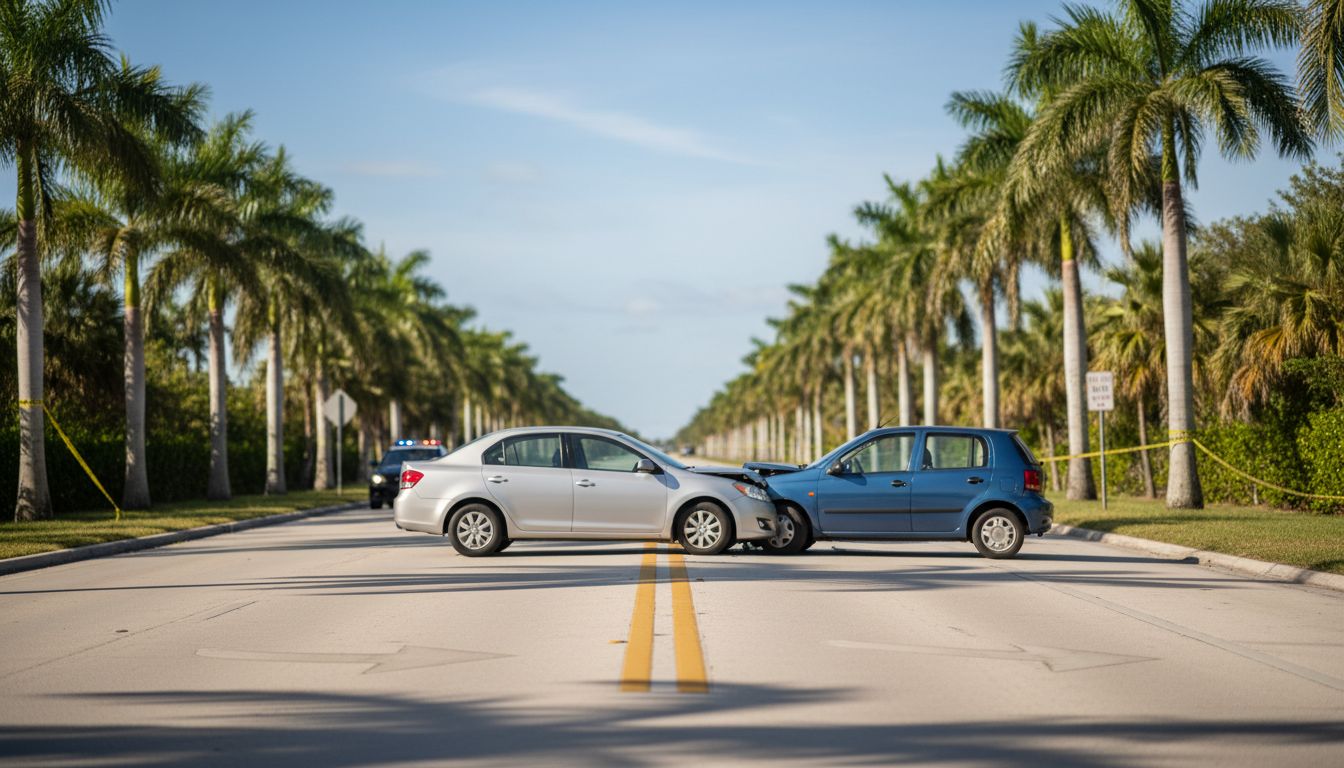
A crash in a center turn lane can look simple at first. Then the blame starts shifting, and the story gets messy fast.
That is where center turn lane crash claims rise or fall. If you were not at fault, the right proof can show who entered the lane wrong, who failed to yield, and who created the impact.
Florida law does not treat the center lane like a free-for-all. The problem is that drivers and insurers often tell a different story after the scene clears. The rest of the claim depends on what you can prove early.
Why Center Turn Lane Wrecks Turn Into Blame Fights
Center turn lanes, also called two-way left-turn lanes, create confusion because more than one driver may use them in the same stretch of road. One driver may be turning left into a driveway. Another may be waiting to turn into traffic. A third may treat the lane like a passing lane.
That mix leads to rear-end crashes, side-swipe impacts, and sudden left-turn collisions. It also gives insurers room to argue that everyone shares some blame.
Florida law limits how a center lane can be used. State traffic rules explain when a driver may enter the lane and when the lane should not be used as a travel lane. The Florida Department of Transportation also explains that two-way left-turn lanes are meant for left turns into streets, driveways, and parking areas, not for normal through traffic. See Florida Statute 316.089 and FDOT guidance on two-way left-turn lanes.
That matters because lane use is often the first fault issue. If the other driver entered the lane illegally or used it wrong, that fact can change the whole claim.
A center lane is not a neutral space. It can become strong evidence, if you document it before traffic clears.
The Proof That Shows You Were Not at Fault
In a turn lane case, proof is the whole game. The insurer may not care what felt fair at the scene. It wants hard details that match your version of events.
Start with the physical evidence. Photos of the roadway, lane markings, signs, damage points, and vehicle positions can show who moved where. Tire marks, debris, and paint transfer can also help. If the other driver hit you while cutting across the lane, the damage pattern may show that.
Witnesses matter too. A neutral bystander who saw the turn, the stop, or the impact can do more than a heated argument at the roadside. Their name and phone number should be saved right away.
Police reports help, but they are not the final word. They often capture road conditions, statements, and the officer’s view of the scene. That record can support your claim, especially if the other driver gives a different account later.
Medical records matter as well. They connect the crash to your injuries. They also show when you sought care and what symptoms followed.
If you need a comparison point, the same kind of proof often helps in Florida turn on red crash claims, where lane position and signal timing can decide fault.
Here is the kind of proof that usually carries the most weight:
- Scene photos from several angles
- Damage photos of both vehicles
- Witness names and contact details
- The police report number
- Repair estimates and body shop photos
- Medical visit records and discharge papers
- Any dash cam or nearby security video
Each item fills a gap. Together, they can turn a messy crash into a clear timeline.
How Insurance Companies Push Back
Even when the facts are on your side, the insurer may try to split fault. That is common in center lane crashes because the lane rules are easy to argue over.
One common tactic is to say you stopped too suddenly. Another is to claim you entered the lane without enough space. Sometimes the insurer says you were speeding, distracted, or following too closely. In some cases, it argues that both drivers had a duty to avoid the crash.
Florida’s fault rules make these arguments important. If the insurer can place some blame on you, it may try to reduce what it pays. That is why a clean claim file matters from day one.
When several vehicles are involved, the fight gets even harder. Statements can clash, and the chain of events can blur fast. That is why Florida multi-car accident claims often depend on scene evidence, vehicle damage, and witness consistency.
Medical proof can also get attacked. The insurer may say your injuries came from an old problem or a later event. Prompt treatment and consistent records help push back on that claim. If you wait too long, the defense gets more room to argue.
What to Gather Before the Scene Changes
The best time to build your claim is right after the crash. Roads get cleaned. Cars get moved. Witnesses disappear. Small details fade fast.
If you are able, focus on the facts that tell the story clearly:
- Photograph the lane layout before you leave.
- Get the other driver’s name, insurance, and plate number.
- Ask nearby drivers or businesses if they saw the crash.
- Save the crash report number and responding officer’s name.
- Keep every medical and repair record in one place.
Also write down what you remember while it is still fresh. Note where each car was, which direction it moved, and what each driver said. Those small details can matter more than a polished statement later.
If you think the other driver violated the lane rules, say so early and back it up with facts. The more precise the record, the harder it is for an insurer to twist the event into a shared-fault story.
Conclusion
Center turn lane crashes often turn into proof battles. That is why not-at-fault drivers need more than a quick explanation and a repair estimate.
The strongest claims rely on scene photos, witness accounts, police records, and medical documentation that all point in the same direction. When that evidence is gathered early, it is much easier to show what really happened.
In a crash like this, proof is the difference between a disputed story and a solid claim.