
Florida Produce Aisle Fall Claims: Why Sweep Logs Matter
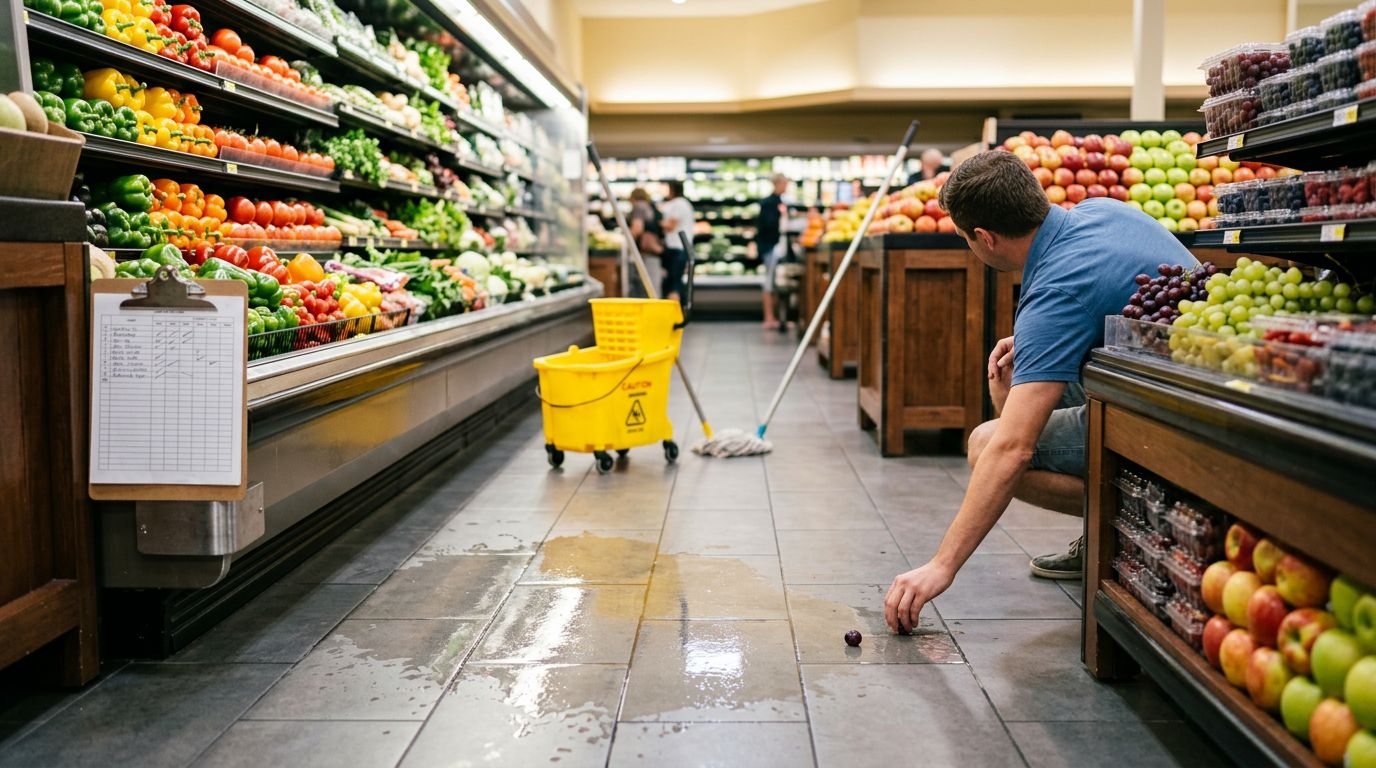
A wet produce aisle can turn a routine grocery trip into a serious injury in seconds. A few grapes on the floor, a dripping bag of greens, or a missed spill can lead to a broken wrist, a head injury, or back pain that lasts for months.
In Florida, the store’s sweep log often becomes one of the first records people want to see. That log can show when workers checked the aisle, how often they returned, and whether the store had time to spot the hazard.
The details matter. A clean-looking log can still raise questions, and a sloppy one can help explain how the fall happened.
Why produce aisles create hard cases for Florida shoppers
Produce aisles are not like dry shelves full of boxed goods. Stores spray mist on vegetables, stack fruit in open bins, and move a steady stream of shoppers through a tight space. That mix makes wet spots, dropped items, and crushed packaging more likely.
Florida slip and fall claims often turn on notice. In plain terms, the question is whether the store knew about the danger or should have found it through reasonable inspection. A spill that sat in a busy aisle for a while tells a different story than one that appeared seconds before the fall.
The condition of the area before the accident can matter too. Loose lettuce leaves, broken grapes, condensation near cold displays, and tracked-in water all leave clues. Those clues can disappear quickly once the floor is cleaned.
Timing is the heart of many produce aisle cases. If employees passed the same spot without checking, or if the store waited too long between inspections, the store may have trouble explaining why the hazard stayed in place.
What sweep logs can prove in a fall claim
A sweep log is more than a cleaning sheet. It can show the time of the last inspection, the employee who signed it, the length of the gap between checks, and whether the store followed its own safety routine.
That matters because the log helps build a timeline. If the store says the aisle was checked ten minutes before the fall, the entry should match the video, the witness accounts, and the condition of the floor. If the log shows a long gap during a busy afternoon, the claim may grow stronger.
The strongest fall claims proof often comes from records that support each other. A log alone can help, but it rarely tells the whole story.
A sweep log helps most when it matches the rest of the evidence.
A log can also hurt a store when it looks incomplete. Handwritten initials without times, repeated entries at the same minute, or pages that seem filled in after the fact can create doubt. So can a log that says the aisle was checked, while video shows no one ever went there.
Other records that carry weight in a Florida produce aisle fall
The sweep log is only one piece of the puzzle. Other records often matter just as much, and sometimes more. When they line up, the case gets clearer.
| Evidence | What it can show | Why it matters |
|---|---|---|
| Surveillance video | How long the hazard stayed on the floor | It can confirm or reject the sweep log |
| Incident report | What the store recorded right after the fall | It may capture early statements and the store’s version |
| Witness statements | What shoppers or employees saw | These accounts can support the timeline |
| Photos of the floor and shoes | The condition of the area and contact with the hazard | Pictures often preserve details that fade fast |
| Medical records | The nature and timing of the injuries | They link the fall to the harm claimed |
When these records point in the same direction, the claim becomes harder to dismiss. When they conflict, the gaps can matter as much as the spill itself.
A photo of a crushed grape, for example, can support the idea that the hazard was there long enough to be seen. A witness who saw an employee walk past the spill can be even more useful. Meanwhile, medical records help show that the fall caused real harm, not a minor bruise that disappeared overnight.
The defenses stores often raise after a fall
Stores usually do not accept blame right away. Instead, they often focus on timing and visibility.
Some say the spill was too fresh to find. Others argue that the hazard was open and obvious. Many point to the sweep log and say it proves the aisle was checked on time.
Each defense depends on facts. A fresh spill can still sit long enough to be found if the aisle is busy. An obvious hazard does not excuse a store that ignored a known problem. A tidy log can lose value if video or witness statements tell a different story.
Common defenses often sound like this:
- The spill appeared only moments before the fall.
- The customer should have seen the hazard.
- The store followed its inspection routine.
- Someone else caused the mess.
Those arguments are not the end of the case. They are starting points for more questions. Who checked the aisle? When did they check it? Did the store inspect the exact area where the fall happened? Did anyone document the hazard before cleanup began?
The answers can change the case fast. A store that cannot explain its timeline well may have a harder time blaming the shopper.
What to do right after a produce aisle fall
The first few minutes after a fall can shape the whole claim. Pain and embarrassment make it easy to rush out of the store. Still, a few careful steps can protect the record.
- Report the fall to a manager before leaving the store.
- Ask for an incident report and keep a copy if you can get one.
- Take photos of the floor, the produce display, warning signs, and your shoes.
- Get the names and phone numbers of witnesses and employees nearby.
- Save the shoes and clothes you wore, and do not wash them if possible.
- Get medical care as soon as you can, even if the pain seems mild.
Those steps help keep the timeline honest. They also make it harder for a store to change its story after the scene is cleaned up.
If you are too hurt to gather evidence, ask someone with you to help. A few quick photos and names can matter later. Memory fades faster than a picture does.
When a Florida attorney should step in
Some claims settle after a clean review of the records. Others do not. The fight usually starts when the store says the log is enough, denies the spill, or refuses to hand over video.
That is the point where legal help can make a difference. A Florida slip and fall attorney can request the sweep log, video, staffing records, and incident file before they disappear. Those records often reveal whether the store’s paperwork matches what happened on the floor.
Fast action matters because stores do not keep every record forever. Video can be overwritten. Logs can be misplaced. Witnesses move on. The sooner those items are collected, the easier it is to compare them against each other.
If the aisle was busy, the hazard was small, or the store cleaned up fast, the paper trail may be the best evidence left. That is why the first review should focus on timing, consistency, and the documents the store controls.
Conclusion
A produce aisle fall can look simple at first, but the records often tell the real story. Sweep logs, video, photos, and witness accounts can either line up or clash, and that timeline can shape the outcome.
In Florida, fall claims proof often comes down to what the store knew, when it knew it, and what the records show. The sooner those records are preserved, the stronger the claim can be.