
Florida FedEx Truck Crash Claims: Scanner Data That Matters
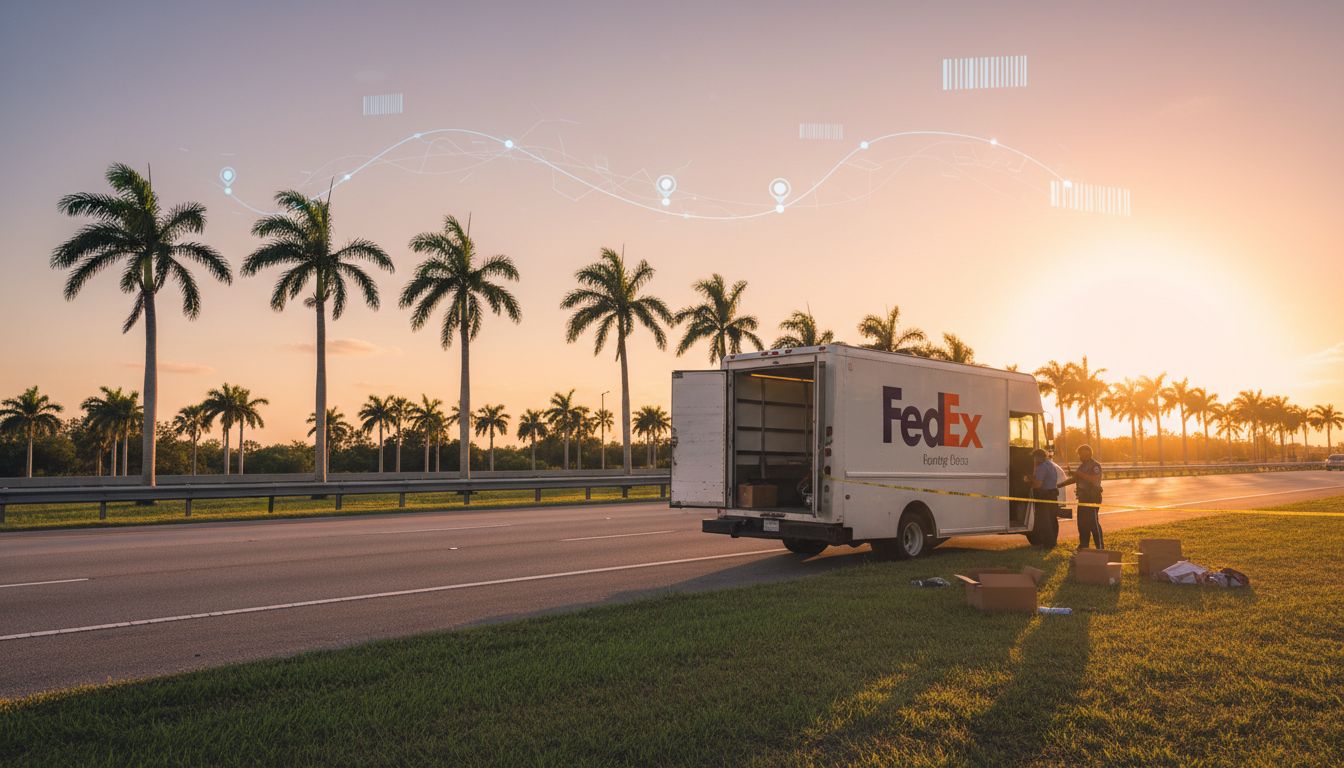
A FedEx crash can leave you with more questions than answers. Was the driver behind schedule? Did the route push him to hurry? Did the truck hit you after a long day on the road or after a rushed final stop?
In Florida, scanner data can help answer those questions. It tracks package scans, stop times, and delivery order, which can show whether the driver was moving too fast to keep up. Delivery trucks run on tight timelines, and those timelines can matter as much as skid marks.
What scanner data shows after a FedEx crash
FedEx drivers scan packages at pickup and at each delivery stop. Those scans create a time-stamped trail. The record may show where the driver stopped, when the stop happened, and the order of the route.
That matters because timing tells a story. A route that looks normal on paper may show a string of late scans, long gaps, or unusual stop patterns. Those details can point to pressure, rerouting, missed breaks, or a driver trying to catch up after falling behind.
Scanner data is not the same as the truck’s black box. The black box records vehicle operation, while scanner data records the delivery side of the trip. Put them together, and the picture gets sharper.
For example, scanner data may show a driver making quick stops across South Florida in a tight window. If the truck’s event recorder also shows hard braking or high speed, the claim may gain weight. If you want a deeper look at truck event records, see Florida truck crash black box evidence.
Why this record matters in Florida injury claims
In a truck crash case, the main fight is often about fault. The company may blame traffic, weather, or another driver. Scanner data can cut through that noise because it is time-stamped and tied to the delivery route.
That makes it useful in a few ways. First, it can show whether the driver was under time pressure. Second, it can help compare the driver’s story with the electronic record. Third, it can support other evidence when the insurer tries to shrink the claim.
Florida injury cases also involve shared fault rules. If blame gets spread around, every hard record matters. Scanner data can help show that the driver was not simply “in the wrong place.” It can show the pace of the route and whether that pace made safe driving harder.
The same kind of proof issues can show up in Florida multi-car accident claims, where one crash turns into several and everyone points a finger somewhere else. In both settings, the strongest file is the one built on records, not guesses.
Other records that help prove what happened
Scanner data is useful, but it rarely stands alone. A strong FedEx crash claim often includes several records that support each other.
- ECM or EDR data can show speed, braking, steering input, and other vehicle actions.
- ELD records can show driving hours and rest time.
- Dispatch notes can show what the company told the driver to do.
- GPS history can show the truck’s path before impact.
- Photos, witness accounts, and police reports can lock the scene in place.
When those records line up, the case gets easier to explain. When they conflict, that conflict can be powerful too. A driver may say he was taking a normal route, but the route data may show repeated delays or a missed stop pattern. A company may say the schedule was relaxed, but the scan history may suggest otherwise.
That is why these claims often turn on detail. One record may seem small by itself. Together, the records can show the real pace of the day.
How to protect scanner data before it disappears
Speed matters after a FedEx crash. Data can be lost, overwritten, or cleaned up during routine business use. The longer you wait, the more likely the trail gets thinner.
If you wait too long, the most useful record may be the one that no longer exists.
A preservation letter can help put the company on notice. It asks for the delivery scans, route history, dispatch records, ELD data, and truck data to be preserved. That step matters because the company controls much of the evidence at the start.
It also helps to save your own records right away. Keep medical visits, bills, missed work proof, and photos of the damage. Those documents may not prove speed, but they help show the human cost of the crash.
Federal trucking rules require carriers to keep many records, and crash-related data can become harder to reach fast. That makes early action more than a good idea. It can change what evidence survives.
Conclusion
FedEx scanner data can be the digital trail that fills in the gaps after a Florida truck crash. It may show a rushed route, a late schedule, or a pattern that matches unsafe driving.
The strongest FedEx truck crash claims are built fast, while the records are still there. Once the scans, logs, and truck data fade, the story becomes harder to prove.