
Florida Floor Mat Trip and Fall Claims Proof Checklist
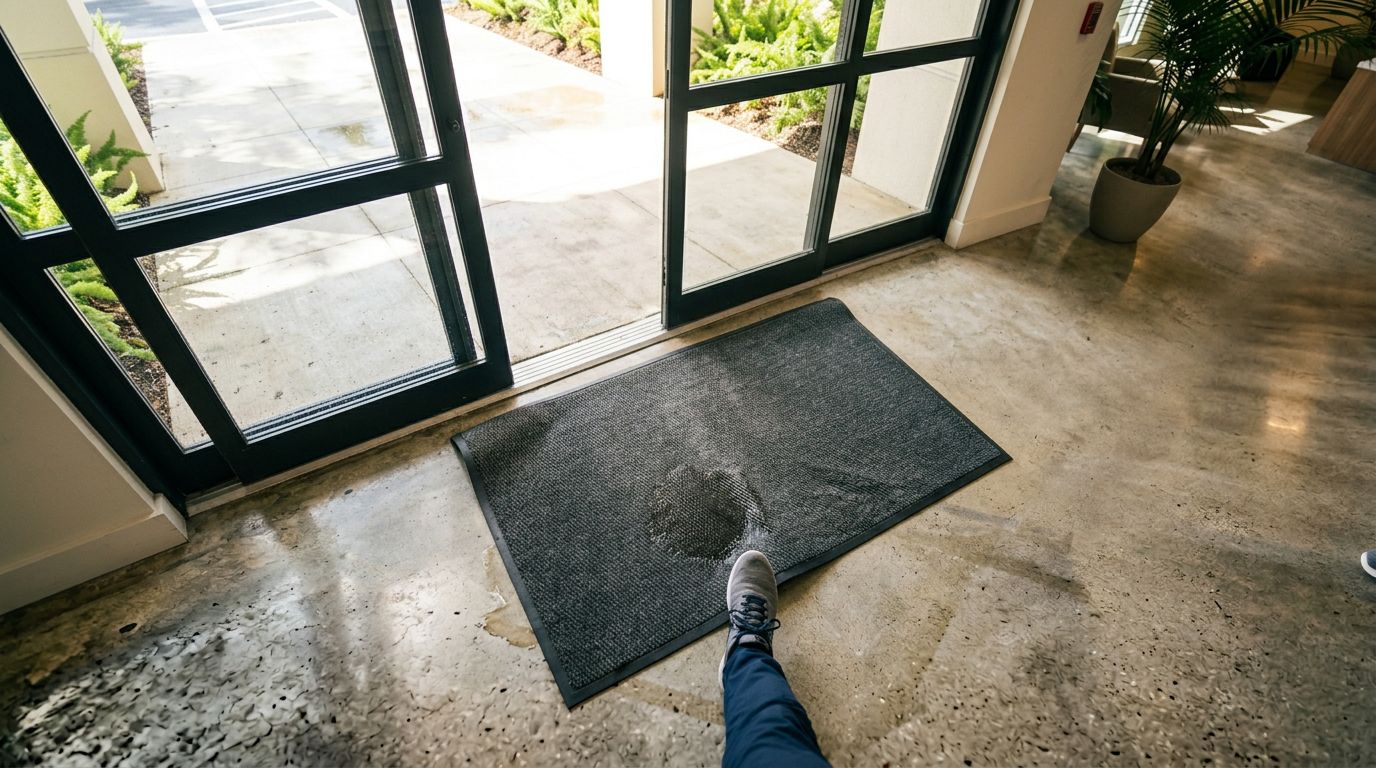
One bad step on a buckled mat can put you on the ground before you know what happened. In Florida floor mat trip fall claims, the hard part usually isn’t proving the fall. It’s proving why the mat was dangerous, who knew about it, and how the business failed to act.
That proof fades fast. Mats get flattened, replaced, or tossed, and camera footage may vanish within days. If you’re hurt in a store, restaurant, hotel, or office, the first hours matter.
What you have to prove after a floor mat fall in Florida
Most mat cases start with duty. If you were on the property as a customer or guest, the business likely owed you reasonable care. Staff should inspect walkways, fix hazards in a reasonable time, or warn people before someone gets hurt.
A floor mat can become dangerous in several ways. Its edge may curl. The backing may slide. The mat may bunch up, or one mat may sit on top of another. Sometimes the problem is the opposite. Rain is pouring in, the entry is slick, and no mat is down at all. Many businesses have rainy-day mat plans, and ignoring one can help show notice.
Notice usually decides the claim. You need proof the business had actual knowledge, or constructive knowledge, of the danger. In plain language, did someone know the mat was loose, or should they have known because a normal inspection would have found it? Wet entryway cases often involve a transitory substance. When they do, Florida Statute 768.0755 often shapes the notice fight. Broader fault rules still come from Florida’s negligence statute, Chapter 768.
You also have to link the mat hazard to the injury. That link often comes from photos, witnesses, video, and prompt medical care. Then there are damages, which include bills, lost pay, and the daily limits the injury caused.
Florida’s fault rule matters too. The defense may say you were distracted, rushed, or ignored an obvious hazard. Clean proof limits that argument.
The proof checklist that gives floor mat trip fall claims weight
In a floor mat case, the scene often changes before the swelling does. This evidence usually carries the most weight:
| Proof | Why it matters |
|---|---|
| Photos and video of the mat | Shows curls, ripples, wet spots, missing cones, and layout |
| Witness names and contact details | Supports how the fall happened and whether staff saw the problem earlier |
| Incident report | Creates a time-stamped record of the fall and exact location |
| Surveillance and inspection records | May show how long the mat was out of place or whether employees walked past it |
| Shoes, clothing, and receipt | Confirms you were there and may preserve moisture, dirt, or scuff marks |
| Medical and wage records | Connects the fall to your injuries and financial losses |
Start with wide photos. Show the doorway, checkout lane, lobby, or restroom entrance. Then move closer. Capture the raised edge, the thickness of the mat, the floor under it, and any liquid nearby. If you can, photograph both the top and the underside. A worn backing or folded corner can tell the story better than a later argument.
If the mat gets replaced before it is documented, the case often turns into a memory contest. Photos taken that day can keep the story grounded in facts.
Report the fall before you leave, if your condition allows it. Ask for the manager’s name, the report number, and the exact location written down. If you need help locking down that paper trail, this Florida slip and fall incident report guide explains what to request and why speed matters. When injuries are serious, early legal help can also preserve video and maintenance records before they disappear.
Next, preserve the rest of the scene around you. Don’t wash your shoes. Don’t throw away torn clothing. Save your receipt, parking stub, or appointment record. Those small items may confirm time, place, and how you entered the business.
Medical care is the other half of the proof. Adrenaline can hide pain for hours. Yet treatment gaps give insurers room to say the mat was not the cause. Keep every bill, work note, and mileage record. If you want a clearer sense of losses, review what compensation may be available after a Florida fall.
Mistakes that weaken a mat hazard claim
The first mistake is guessing. If you do not know how long the mat was curled or wet, do not invent a timeline. If you are not sure whether you caught the edge or slipped on water beside it, say that clearly. A precise “I don’t know” is stronger than a wrong answer.
Delay is another problem. A business can swap the mat, mop the entry, or lose the video before the weekend ends. Many entrances also pull footage from several angles, including outside approaches and curbside areas. That is one reason falls near store doors can overlap with the same proof issues seen in Florida parking lot trip and fall claims.
Be careful with early statements. A quick “I’m okay” or “I just tripped” may look harmless, but insurers often treat it like a confession. Social media can create the same problem. A smiling photo posted later does not erase pain, yet the defense may still try to use it that way.
Also, do not assume an obvious mat defect kills the case. Florida law does not give businesses a free pass because a danger can be seen. A dark mat on a dark floor, a wrinkled runner in a crowded entry, or a soaked mat during a storm may still support liability if the business did not act reasonably.
Most negligence claims in Florida now face a two-year filing deadline. That sounds like time, but evidence disappears long before the court deadline does. In floor mat trip fall claims, the strongest file is the one built early.
A floor mat fall can look small from across the room, but the injury and proof issues are rarely small. The cases that hold up are the ones backed by photos, records, and a clear medical timeline.
When a business starts disputing notice or blaming you, speed matters almost as much as the injury itself. The mat may be gone tomorrow, but good evidence can keep the truth in place.