
Florida ADA Ramp Fall Claims and Slope Proof
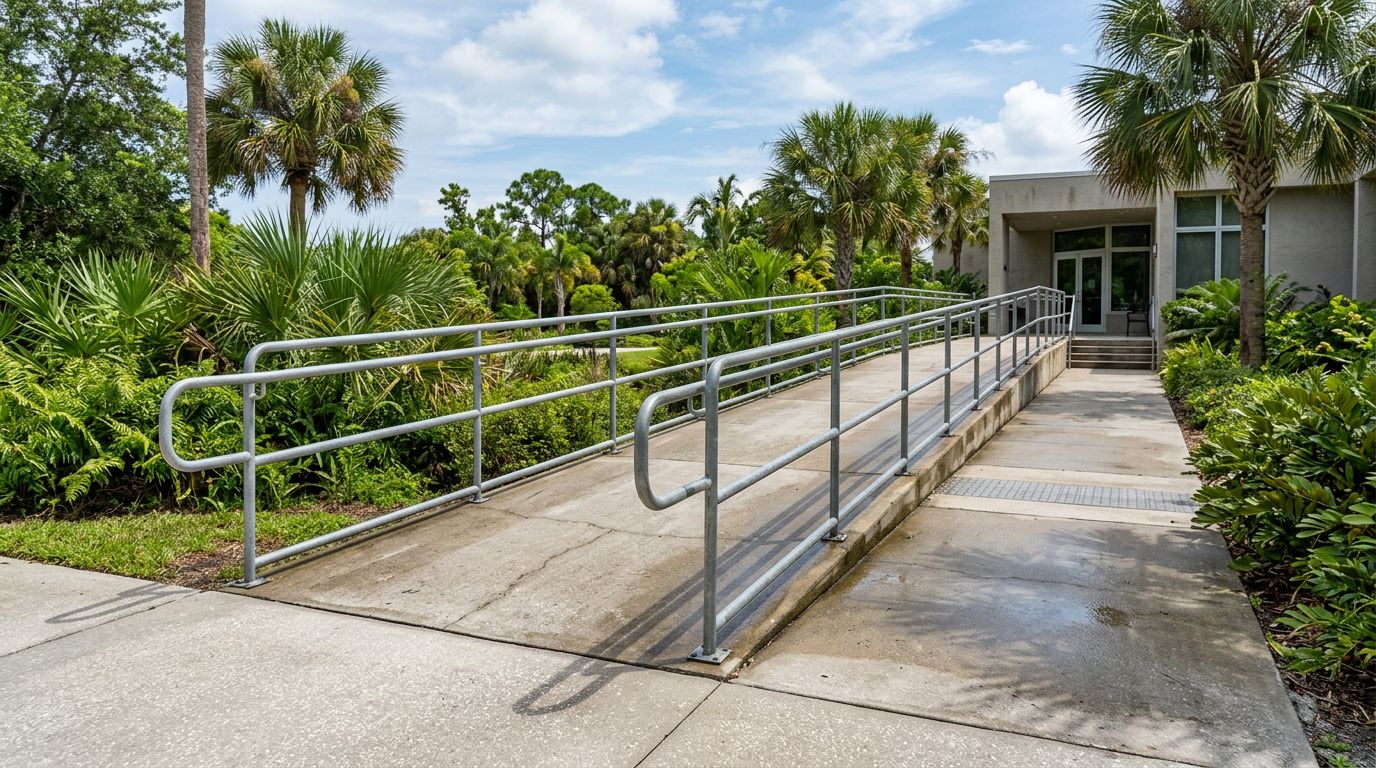
A ramp can look harmless until one bad step sends someone hard to the ground. In Florida ADA ramp claims, slope, landing space, and surface condition often matter more than paint or warning strips.
If the ramp is too steep, tilted, or broken at the edge, the injury case can turn on proof. The challenge is simple, but urgent, measure it before the scene changes. Then the facts can speak for themselves.
When a ramp condition becomes a legal claim
A fall alone does not prove negligence. The law looks at whether the property owner knew, or should have known, about a dangerous condition and failed to fix it. That is where understanding Florida premises liability duty of care matters, because control, notice, and inspection records shape the case.
A ramp can create risk in several ways. The slope may be too sharp, the cross slope may pull a foot sideways, or the landing may be too short to give a stable step. Wet coating, broken concrete, loose mats, and poor lighting can make a bad setup worse. A business guest, tenant, customer, or visitor does not need a perfect ramp. The law asks for a reasonably safe one.
Still, a claim gets stronger when the hazard is visible and repeated. A cracked edge that has been ignored for months tells a different story than a one-time spill. Complaints, repair requests, and prior incidents can matter as much as the ramp itself. When those records exist, the ramp stops being an abstract code issue and becomes a safety failure tied to real notice.
The slope numbers that matter most
ADA ramp cases often hinge on measurements, not impressions. A ramp that “looked steep” helps less than one measured on site.
| Measurement | Common benchmark | Why it matters |
|---|---|---|
| Ramp run slope | 1:12 maximum | Too much rise over too little run can force awkward footing. |
| Cross slope | About 2% or 1:48 maximum | Side tilt can shift balance and twist a step. |
| Landings | Level at top and bottom | Landings give room to rest and turn safely. |
| Width and edge control | Enough room for safe passage | Narrow paths and open edges raise the chance of a fall. |
For curb ramps, the full setup matters too. The ramp should connect cleanly to the sidewalk or parking area, and the surface should not create a lip at the transition. On some projects, detectable warning surfaces also come into play. The point is not to turn every code issue into a lawsuit. The point is to show that a measurable defect existed when the fall happened.
A ramp that is measured on site is harder to dismiss than one described from memory.
The numbers give the case a fixed anchor. They also help separate a real slope problem from a simple stumble. When the ramp falls outside normal access standards, the condition becomes easier to explain and harder to ignore.
How to document slope after the fall
Good evidence starts before repairs. If the scene stays untouched, the numbers are easier to trust. If a landlord, tenant, or city crew patches the area first, the proof gets thinner fast.
A strong file usually includes:
- Photos of the whole ramp, plus close-ups of the damaged area.
- A tape measure, level, or laser reading showing rise and run.
- Video that shows how the foot path meets the ramp.
- Witness names, especially anyone who saw the fall or the condition.
- Medical records, incident reports, and any written complaint.
The best habit is to mark where the measurement came from. A single ramp can have one steep section and one better section. That is why the exact spot matters. Measure where the foot landed, not the safest part of the route. If you are comparing evidence in similar cases, the Florida trip and fall proof checklist gives a good sense of the proof that tends to hold up.
Photos should also show context. Include the approach to the ramp, the parking area, handrails, drainage, and any nearby warning signs. Lighting matters too. A ramp that looks fine at noon can be far harder to judge at dusk. If the fall happened during rain, note that as well, because wet concrete changes both traction and visibility.
A simple photo without scale can leave room for argument. A photo with a ruler, a level, and the exact location leaves less room.
Who may be responsible for the ramp
Liability often follows control. The owner, tenant, property manager, or contractor may hold part of the responsibility, depending on who built, inspected, or maintained the ramp. A lease can shift some duties, but it does not erase them.
That is why documents matter. Inspection logs show who walked the property. Repair invoices show who fixed, or ignored, the ramp. Emails and maintenance requests can show notice long before the fall. In a shopping center, one business may own the building while another controls the sidewalk or entry. In an apartment complex, the owner may hire a management company to handle repairs. Each layer can matter.
When a ramp was built badly, design and construction records matter. When it was built well but later broke down, maintenance records take center stage. The proof changes with the problem. The claim should too.
Defense lawyers often argue that the person slipped because of shoes, speed, distraction, or weather. Those arguments matter less when the ramp measurements and photos show a clear hazard. Good evidence lets you answer those claims with facts, not guesses.
Public property claims and notice deadlines
If the ramp sits on a sidewalk, public building, parking lot, or transit path, the case may involve a city, county, or state entity. Public claims follow different rules, and timing matters. If the ramp is part of a sidewalk-related hazard, Florida sidewalk fall claims against cities explains the notice path that often applies.
In many cases, written notice must go to the right agency before suit begins. The Florida Department of Financial Services may also need notice, and the agency often gets a review period of up to 180 days. That window can feel long, but it moves fast when evidence is fading. A patch, repaint, or new mat can erase the scene that made the claim possible.
Government ownership can also be messy. A ramp near a parking lot, utility area, or mixed-use sidewalk may involve more than one entity. That is why the exact location of the fall matters. A few feet can change who had control, who had notice, and who must answer for the hazard.
If the case involves public property, record the location as precisely as possible. Note the nearest entrance, sidewalk segment, or parking space. A clean location description helps a lawyer send notice to the right place and avoid losing time.
Conclusion
A steep or broken ramp can do more than cause a fall, it can supply the proof behind a claim. The strongest Florida ADA ramp claims usually pair clear measurements with photos, witness accounts, and medical records.
Slope matters because it gives the case a fixed number. Duty, notice, and control matter because they show who should have made the ramp safe. When the ramp belongs to a city or county, deadlines and notice rules can change the whole strategy.
If the ramp is still in place, the next step is fast documentation. Once the surface changes, the best evidence disappears with it.