
Florida Airport Shuttle Crash Claims After a Passenger Injury
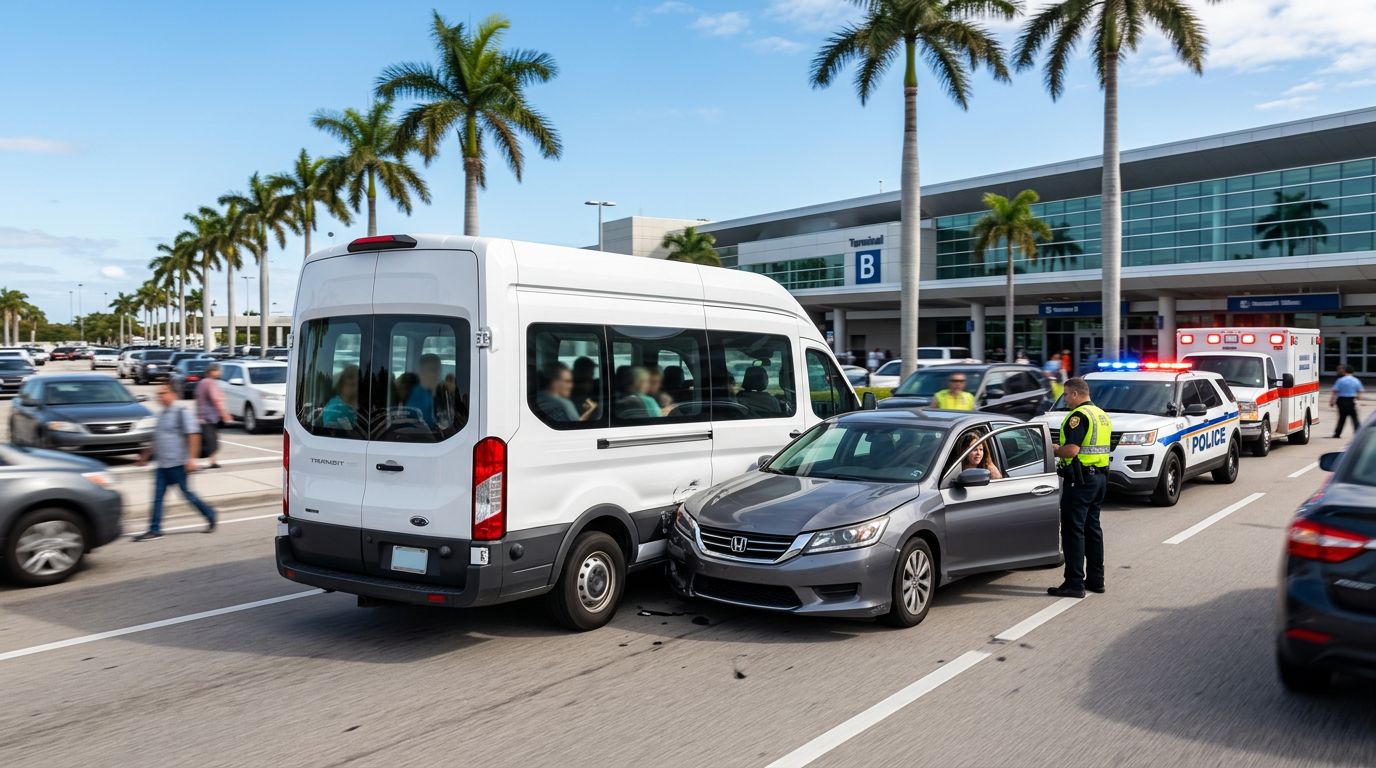
An airport shuttle ride should be the easy part of the trip. Then a van gets rear-ended near the terminal, rolls in a parking lot turn, or slams into another vehicle on the hotel loop, and the ride turns into an injury claim.
If you were hurt, Florida airport shuttle crash claims can get complicated fast. More than one company may be involved, and key proof can disappear within days. The first steps after the crash often shape the entire case.
Why these passenger injury claims get complicated fast
Airport shuttle crashes are rarely simple fender-benders. The vehicle may belong to a hotel, an off-site parking company, a rental car business, an airport contractor, or a public entity. Another driver may have caused the crash, but the shuttle company’s hiring, training, maintenance, or route practices can still matter.
Passengers usually start from a strong position because they did not cause the wreck. Still, fault fights happen behind the scenes. One insurer may blame another. A shuttle company may say an outside driver caused the impact. The other driver may say the shuttle stopped short or changed lanes without warning.
Those disputes matter because they affect where compensation comes from. In some cases, a claim may involve commercial auto coverage, a business policy, or a public agency notice requirement. If the shuttle was part of a chain reaction near crowded pickup lanes, the proof issues can look a lot like Florida multi-car accident claims, where impact order and vehicle positions become a major fight.
Airport cases also bring location-specific evidence. Terminal roads often have cameras. So do hotels, parking lots, toll plazas, and rental car centers. Driver logs, dispatch records, passenger manifests, and maintenance files can all help show what happened. When the shuttle is run by an airport authority or local government, extra rules may apply before a lawsuit can be filed.
Publicly available reporting in April 2026 does not show a new statewide wave of airport shuttle crashes in Florida. That said, one serious shuttle rollover or side-impact crash is enough to leave a passenger with months of pain, missed work, and medical bills.
The proof that often decides Florida airport shuttle crash claims
A strong claim needs more than a hospital visit and a memory of what happened. It needs records that tie the crash to the injury, and the injury to real losses.
Start with medical care. Some injuries, especially head, neck, and back injuries, show up later. Early treatment creates a clear timeline. It also helps if PIP may apply through your own auto policy or a household policy. Florida’s 14-day treatment rule can matter.
Next, save the facts that vanish first. Try to keep:
- Photos of the shuttle, the other vehicles, your visible injuries, and the scene
- The shuttle company’s name, vehicle number, and driver name
- Your reservation email, parking receipt, or hotel booking tied to the ride
- Names and numbers for other passengers or witnesses
- Any incident report, crash report number, or discharge papers
In shuttle cases, camera footage can disappear before the bruises fade.
That is why early requests matter. A broader evidence checklist for bus injury claims shows how fast rider records, onboard video, and company files can be lost if no one asks for them.
Damages often go beyond the ER bill. You may have lost wages, follow-up care costs, prescriptions, transportation to appointments, and pain that affects sleep or daily tasks. When injuries are serious or permanent, a liability claim may seek money for those larger losses.
It also helps to separate airline problems from roadway injury claims. If your issue is a canceled flight or baggage problem, the U.S. Department of Transportation’s archived Fly Rights guide covers air travel consumer issues. A shuttle collision on airport roads is usually a motor vehicle injury case, not an airline complaint.
Deadlines, insurance rules, and settlement traps
Many injured passengers assume the shuttle company’s insurer will “take care of it.” That is rarely how it works. In Florida, payment may start with your own PIP coverage, a household policy, health insurance, or the at-fault company’s commercial policy. The order depends on the facts.
As of April 2026, Florida lawmakers have filed Senate Bill 522, which would repeal the state’s no-fault system. A filed bill is not current law. So, for now, existing motor vehicle rules still matter in shuttle injury cases.
Deadlines matter too. Most Florida negligence claims tied to recent crashes now have a two-year filing window. Claims against public bodies can bring extra notice steps and tighter practical deadlines. Waiting too long can wipe out a good case before settlement talks ever start.
Insurers also look for ways to trim value early. They may ask for a recorded statement before you know the full extent of your injuries. They may offer quick money before follow-up care reveals a disc injury, concussion, or lasting shoulder damage. A fast settlement can feel helpful in the moment, but it can leave you paying later costs on your own.
Shared fault arguments show up here as well. Passengers are rarely blamed, yet insurers still raise seatbelt issues, prior injuries, or inconsistent statements when they want to cut payment. Florida’s rules on Florida modified comparative negligence help explain why fault percentages can still affect the money available in a contested case.
An airport shuttle should get you to the terminal, not into months of treatment and insurance calls. When a crash happens, the strongest claims usually start with quick medical care, preserved video and trip records, and a clear sense of which company was responsible.
Most passengers do not lose value because the wreck was impossible to prove. They lose value because Florida airport shuttle crash claims depend on evidence that disappears early.