
Florida Amazon Delivery Van Crash Claims: The Route Data That Can Prove Fault
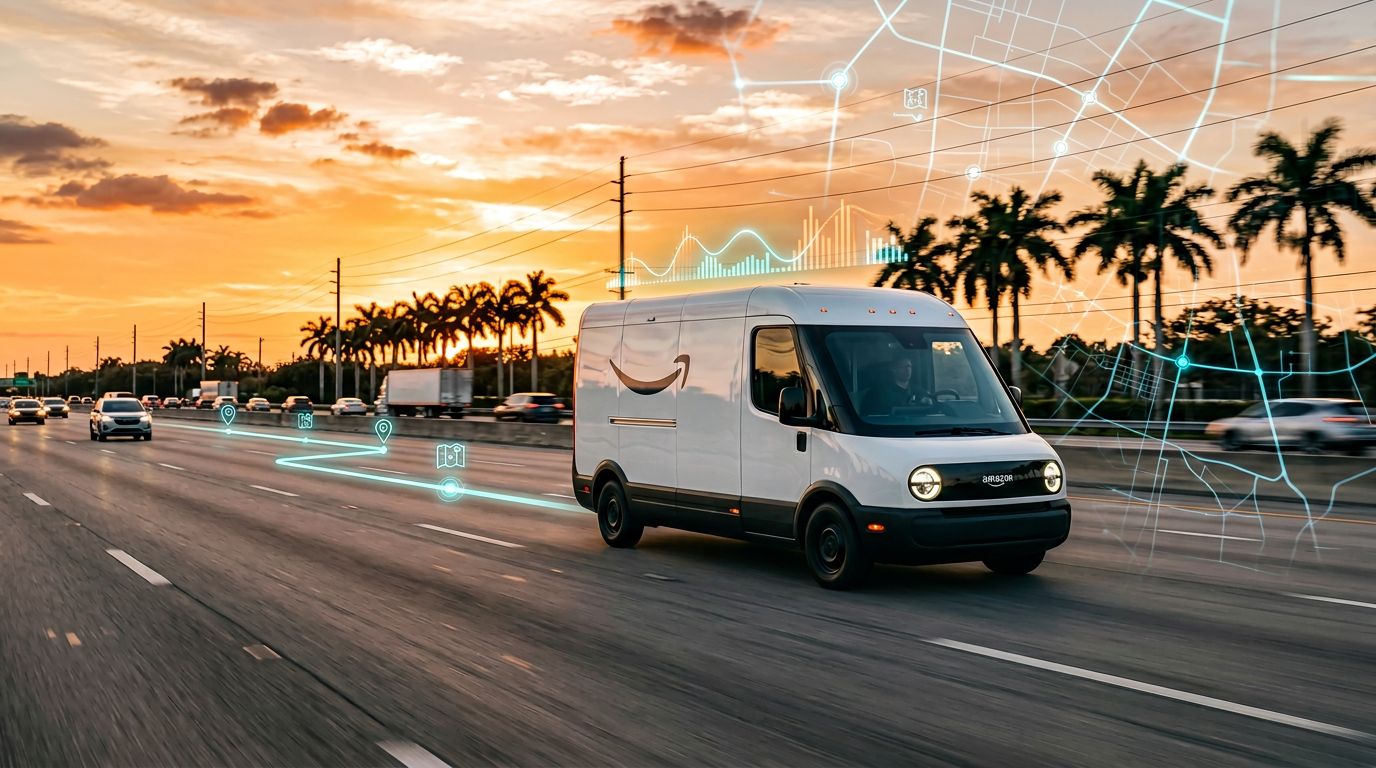
An Amazon van can leave the scene fast, but its route history often stays behind. In many Florida Amazon delivery van crash claims, the best proof is not the logo on the van. It’s the electronic trail showing where the vehicle went, when it stopped, how fast it moved, and what happened right before impact.
If you were hit by an Amazon-branded van or a contractor making Amazon deliveries, that trail can tighten up a weak case. It can also expose rushing, unsafe backing, late braking, or a story that doesn’t match the records. That is why the first days after the crash matter so much.
Why route data matters more than memory
Delivery van crashes often happen in short bursts. A van stops, pulls out, backs into a driveway, swings wide, or darts across a lane to make the next stop. Later, both sides remember the event differently. Route data can help cut through that fog.
Public news reports through April 2026 have not highlighted a Florida Amazon van injury case built around route logs. That is not surprising. These records are usually private business data, and they tend to surface only after a lawyer demands they be preserved.
Many Amazon routes are handled by a Delivery Service Partner, not Amazon directly. That means the important records may sit in more than one place, including the van, a fleet platform, a delivery app, or a contractor’s dispatch system. When those records line up, they can show far more than a driver can recall months later.
This is the kind of route data that often matters most:
| Record | What it may show | Why it matters |
|---|---|---|
| GPS breadcrumb trail | Exact path and timing | Tests whether the van was where the driver claims |
| Stop sequence and scan times | Delivery order and stop length | Shows whether the driver was rushing between stops |
| Speed and braking data | Sudden braking, sharp turns, acceleration | Supports or weakens a negligence claim |
| Camera clips | Traffic, lane position, backing movement | Helps show what the driver saw |
| Dispatch or app messages | Route changes, timing pressure, instructions | May show who controlled the pace of the route |
A simple example helps. If the driver says the van had been parked for several minutes, but the GPS shows it rolled backward seconds before impact, that conflict matters. If the company says the driver was not under time pressure, but the app records show a late route and stacked stops, that matters too.
Route data can tell the story from before the crash, not only after it.
The records that carry the most weight in Florida Amazon delivery van crash claims
Not every data point is equally useful. Some records move a case, while others are little more than background noise.
Start with location and timing. The van’s GPS path can show whether it drifted into your lane, stopped in traffic, or turned from the wrong position. That same path may also place the van at the exact address where a witness says it was speeding through a neighborhood.
Next comes stop activity. Amazon deliveries leave timestamps behind, such as scan events, delivery confirmations, and stop order. Those records can help answer a hard question: was the driver focused on the road, or scrambling to finish the next drop? In a crash near a home or apartment complex, stop sequence data may show that the driver reversed, pulled forward, then backed again within moments.
That issue comes up often in neighborhood wrecks. If the collision happened while the van was reversing, the proof problems are much like those covered in this Florida backing-up accident proof checklist.
Speed and braking data also matter. A hard brake event, a fast approach to a stop sign, or quick acceleration after a delivery can support your version of events. So can outward-facing camera video, if the van had it. Some systems also log seat belt use, distraction alerts, and harsh driving events. Those details are not public, and you usually cannot get them with a phone call. They often require a preservation demand, formal claim work, or a subpoena after suit.
Route data also helps in chain-reaction crashes. If an Amazon van stopped short, blocked a lane, or triggered several impacts, timing becomes everything. In that setting, the same fault questions discussed in this Florida multi-car accident claims guide can shape the case.
How to preserve route evidence before it disappears
You cannot pull Amazon’s internal route logs on your own. Still, you can protect the pieces that lead to them.
First, gather the basics at the scene if you can do it safely. Get photos of the van, the plate, side markings, unit numbers, damage points, and the full roadway. Save the exact time, the nearest address, and the direction each vehicle was traveling. Doorbell cameras and dashcams matter because they help match the van’s route data to the real scene.
Also, follow FLHSMV’s guidance for drivers involved in a crash and get checked by a medical provider quickly. Florida’s no-fault rules may send initial medical bills through your own PIP coverage, but a larger injury claim still depends on solid proof of fault and injury timing.
Then order the official report through the Florida traffic crash report portal. Read it closely. If the report lists the wrong company, the wrong lane, or the wrong sequence, that mistake can spread through the claim.
One more point matters. Don’t assume the company will save everything on its own. Video can be overwritten. App logs can roll off. Vehicles get repaired. If a commercial insurer asks for a recorded statement before route evidence is locked down, slow the process and get legal advice first.
The strongest cases often do one thing well: they preserve the story before the other side edits it.
The van’s route can speak more clearly than memory. In Florida Amazon delivery van crash claims, that route data may show rushing, backing, braking, and timing in a way no witness can match.
When those records are saved early, they can turn a blurry dispute into a claim built on facts. When they are lost, part of the crash may disappear with them.