
Florida ATM Assault Claims and Prior Crime Evidence That Matters
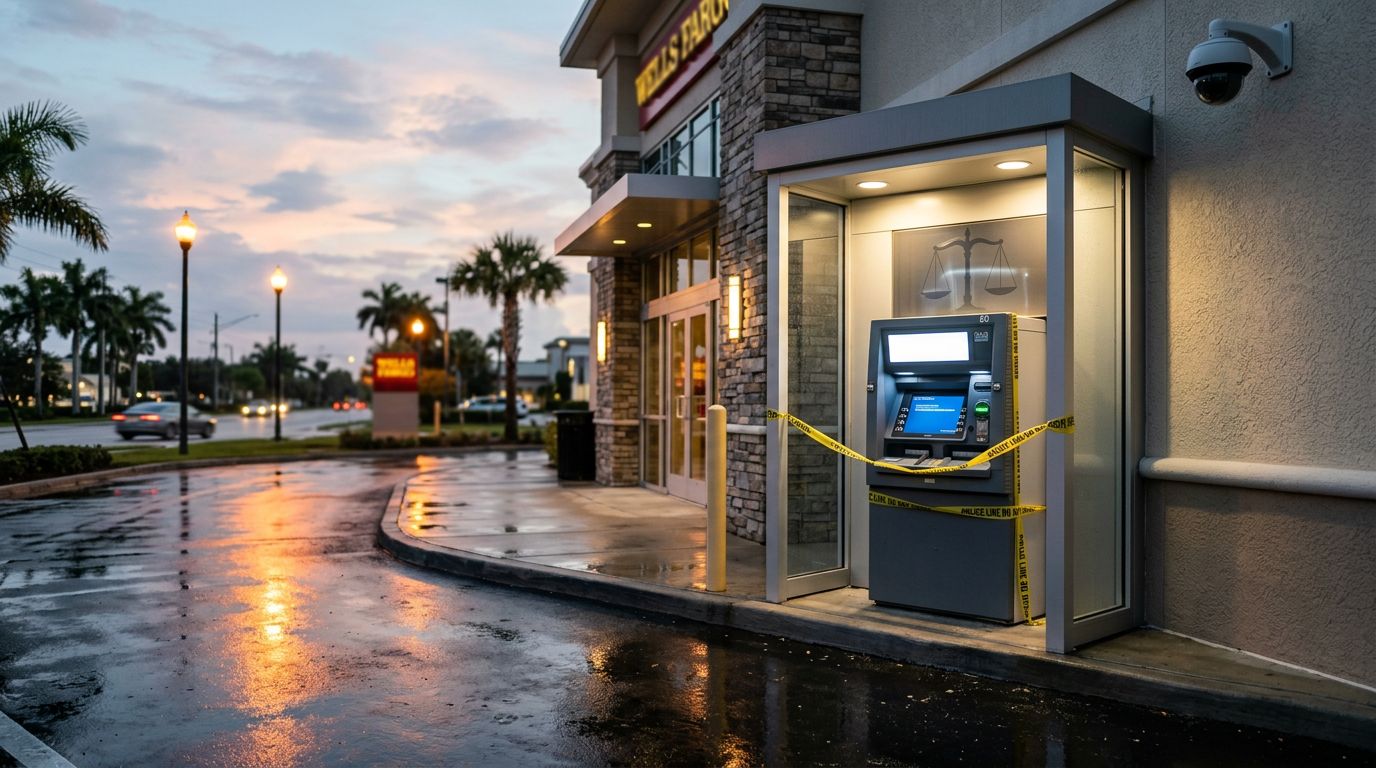
An ATM attack can happen in seconds, but the legal case can last much longer. If you were hurt at a Florida bank ATM, the key issue is often whether the bank, property owner, or security company knew the area was dangerous. That is where prior crime proof matters, because a history of robberies, assaults, or repeated police calls can help show the attack was foreseeable.
The claim may involve negligent security, premises liability, or another negligence theory. The details matter, and small records often carry real weight. A few old reports may mean little on their own, while a clear pattern of crime can change the case.
What a Florida ATM assault claim usually turns on
A Florida ATM assault claim usually starts with a few basic questions. Who controlled the property? What did they know about danger at the site? Did they take reasonable steps to lower the risk?
That can include a bank branch, a shopping center owner, a landlord, a security vendor, or the company that maintained the ATM area. If the attack happened in a parking lot, at a walk-up machine, or in a vestibule, the site layout matters. So do cameras, lighting, access points, and guard patrols.
A criminal case against the attacker does not answer the civil question. Your civil claim focuses on whether someone failed to keep the area reasonably safe. That is why the security record, not just the police report about the attack, can shape the result.
Why prior crime proof can change the case
Prior crime proof matters because it helps show foreseeability. If a place has a history of robberies, assaults, trespass calls, or repeated suspicious activity, a later attack looks less random. The exact same crime is not always required. A pattern of violence or warning signs can still support the claim.
The earlier incidents do not have to be a carbon copy. A pattern can still make the later attack more predictable.
A bank that knows the area is drawing trouble may need more than a camera on paper. It may need working lights, clear sight lines, better patrols, or restricted access. The question is not whether crime can happen anywhere. The question is whether this location had enough warning to demand more care.
Evidence that can show the property was already risky
The strongest proof usually comes from records tied to the exact site and the months before the assault. Here is the kind of evidence that often matters most.
| Evidence | What it can show | Why it helps |
|---|---|---|
| Police reports | Prior robberies, assaults, or threats | Shows a known danger |
| 911 calls | Repeated complaints about loitering or suspicious behavior | Helps prove a pattern |
| Security logs | Missed patrols, broken cameras, or alarm failures | Shows weak protection |
| Maintenance records | Burned-out lights, bad locks, or faulty cameras | Connects defects to the risk |
| Witness statements | What regular users, guards, or nearby workers saw | Fills gaps in written records |
Records from nearby businesses can also help, especially when the ATM sits in a shared lot or shopping center. The closer the evidence is to the site and time of the attack, the more useful it tends to be.
Florida claims often get stronger when the records show repeated trouble, not a one-time event. A stolen purse in the same lot, a prior mugging near the entrance, and several calls about loitering can all matter together. The point is not to prove a perfect match. The point is to show a danger the owner should have recognized.
How Florida law reads location, timing, and pattern
Florida courts and insurers usually care about three things, location, timing, and pattern. A crime report from the same ATM area last month matters more than a vague complaint from years ago. So does a series of incidents that shows the property kept drawing the same kind of trouble.
Distance matters too. An attack next to the branch is different from one miles away. Still, nearby crimes can count when the ATM sits in a small retail center or a shared parking area. Lighting, visibility, and foot traffic also matter. A dark corner with a broken camera can make earlier crime history more important.
The same idea applies to the type of incident. A string of robberies may matter more than a single property damage report. However, repeated trespass calls, threats, and suspicious loitering can still support the argument that the site needed better security. The records do not have to tell the exact same story twice. They only need to show a danger that should have been taken seriously.
Steps to take after an ATM assault
What you do next can affect both your health and your claim. Start with the basics, then work toward preserving proof.
- Get medical care right away. Even if the injuries seem small, get checked. Some injuries get worse later, and medical records help connect the harm to the assault.
- Call the police and ask for the report number. A police report creates an official record of the attack. It also helps identify witnesses, responding officers, and the exact location.
- Save every piece of evidence you can. Keep photos, torn clothing, bank receipts, text messages, and any notes you made about what happened. If you took pictures of poor lighting or broken equipment, keep those too.
- Write down the details while they are fresh. Record the time, the people you saw, what was said, and how you got away. Small details often matter later, especially when video footage is gone.
- Speak with a lawyer before you sign anything. A team of Florida personal injury lawyers can request records, ask for video preservation, and review whether negligent security fits the facts.
The faster you act, the better your chance of keeping evidence intact. Surveillance footage can be lost, and a property manager may not save incident records unless someone demands them.
Mistakes that can weaken the claim
Some errors make ATM assault cases harder than they need to be. The first is waiting too long to request video or incident records. Once those records are lost, proving prior crime history gets much harder.
Another mistake is relying only on the police report from the day of the attack. That report may describe the assault, but it may not show what the owner knew before it happened. A third mistake is posting details online or giving a recorded statement too early. Simple comments can be taken out of context later.
Missing medical follow-up also hurts. If you skip treatment, the defense may argue that your injuries were minor or unrelated. Careful documentation helps close that gap.
Why fast legal help matters
Prior crime proof rarely sits in one easy file. It has to be gathered from police records, security logs, maintenance reports, witness accounts, and sometimes nearby businesses. A lawyer can send the right requests before the records disappear and can look at which parties had control over the site.
That matters because the right defendant is not always obvious. The bank, property owner, landlord, and security company may each play a role. If you want to review one example of that background, see attorney Deborah A. Wainey’s profile.
The strongest claims are built early. They connect the assault, the site’s history, and the missed warning signs into one clear record.
Conclusion
Florida ATM assault claims often turn on one central issue, whether the danger was already visible before the attack. Prior crime proof can help show that the risk was not a surprise, especially when the records point to repeated trouble at the same site.
The best evidence usually comes from the moments before it disappears, video, logs, complaints, and witness memories. Once those pieces are gone, the case gets harder to prove.
If an ATM attack left you injured, the path forward starts with preservation and proof. The earlier the pattern of crime is documented, the clearer the case becomes.