
Florida Automatic Door Injury Claims in Grocery Stores
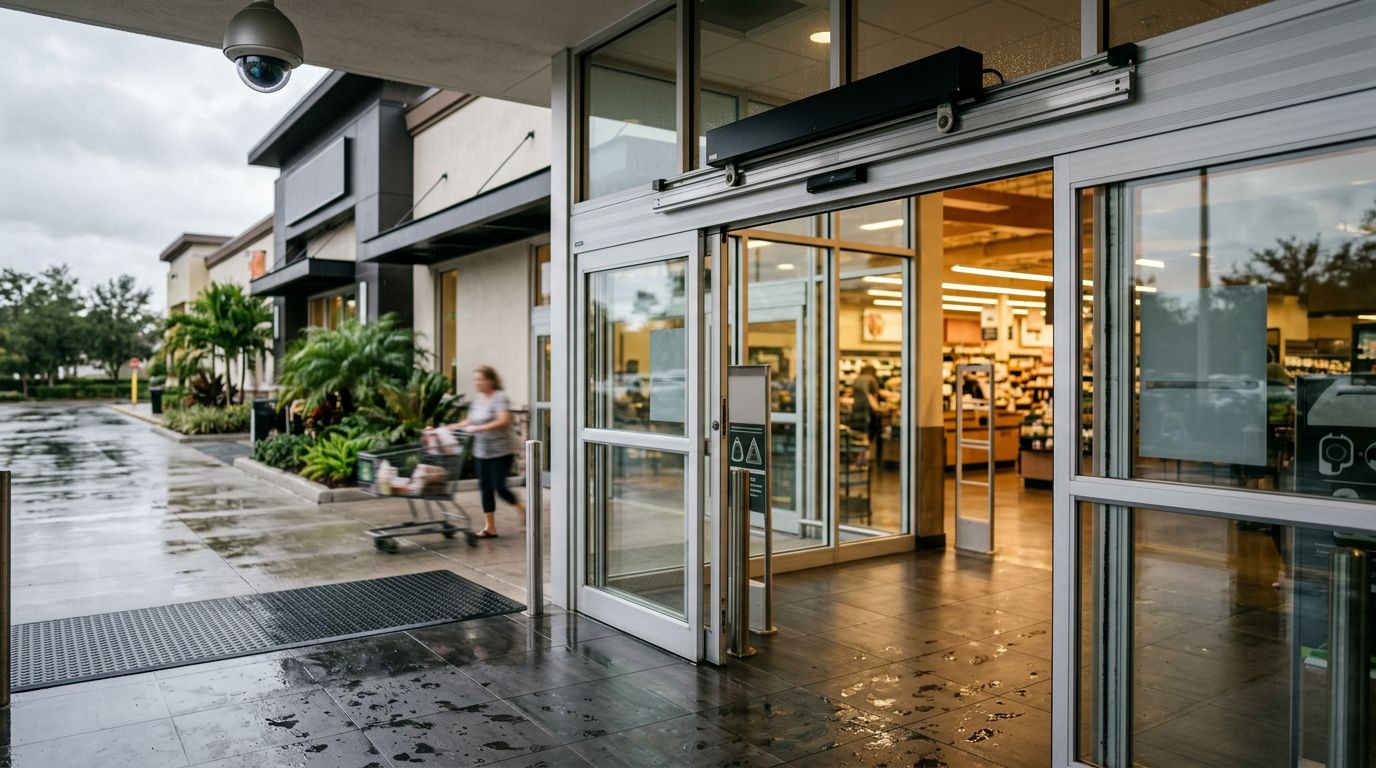
A grocery store automatic door can turn a routine stop into a painful accident in seconds. In Florida automatic door claims, the strongest proof often sits in sensor logs, repair notes, and store records that can disappear fast.
Those records matter because a doorway can fail in small ways before it fails in a big one. A door may close too soon, reopen without warning, or react badly to a cart, a child, or wet shoes near the entrance. The question is often simple: did the store maintain the door the way it should have?
Key Takeaways
- Sensor logs and repair records can help show whether an automatic door malfunctioned or had repeated problems.
- Florida grocery stores must inspect and maintain doors and the surrounding entrance area.
- Rainwater near the entrance can make a door-related claim stronger, especially after a storm.
- Photos, witness names, medical records, and an incident report can protect your claim.
- Damages may include medical bills, lost income, future care, and pain and suffering.
Why grocery store automatic doors cause injuries
Automatic doors usually fail in predictable ways. The sensor may miss a person standing too close. The closing speed may be too fast. A misaligned track can make the door jerk or stop. Sometimes the door works, but the area around it does not.
Customers can get hurt in several ways. A door can strike a hand, shoulder, arm, or head. It can catch a cart and twist the body. It can also trigger a fall when someone jumps back, stumbles, or slips at the threshold.
Rain makes these incidents worse. Water tracked in from the parking lot can spread across smooth tile near the entrance. That creates a second hazard right where people expect the doorway to be safest. For more on that kind of entrance danger, see liability for tracked-in water in Florida.
A clean-looking entrance can still hide a weak sensor, a bad threshold, or a repair delay that matters later.
Florida premises liability law usually turns on inspection, maintenance, and notice. If the store knew about the problem, or should have found it through regular checks, that can support the claim. Even a short delay in service can matter when a door is used by hundreds of shoppers a day.
What sensor records can prove in a Florida grocery store claim
Sensor records are valuable because they can show what the door did before and after the injury. They can also show whether the problem had happened before. That can help move the case from a guess to a documented failure.
These are the records that often matter most.
| Record type | What it may show | Why it helps |
|---|---|---|
| Door controller logs | Fault codes, reopen events, activation times | Can show repeated trouble or a sudden failure |
| Maintenance service notes | Prior complaints, repairs, part replacement | Can show notice and how the store responded |
| Incident report | What employees wrote right after the event | Captures the account before memories fade |
| Video footage | Door movement and customer actions | Confirms how the injury happened |
| Inspection schedule | Whether the door was checked on time | Helps show missed or late inspections |
A good claim often uses several records together. A sensor log may show a fault at 2:14 p.m. A witness may say the door slammed shut at that same time. A medical record may show the injury was reported that afternoon. When those pieces match, the story becomes harder to dispute.
The problem is that these records do not always stay available for long. Some systems overwrite logs. Some stores keep only brief service notes. Others hand the maintenance work to a third-party contractor, which means the paper trail sits in more than one place.
That is why preservation matters early. A lawyer can send a request for video, logs, inspection notes, and vendor records before they disappear. If the store waits, the evidence can weaken even when the injury was real.
Steps that protect your claim after an automatic door injury
The first hours after the accident matter. Pain can set in later, but the proof starts now.
- Get medical care right away. Even if the injury seems minor, a record from the same day helps link the harm to the door.
- Report the incident to the store manager and ask for a copy of the report.
- Take photos of the door, the floor, warning signs, tracks, mats, and your injuries.
- Get names and phone numbers of witnesses and employees who saw the incident.
- Keep your clothing, shoes, and any broken items in the same condition they were in after the fall or impact.
Do not rely on the store to save everything for you. Ask about video quickly, because many systems keep footage for a short time. Also save receipts, follow-up visit notes, and records of missed work.
A prompt call to a lawyer can help if the store blames you or downplays the injury. Legal help for premises liability cases in Florida can also help with preservation letters, records requests, and insurer pushback.
Avoid giving a recorded statement before you understand the full picture. A simple description can be turned against you if the store later claims the door was working or that you moved too fast. Short, careful statements are safer than guesses.
Damages and defense arguments in automatic door cases
A grocery store automatic door injury can lead to more than an ER bill. Medical treatment may include imaging, follow-up visits, physical therapy, or surgery. Time away from work can add wage loss. Some people also deal with lingering pain, limited motion, or fear around busy entrances.
Those losses are part of the claim. For a broader look at what may be recovered, see Florida slip and fall damages.
Stores and insurers often raise a few common defenses. They may say the door worked properly that day. They may claim the customer was distracted. They may argue that the rain was obvious or that no one had reported a defect before the injury. They may also point to comparative fault and say the shopper moved too close or ignored the area.
That is where sensor records can matter most. A fault code, repeated service call, or reopen event can cut through a later denial. Inspection records can also show whether the store checked the door often enough. If the same doorway had prior complaints, that history can help show the risk was not new.
Florida’s comparative fault rule can reduce compensation if the injured person shares blame. That makes early evidence even more important. The more clearly the records show the door malfunctioned, the harder it becomes for the store to shift the story onto the customer.
Conclusion
An automatic door injury may look sudden, but the proof usually comes from what happened before and after the impact. Sensor logs, maintenance notes, and video can show whether the store had a real problem or ignored warning signs.
If you were hurt in a Florida grocery store, the first task is to protect the records. The second is to connect those records to your medical treatment and the conditions at the entrance. When the evidence lines up, the claim becomes far stronger than a memory of a bad moment at the door.