
Florida Backing-Out Crash Claims and Reverse Camera Footage
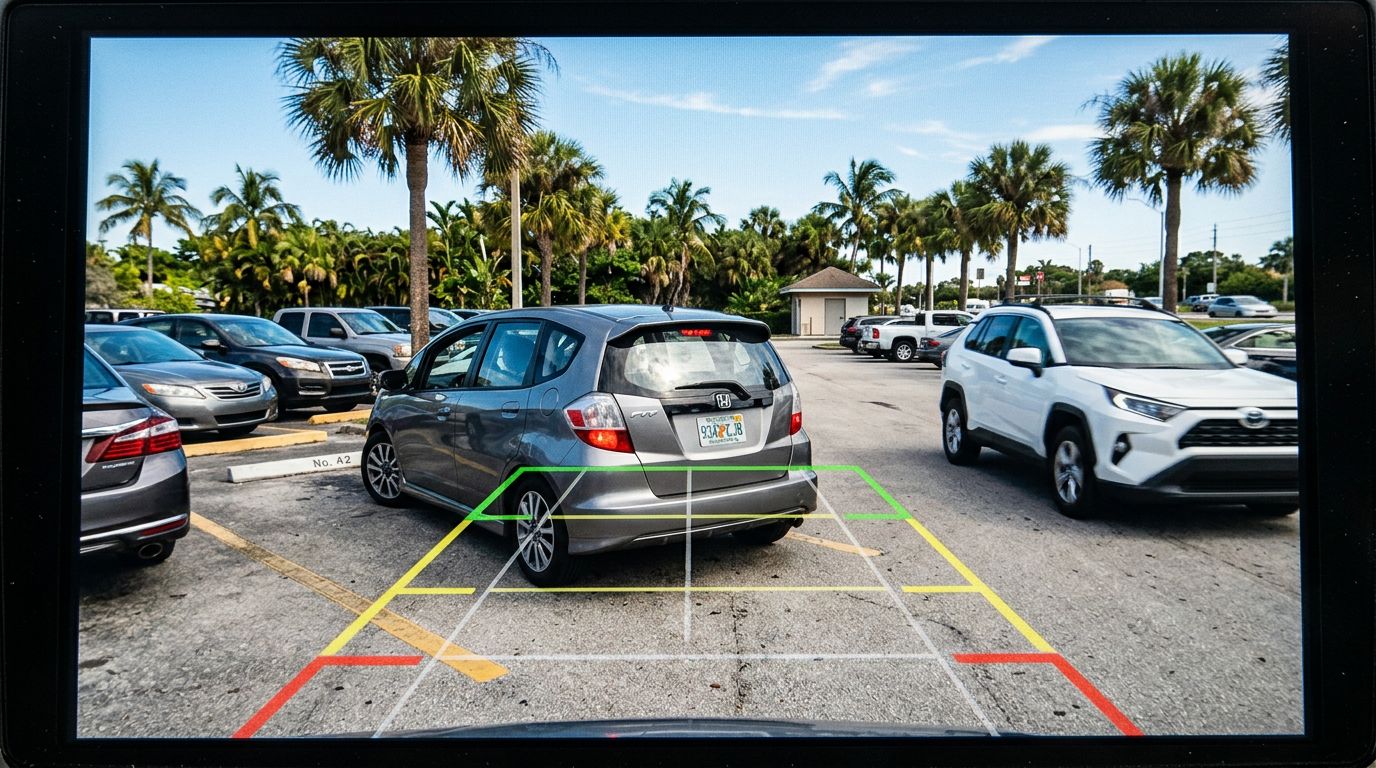
Backing-out crashes happen in seconds, but the claim can drag on. In Florida, a low-speed impact in a driveway or parking lot can still lead to pain, missed work, and a fight over fault.
Florida backing-out crash claims often turn on small details. Reverse camera footage can show where the car moved, how close the other vehicle was, and whether the driver had room to reverse safely.
That kind of evidence matters because memories blur fast. The next sections explain what the footage can show, what it cannot, and what else helps a claim hold up.
How backing-out crashes usually happen
These crashes often start in places where people expect a quick move, not a collision. Parking spaces, apartment lots, grocery store aisles, office lots, and driveways all create tight spaces with poor sight lines.
A driver backing out may see nothing in the rear window, then hit a car, bicycle, pedestrian, or parked vehicle. Another driver may come through the lane at the same time and say the backing driver never checked. Both stories can sound believable at first.
That is why these claims often turn into a dispute over timing. Who was already moving? Was the other vehicle in the lane before the backup started? Did one driver pause, or did the car roll back without warning?
The answer can matter a great deal. If the rear-facing video shows the car moving straight back into an open lane, the insurer may have a clear picture. If the footage shows another car speeding through a lot or cutting across a lane, fault may look very different.
In these cases, fast legal help can keep the facts from getting lost. Florida car accident attorneys can review the scene evidence, the damage pattern, and the video before the story gets reshaped by an adjuster.
Why reverse camera footage can change the claim
Reverse camera footage is useful because it captures the crash as it unfolds. It can show the vehicle’s movement, the angle of the turn, and whether another car was already behind it. It may also show brake lights, lane markings, parking spaces, or a driver who stopped and then kept backing.
That matters because a crash claim is often a contest between memory and video. A witness may be helpful, but a camera feed can show the scene in a way people remember less clearly later.
A rear camera can show the move, but the claim still needs proof of injury and fault.
Still, backup camera footage has limits. Most systems only show what is directly behind the car. They may miss side traffic, a pedestrian approaching from the left, or a vehicle that came through the lane too quickly to appear in frame for long. Lighting, rain, glare, and a dirty lens can also make the image harder to use.
Sometimes the camera feed helps most when it is combined with the damage pattern. A hard rear impact may support one version of events. Light contact with a side scrape may support another. Either way, the footage becomes stronger when it matches the physical evidence.
The key is to preserve it early. Some systems overwrite old footage, and once the file is gone, it can be hard to replace.
The other proof that backs up the video
Video rarely tells the whole story. It works best when other records confirm what happened before and after the impact. That is where the rest of the claim matters.
Here is a quick look at the evidence that often supports a backing-out crash case:
| Evidence | What it can show | Why it helps |
|---|---|---|
| Reverse camera footage | Vehicle movement and timing | Shows how the collision began |
| Scene photos | Car positions, damage, lot layout | Adds context the video may miss |
| Witness names | What someone saw in real time | Supports or challenges each driver’s story |
| Medical records | Injuries, treatment, and symptoms | Connects the crash to the harm |
| Repair estimates | Damage patterns and force of impact | Helps match the damage to the event |
The strongest claim usually has more than one kind of proof. If the camera shows the backing move, the photos show the final position, and the medical records show the injury, the insurer has less room to guess.
If you are trying to build a record after a crash, how to prove your car accident claim explains the kind of documentation that can make a difference. A claim gets stronger when the evidence fits together cleanly.
Witness statements can help too, especially in crowded parking lots. A customer, neighbor, or worker may have seen the other car move first, or may have heard the crash and looked up at the right moment. Even a short statement can matter when the footage is unclear.
Medical care also matters more than many people expect. A small bumper hit can still lead to neck pain, back pain, or a shoulder injury. If you wait too long to get checked, the insurer may argue that something else caused the symptoms.
Fault, PIP, and injury claims in Florida
Florida claims have an extra layer because the state uses a no-fault system for the first round of medical coverage. In many crashes, your own personal injury protection, or PIP, pays first. That does not end the claim if your injuries are more serious.
If the crash caused injuries that go beyond the basic PIP level, you may have a claim against the at-fault driver for additional losses. Those losses can include medical bills, wage loss, and pain related to the crash.
Backing-out cases can get messy because insurers often look for shared fault. They may say both drivers had a duty to watch where they were going. They may argue that the other car was speeding through the lot, or that the backed-up driver failed to yield.
Florida law can reduce recovery when fault is shared, so the details matter. That is why reverse camera footage is so useful. It can break a deadlock when both drivers swear the other one was careless.
When the crash causes more than a sore neck, Florida personal injury lawyers can help connect the footage, the medical records, and the wage loss into one claim file. The goal is not to make the crash sound worse than it was. The goal is to show what happened with clear proof.
What to do right after the crash
The best time to protect a backing-out claim is right away. The video may still be on the car, the nearby business may still have surveillance, and the witness who saw the impact may still be nearby.
- Save the reverse camera file and any phone video.
- Take photos of both vehicles, the parking area, the driveway, and the damage.
- Get names and contact details for witnesses.
- Seek medical care if you hurt, even if the pain feels mild at first.
- Ask nearby businesses or property managers to keep any surveillance video.
Some systems overwrite footage quickly. That makes the first day or two important. If the recording lives on a phone app or memory card, back it up before the file is lost. If a store camera captured the lane, ask for the footage before it gets erased.
A written note also helps. Write down the time, weather, lighting, and what you saw before the crash. Small details fade fast, and they can be useful later when the insurer starts asking questions.
Do not assume the damage tells the full story. A low-speed rear impact can still cause a painful injury. Likewise, a small dent does not prove the crash was minor. The camera, the photos, and the medical records need to work together.
Conclusion
Reverse camera footage can make a backing-out crash much easier to prove, but it usually works best as part of a larger record. Photos, witness statements, repair estimates, and medical records still matter.
In Florida, backing-out crash claims often come down to timing, visibility, and quick action. The driver who saves the footage early usually has a better chance of showing what really happened.
That is the heart of these cases. A rear camera may catch the moment, but the claim succeeds on the details around it.