
Florida Bed Sore Claims and Turning Chart Records
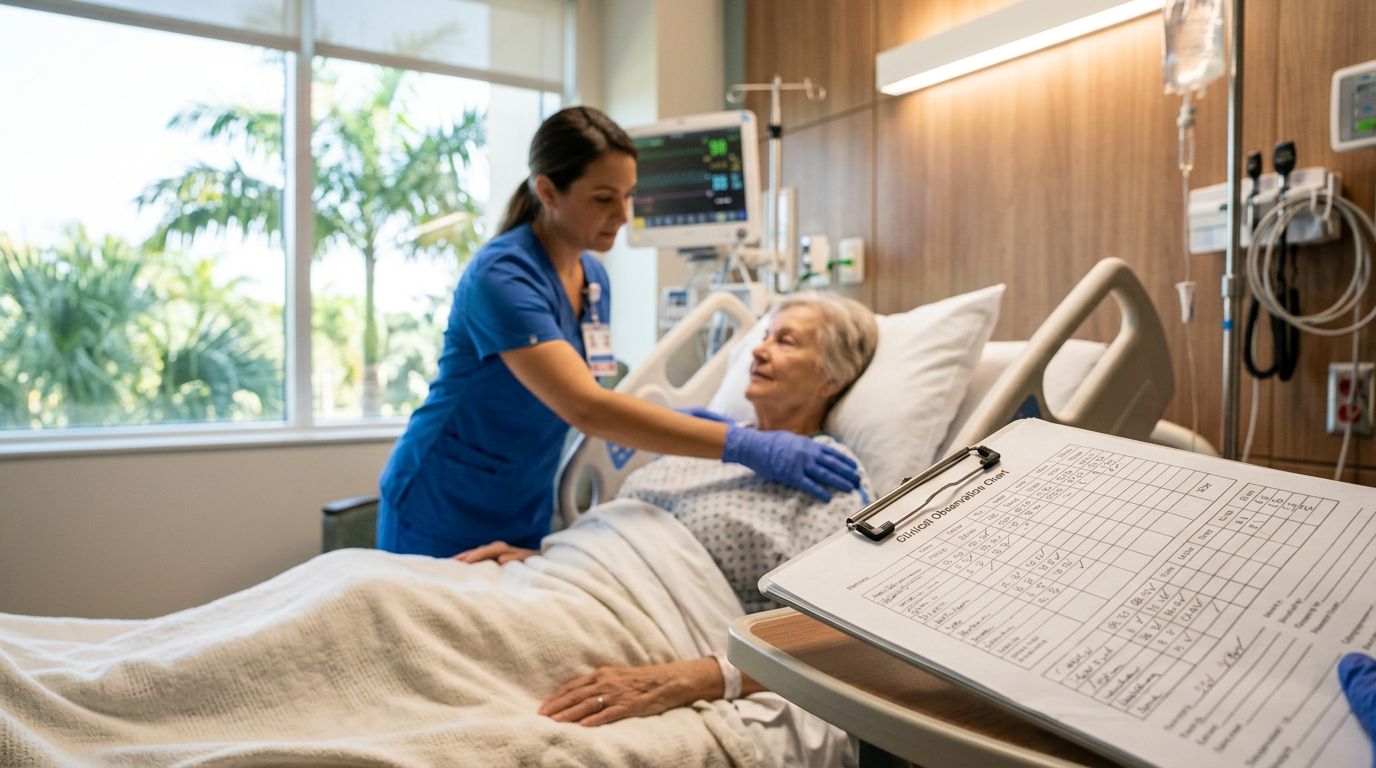
Florida bed sore claims often rise or fall on paper, not memory. A chart that shows regular turning, skin checks, and wound care can support a hospital’s defense, while missing entries can point the other way.
If you suspect a loved one developed a preventable pressure injury in a Florida hospital, the details matter. Who documented the turns? When did the wound first appear? Did the records match the bedside condition? Those questions can shape the claim.
Key Takeaways
- Turning chart records can be powerful evidence because they show whether staff repositioned a patient as ordered.
- Missing or inconsistent entries can matter just as much as what the chart says.
- Bed sore claims are not automatic, because some patients have serious risk factors and some wounds are hard to avoid.
- Other records matter too, including nursing notes, wound photos, skin assessments, and care plans.
- A careful review of the medical file often shows whether the hospital met the standard of care.
How Bed Sores Become a Florida Claim
A bed sore, also called a pressure injury, develops when constant pressure cuts off blood flow to the skin and tissue. Hospitals see these injuries in patients who are immobile, sedated, recovering from surgery, dealing with a stroke, or too weak to shift on their own.
A claim usually focuses on whether the injury could have been prevented or reduced with proper care. That care may include turning the patient, checking the skin, using support surfaces, keeping the skin clean and dry, and responding fast when redness appears. When staff ignore those steps, a preventable wound can become a serious legal issue.
Florida law does not treat every bed sore as negligence. Some patients are at high risk because of diabetes, poor circulation, malnutrition, incontinence, or severe illness. Still, a high-risk patient is not the same as a forgotten patient. Risk calls for more attention, not less.
The main legal question is simple: did the hospital provide reasonable care under the circumstances? If the answer is no, the chart often tells that story before anyone else does.
Why Turning Chart Records Matter So Much
Turning chart records, also called repositioning logs or turning schedules, are a window into day-to-day care. They show whether staff moved the patient at the right intervals and whether anyone noticed early warning signs.
These records matter because pressure injury prevention depends on action over time. One missed turn may not prove anything by itself. A pattern of gaps, late charting, or entries that look copied and pasted can be far more telling.
A chart can show more than the timing of a turn. It can also reveal whether the patient was assessed after the turn, whether the nurse noted redness, and whether any protective measures were used. When those details are absent, the record may look neat but say very little.
A complete chart is helpful, but a chart that conflicts with wound photos, nursing notes, or family observations can raise a serious question.
Hospitals sometimes argue that the record proves care was provided. That argument only goes so far if the entries do not line up with the wound’s progression. If the chart says the patient was turned regularly, yet the wound worsened fast, the timeline deserves a closer look.
Other Records That Strengthen or Weaken the Case
Turning logs are only one piece of the picture. A strong claim often depends on how several records fit together. The chart becomes much more useful when it matches the rest of the file.
Here is a quick look at the records that often matter most:
| Record Type | What It Can Show |
|---|---|
| Nursing notes | Complaints, skin changes, interventions, and staff observations |
| Turning or repositioning logs | Whether staff say they moved the patient on schedule |
| Skin assessments | Early redness, breakdown, or changes in pressure areas |
| Wound care notes | Stage, size, drainage, odor, treatment, and progression |
| Care plans | Whether the patient was recognized as high risk and given preventive steps |
| Medication and sedation records | Whether the patient was too sedated or weak to reposition independently |
| Photos and measurements | How the wound looked at different points in time |
The best evidence often comes from the details that do not match. For example, a care plan may flag the patient as high risk, but the bedside notes may show limited prevention. A turning log may claim regular movement, but wound photos may show a pattern of worsening pressure damage.
If you are trying to gather this material, essential documentation for injury claims can help you organize the records before they are harder to find. The goal is not to collect every page. The goal is to collect the pages that show timing, condition, and response.
What Usually Hurts a Florida Bed Sore Claim
Hospital cases often turn into arguments about timing and responsibility. The hospital may say the patient was already fragile or that the wound was unavoidable. Sometimes that defense is valid. Other times, it hides weak documentation.
Common defense points include:
- The patient arrived with a pre-existing wound.
- The patient refused turns or removed dressings.
- The patient was too unstable for frequent repositioning.
- The wound developed despite reasonable preventive steps.
- The injury appeared slowly and could have been caused by the patient’s medical condition.
Those arguments are easier to test when the chart is complete. They are harder to trust when the record has large gaps, late entries, or notes that look repetitive. A hospital can say all the right things after the fact, but a paper trail that starts late or changes often may raise more questions than it answers.
Staffing can also matter. If one nurse cared for too many patients, turning and skin checks may have slipped. That issue does not excuse poor care, but it helps explain how the injury developed. Records showing call lights, delayed responses, or repeated requests for help can support that picture.
What to Do If You Suspect a Preventable Pressure Injury
Time matters after a serious wound appears. The sooner you gather records, the easier it is to see what happened.
- Ask for the full medical record, not just the discharge summary.
- Save wound photos with dates, if you have them.
- Write down when you first noticed redness, drainage, or open skin.
- Keep names of nurses, aides, and doctors who spoke with you.
- Request the turning chart, skin assessments, and wound care notes.
- Have a lawyer compare the records against the injury timeline.
That review can be especially useful when the bedside story and the chart do not match. A claim is stronger when the paper trail shows exactly when the injury began, what staff knew, and how they responded.
If you want legal help, Florida personal injury attorneys can review the chart, identify missing pieces, and decide whether the case fits a medical negligence or hospital injury claim. A close reading of the records often tells a more reliable story than a quick summary from the hospital.
Conclusion
Florida bed sore claims often come down to a few pages of records, especially the turning chart. Those entries can show whether staff moved the patient, checked the skin, and responded before the wound got worse.
The strongest cases are usually built on more than one document. When turning logs, nursing notes, wound photos, and care plans point in the same direction, the picture becomes much clearer.
If a pressure injury appeared in the hospital and the paperwork feels thin or inconsistent, the chart may be the best place to start.