
Florida Bicycle Dooring Claims: Proof Injured Riders Need
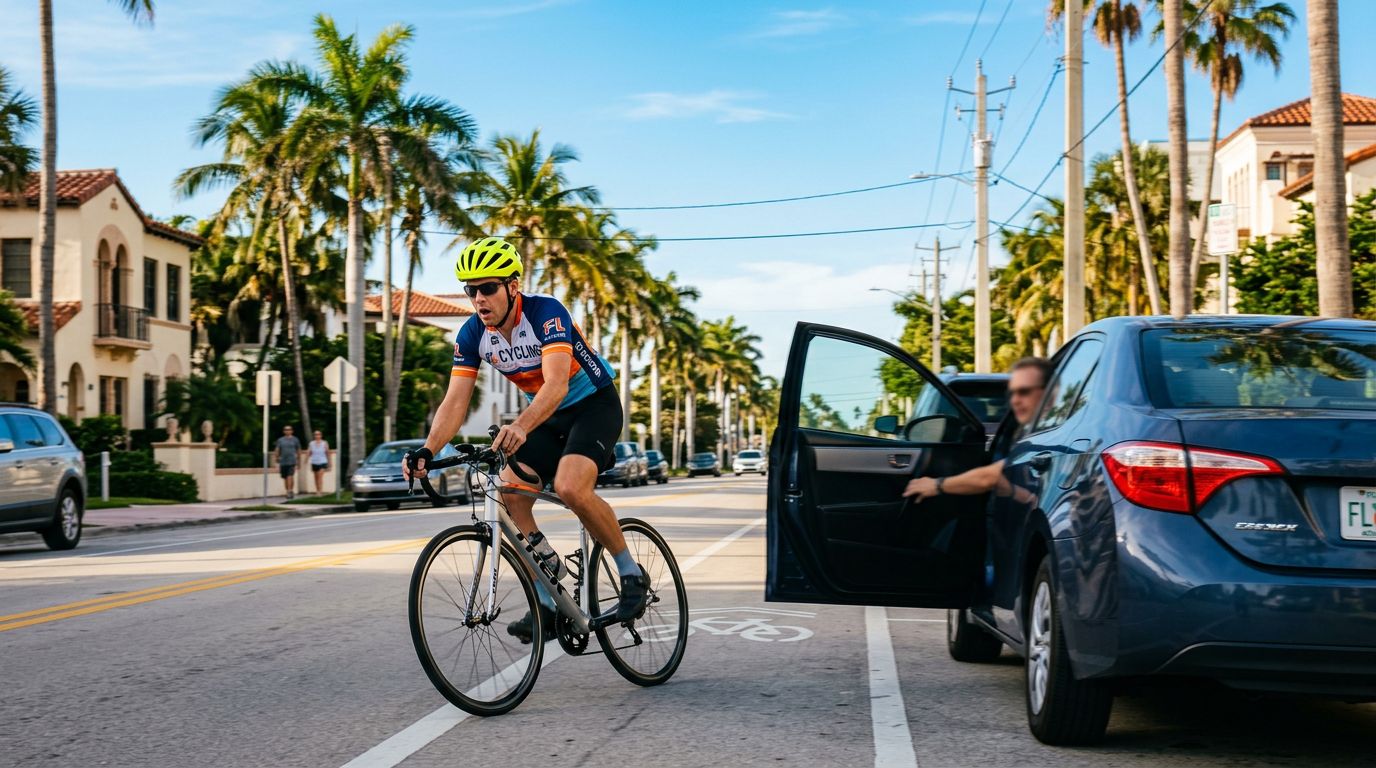
A bike rider can be struck by a car door in seconds, and the fallout can last for months. The injury is easy to see, but the proof behind the claim is often harder to build.
That matters because Florida bicycle dooring claims often turn into blame disputes. An insurer may say the cyclist was too close, riding too fast, or should have seen the door opening. Strong evidence answers those arguments early and keeps the case grounded in facts.
Why dooring crashes turn into fault fights
Dooring crashes look simple on the surface. A person opens a door into a cyclist’s path, the rider has little room to react, and impact follows almost immediately.
The problem is that these cases rarely come with one clean witness or one clear photo. The car may be parked, the driver may claim the door opened for only a second, and the rider may be on the ground before anyone can explain what happened. That gap gives insurers room to argue.
In many cases, the key question is not whether the rider hit a door. It is whether the door was opened without checking for traffic, and whether the rider had a reasonable chance to avoid it. That is where proof matters.
A case gets stronger when the evidence shows three things:
- the bike lane, shoulder, or travel lane was blocked by the open door
- the door opened into the rider’s path
- the crash caused the injuries claimed
When those points line up, the story becomes much harder to twist. Without them, the insurer may try to shift fault onto the cyclist.
The evidence that carries the most weight
The strongest file tells one clear story. It shows where the car was parked, where the rider was traveling, and how the door created the impact.
| Evidence | What it can show | Why it matters |
|---|---|---|
| Photos of the scene | Door position, bike lane markings, car placement | Helps place the bike and vehicle in the same space |
| Bike damage | Point of impact and force of the collision | Can support the rider’s account |
| Video footage | The sequence before, during, and after the crash | Removes guesswork and weak excuses |
| Witness statements | Whether the door opened suddenly, and how close the rider was | Corroborates the cyclist’s version |
| Police crash report | Officer observations, scene notes, and any citations | Creates an early record of the event |
| Medical records | Injury type, timing, and treatment | Links the crash to the harm |
| Helmet or clothing damage | Impact points and trauma pattern | Supports the force and direction of the hit |
No single item has to prove everything. A claim usually gets stronger when several pieces fit together without gaps.
A solid claim does not depend on one dramatic photo. It depends on a set of facts that all point in the same direction.
If you took pictures after the crash, save the originals. If someone else captured video, get a copy right away. Businesses often overwrite footage quickly, and that lost clip may be the best evidence in the case.
Medical records and the timeline of injury
After a dooring crash, medical care does more than treat pain. It creates the record that ties the collision to the injury.
Get checked as soon as you can, even if the pain feels minor at first. A wrist fracture, shoulder injury, concussion, or neck strain may get worse later. If you wait too long, the insurance company may argue that something else caused the problem.
Tell every provider how the crash happened in plain language. Say that a car door opened into your path. Say which side of the body hit the pavement. Say where the pain starts and how it changes. Those details help the chart reflect the accident, not a vague complaint.
Keep every follow-up visit. Missed appointments can make the injury look less serious than it is. Save discharge papers, therapy notes, prescriptions, and receipts for braces or mobility aids. Those records help show how the crash changed your day-to-day life.
A clean medical timeline can be one of the best tools in Florida bicycle dooring claims. It shows when the pain started, how long it lasted, and what treatment you needed.
Mistakes that weaken a bicycle dooring claim
Small choices after a crash can cause big problems later. Some mistakes are easy to avoid, but once they’re made, the damage is hard to undo.
- Leaving without documenting the scene: If you can do so safely, photos of the door, the car, the bike, and your injuries matter.
- Guessing about speed or fault: A rushed statement can give the insurer a quote to use against you.
- Delaying medical care: Gaps in treatment make it easier to question the injury.
- Posting on social media: A harmless photo can be taken out of context and used to downplay pain.
- Repairing or discarding the bike too soon: The bike itself may contain clues about where the impact happened.
The safest move is simple. Preserve everything until someone with experience reviews it.
How a Florida lawyer builds a stronger case
Dooring claims move fast at the start, then stall when proof disappears. A lawyer can step in before that happens.
In a strong case, the legal team may send preservation letters, request nearby video, interview witnesses, and compare the crash report with the medical record. They may also review the parking setup, the bike lane, and the angle of the open door to see whether the driver or passenger had room to check before opening it.
That work matters because insurers often look for the weakest link. If they can say the rider was partly at fault, they may try to lower the value of the claim. Clear proof limits that tactic.
For riders who need help with the injury claim itself, Florida bicycle accident attorneys can gather the records, handle the adjuster, and push for a fair review of the facts. That can be especially important when the injuries are serious or the other side denies responsibility.
A lawyer can also identify every available insurance policy. In some cases, the driver, vehicle owner, or another policy may matter. The right coverage source can change the value of the claim.
Conclusion
Dooring cases often rise or fall on proof, not assumptions. The best evidence shows where the rider was, how the door opened, and how the injury happened.
The sooner that proof is preserved, the harder it is for an insurer to rewrite the story. When a parked car door cuts into a bike lane, facts carry more weight than excuses.