
Florida Bobtail Truck Crash Claims and Insurance Gaps That Matter
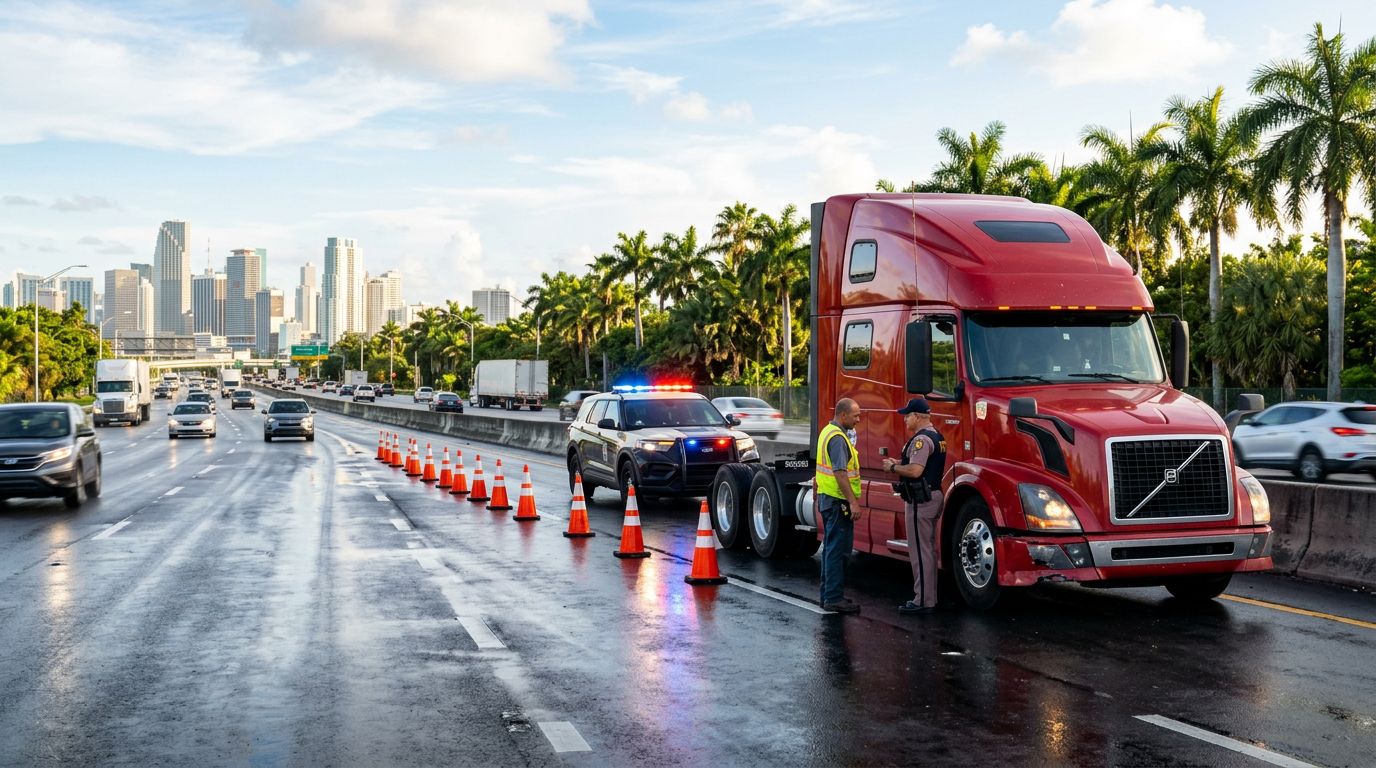
A bobtail crash can look simple from the road, then the insurance file turns into a maze.
That matters because the tractor may be on the highway without a trailer, yet the driver may still be working for a motor carrier. In those cases, the biggest fight is often not fault alone, but which policy should pay and which one tries to step aside.
If you’re already sorting through a Florida company vehicle accident claim, the same coverage questions often show up here. The details at the moment of impact can change the whole case.
Why bobtail crashes create tougher claims
Bobtail driving usually means a tractor is on the road without a trailer. Drivers may be heading home, moving between jobs, or repositioning equipment.
That sounds simple, but insurers look at the trip’s purpose, the lease, and the dispatch record. Was the driver off duty, or still under the motor carrier’s control? Was the tractor empty because the load had been dropped, or because the next assignment had already started?
Those details shape liability. In Florida bobtail truck claims, a single line in a dispatch log can matter more than a witness’s guess.
The crash may also involve a leased owner-operator, a fleet truck, or a driver using a company tractor for business errands. In each setting, the relationship between the driver and the carrier matters. So does the exact time, route, and reason for the trip.
When the insurer argues that the truck was not in service, the claim can stall fast. When the carrier argues the driver was still working, another policy may be pulled into the fight. The wreck itself may be the same, but the insurance story changes with one fact.
The insurance gaps that leave people underpaid
Insurance for these crashes often looks layered, but each layer has a gap.
| Policy type | Typical role | Common gap |
|---|---|---|
| Motor carrier liability | Covers work-related driving for the carrier | The carrier may deny the driver was in service |
| Bobtail or non-trucking liability | May cover a tractor without a trailer during non-business use | It often excludes hauling, dispatch, or work errands |
| Contingent liability | May protect the lease arrangement | It may apply only after other coverage is denied |
| Umbrella or excess policy | Adds limits above primary coverage | It only helps if the base policy responds first |
Florida trucking insurance requirements set a floor, but they do not guarantee the right policy pays after a bobtail wreck. A general guide to Florida trucking insurance requirements shows how broad trucking coverage can be, but broad does not mean complete.
A bobtail policy can exist and still leave a claim short if the driver was under dispatch or doing work for the motor carrier.
For owner-operators, the hardest part is often the policy label. “Bobtail” and “non-trucking liability” sound broad, but many policies exclude trips tied to work. If the tractor had no trailer yet the driver was on a company run, the insurer may push the loss onto another policy, or deny it altogether.
A plain-language overview of bobtail insurance basics shows why the name alone is never enough. The real question is whether the trip was personal, business-related, or somewhere in between.
Proof can decide which policy pays
Proof decides the gap question.
Photos of the tractor, trailer hitch, damage points, and roadway can show whether the truck was truly bobtail. Dispatch messages, electronic logging device data, GPS records, lease papers, repair orders, and bills of lading can reveal who controlled the trip.
Medical records matter too. They connect the crash to the injuries and stop the insurer from blaming an old condition. Even a short delay in treatment can give the adjuster room to argue.
Trucking companies move fast after a wreck. So should you. Records can be overwritten, and phone data can vanish. If you are already thinking about Florida truck accident attorneys, that is often because the evidence window is closing.
A claim built on guesswork gives the insurer room to narrow the policy. A claim built on logs, photos, and timeline evidence makes that much harder.
Florida fault rules and deadlines still matter
Florida fault rules still shape the value of the case.
Under the state’s modified comparative negligence rule, a driver who is more than 50 percent at fault cannot recover damages. That gives insurers a reason to argue about lane changes, speed, following distance, or distraction.
The legal deadline matters too. Most injury suits must be filed within two years, and missed time limits can end the claim before the facts are heard. That is a hard cutoff, not a suggestion.
Florida’s insurance rules are also shifting in 2026, including the move away from the old no-fault system on July 1. Even so, a serious truck crash usually needs a third-party claim, because the medical bills and lost income can run past the first policy layer quickly.
Current PIP benefits are small compared with truck injuries, so the coverage fight often starts after the first bills arrive. That is why the policy review has to happen early, before the carrier starts pointing to exclusions or the clock runs out.
Conclusion
Bobtail cases are won or lost on details that seem small at first, like whether the tractor was under dispatch, whether a trailer was attached, and which policy sat on top of the stack. Those details decide if a claim is paid, delayed, or denied.
When a commercial truck crash happens in Florida, the best next step is to pin down the coverage, preserve the logs, and keep the fault fight tied to the facts. If those pieces are slipping away, a prompt review by Florida truck accident attorneys can keep the claim on track.