
Florida Broken Curb Fall Claims at Shopping Centers
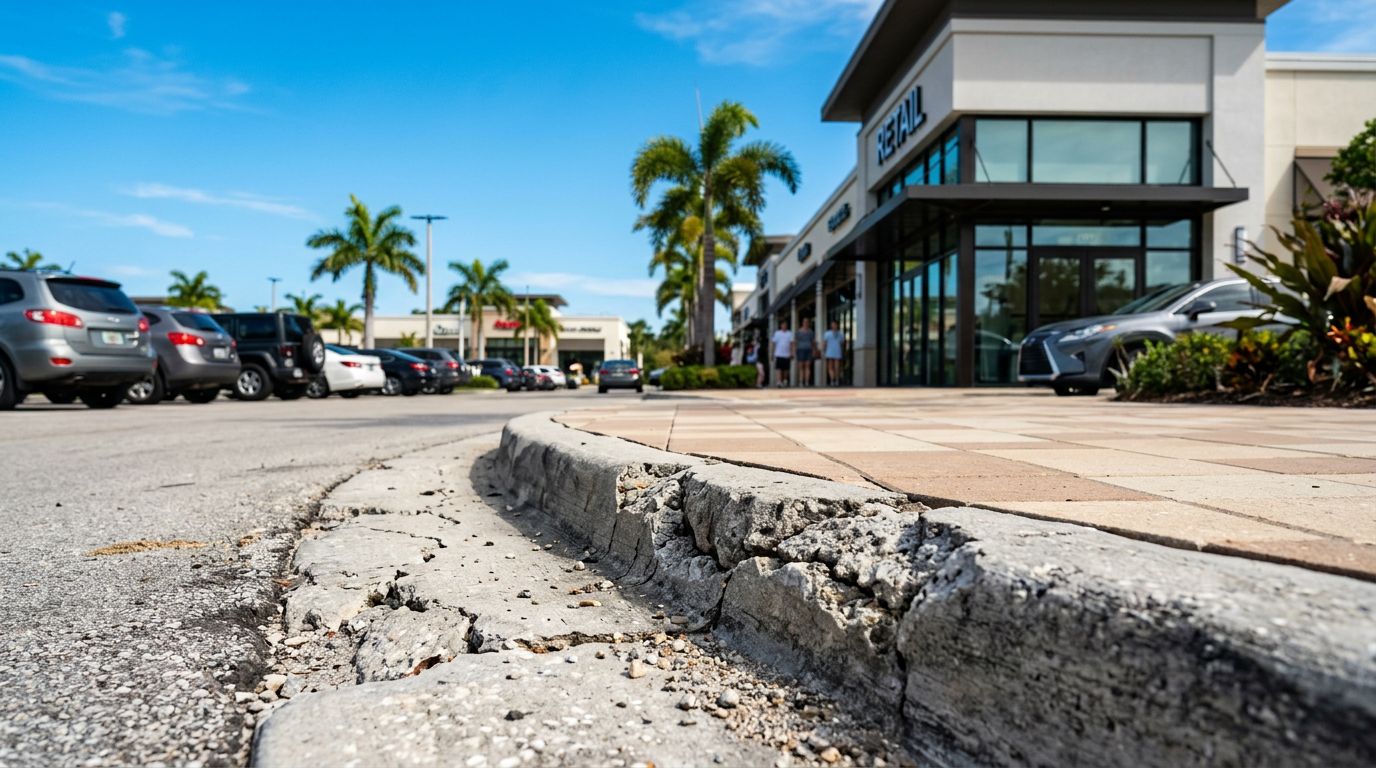
A broken curb can turn an ordinary shopping trip into a painful fall in a split second. In Florida, the claim that follows often depends on proof that the curb was unsafe, that the right party controlled the area, and that repair tickets or complaints existed before the accident.
Shopping centers create messy liability questions because owners, managers, tenants, and contractors may all touch the same space. If you were hurt, photos, witness names, medical care, and repair records can shape the case from the start. The details matter, and the first question is where the hazard came from.
Key Takeaways
- Broken curbs can create dangerous trip points in parking lots, sidewalks, and pedestrian paths.
- Repair tickets, maintenance logs, and complaints may show that the shopping center knew about the problem.
- Liability may fall on an owner, manager, tenant, or contractor, depending on who controlled the area.
- Early photos, witness names, and video requests can help preserve proof before the curb is fixed.
- Compensation may include medical bills, lost income, pain and suffering, and future care.
Why broken curbs at shopping centers cause serious falls
A curb does not have to collapse completely to be dangerous. A chipped edge, lifted concrete, missing section, or uneven transition can catch a shoe and throw a person off balance. At a busy shopping center, that kind of hazard blends into the background.
People look for cars, carts, crosswalks, and store entrances. They don’t study every inch of concrete. That makes a broken curb especially risky near walkways, curb ramps, cart return areas, and parking lot edges. Rain, poor lighting, and heavy foot traffic make the problem worse.
Florida premises cases often turn on notice and control, which is why proving knowledge in Florida slip and fall cases matters so much. If the defect existed long enough, or if complaints came in before the fall, the story changes. A curb that looked minor to one shopper may have been a known maintenance issue to the people running the property.
A fall like this can cause more than bruises. Broken wrists, knee injuries, back strains, and head trauma are common when a person hits pavement. Even a short fall can lead to weeks of pain and missed work.
Who may be responsible for a broken curb
Shopping centers are rarely owned and maintained by just one party. The property owner may hold the land, a management company may handle day-to-day operations, and a tenant may control the area near its storefront. A contractor may also be responsible if repair work was assigned and done poorly.
The question is usually not just who owns the lot. It is who had control over inspections, repairs, and warnings.
| Possible party | What they may control | Why it matters |
|---|---|---|
| Property owner | Long-term maintenance, budget decisions, major repairs | Owners often control the big fixes |
| Property manager | Inspections, work orders, vendor calls | Managers may receive complaints first |
| Tenant | Areas near the store, if the lease gives them control | Tenants can be responsible for assigned spaces |
| Contractor | Repair work and temporary patches | Poor repairs can create a new hazard |
Leases and service contracts often decide who had the duty to inspect and repair. That paperwork can matter as much as the pavement itself. In shared parking lots, more than one company may point at someone else, so the maintenance records become important fast.
How repair tickets show notice
Repair tickets can be powerful because they put dates on the problem. A ticket may show when someone first reported the broken curb, who received the complaint, and whether anyone closed the issue without fixing it right away. If the same curb appears in multiple tickets, that pattern can matter even more.
Businesses use different terms for these records. Some call them work orders, service requests, maintenance logs, or service tickets. Whatever the label, the value is the same. The paperwork can show that the hazard was not a surprise.
A repair ticket can do more than show a broken curb existed. It can show how long the problem sat in the system before anyone fixed it.
Look for the details inside the record. A useful ticket may list the date opened, the assigned vendor, inspection notes, photos, and the date closed. If a temporary patch failed, or if the ticket stayed open after repeated complaints, that can help explain why the curb remained dangerous.
For a fuller record list, see essential evidence for Florida slip and fall claims. Photos, witness statements, video preservation requests, and medical records can work together with the repair history. A single ticket rarely tells the whole story, but it can anchor the timeline.
What to do after a curb fall at a shopping center
The first hours after the fall matter. Pain, shock, and embarrassment can make everything feel blurry, so a simple plan helps.
- Get medical attention right away. Even if you think the injury is minor, let a doctor check for sprains, fractures, or a head injury.
- Photograph the curb from several angles. Capture the broken edge, the walking path, the lighting, and the surrounding parking area.
- Ask for the incident report and the names of any employees who responded. Write down what they said while the details are fresh.
- Save the shoes and clothes you wore. Wear patterns, scuffs, and tears can support your account of how the fall happened.
- Collect witness names and request nearby video. Security cameras, storefront cameras, and handheld phone video can disappear quickly.
If you can, note the weather, the time of day, and whether the area had poor lighting or a distracting crowd. Those facts help show what made the curb hard to see. If you were too hurt to gather this yourself, ask a friend, family member, or bystander to help.
A few minutes of documentation can make a big difference later. Without it, the property owner may claim the curb looked fine or that the fall happened somewhere else.
What a shopping center curb-fall claim may cover
A claim can include the losses tied to the fall, not just the first ER bill. Medical expenses often start with the initial visit, then grow with follow-up care, imaging, therapy, injections, or surgery. Lost wages may also matter if you missed work or had to cut back your hours.
Other losses can be harder to see but still real. Pain, sleep problems, reduced mobility, and the stress of being unable to shop, drive, or work normally can all belong in the case. In serious injury claims, future treatment and reduced earning ability may also matter.
For a closer look at recoverable losses, review types of damages available in slip and fall lawsuits. The amount depends on the injury, the proof, and how the fall changed daily life. Good records make it easier to connect those losses to the broken curb.
Comparative fault can also come up. The defense may argue you were looking at your phone, wearing unsafe shoes, or not watching your step. That does not end the claim. It just means the evidence needs to show how the curb defect played a real role in the fall.
Conclusion
Broken curb claims at shopping centers turn on proof, not guesses. The shape of the curb, the location of the fall, and the maintenance history all matter.
Repair tickets can be some of the most useful records in the file because they show who knew about the hazard and when. Paired with photos, witness information, and medical records, they help tell a clearer story about what happened.
If you fell at a Florida shopping center, the sooner the records are gathered, the better the claim can be built. The broken concrete is only part of the case, the paper trail often tells the rest.