
Florida Construction Zone Crash Claims: Proving Flagger Errors and Lane Shift Fault
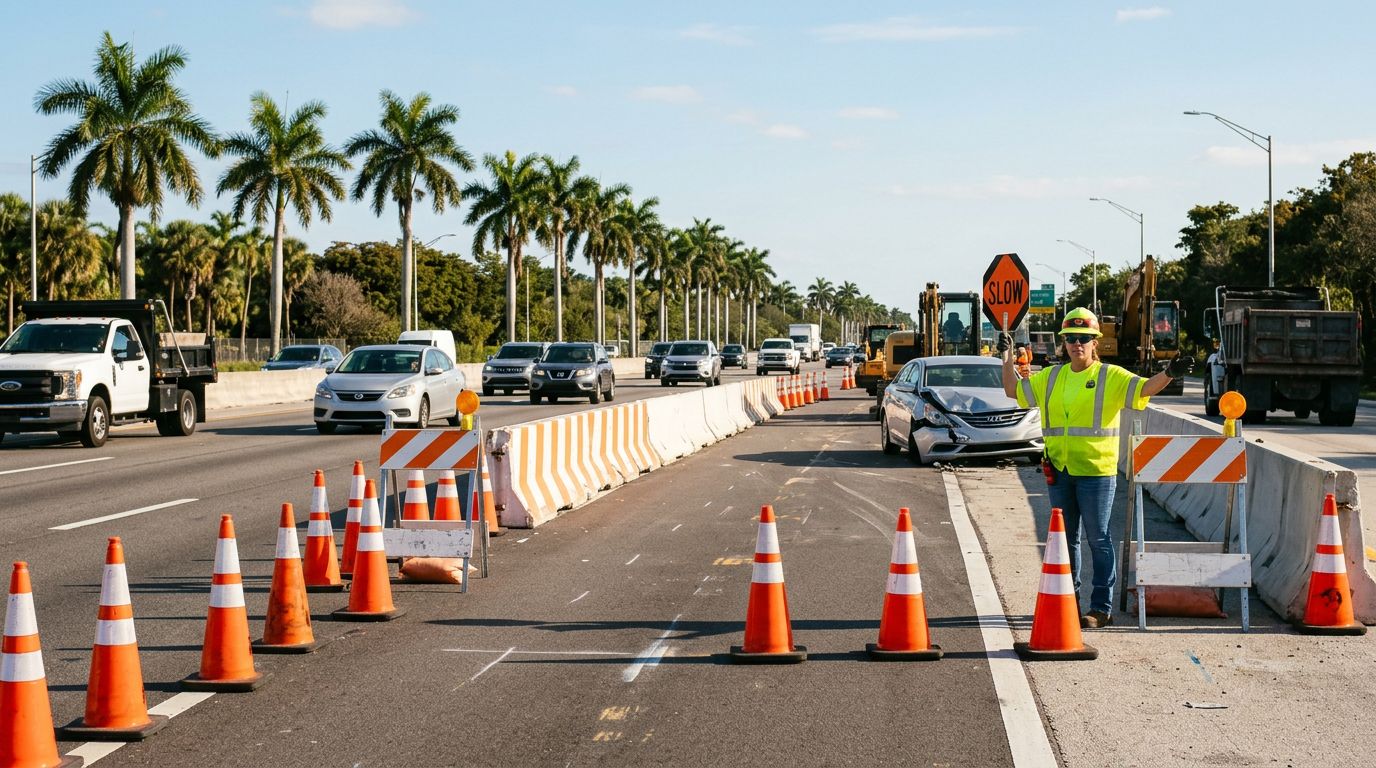
Florida construction zone crash claims often turn on one question, did the work zone itself help cause the wreck? A driver may make a mistake, but a bad taper, a missed signal, or a confusing lane shift can turn a close call into a serious impact.
Those details matter because work zones change fast. Signs move, lanes shift, and crews may guide traffic by hand. If you were hurt in one of these crashes, the evidence has to show what the zone looked like when things went wrong.
The strongest claims tie driver behavior to the condition of the work area. That starts with the flagger’s actions and the lane shift setup.
Why construction zone crashes need a different kind of proof
A normal crash case often focuses on speed, following distance, or a red light. A work zone case adds another layer. Traffic may be narrowed, rerouted, or merged within a few yards.
That means the issue is not only what a driver did. It is also what the crew set up, what signs were visible, and whether the lane shift gave drivers enough room to react. A zone can look safe from far away and still trap drivers up close.
In many claims, the scene itself is part of the fault story. Missing signs, short tapers, cones out of place, and blocked sight lines can all matter. So can the timing of the shift, since crews may move barriers during the day.
In work zone cases, the road can change faster than the vehicles do.
That is why collecting evidence for construction zone accidents matters so much. Photos, video, permit records, and witness names can show whether the lane shift was marked well enough.
Flagger errors that can change the case
A flagger controls traffic with hand signals, paddles, or other direction tools. That role sounds simple, but it carries real risk. One wrong signal can send a car into a closing lane or stop traffic in the wrong place.
Signals that clash with lane changes
Some crashes happen when the flagger’s direction does not match the lane pattern. For example, a driver may be told to move left even though the lane ahead is ending. Another driver may be waved through before the merge opens.
That kind of mismatch can create instant confusion. Drivers may hesitate, brake hard, or swerve. In a crowded work zone, that split-second mistake can be enough to trigger a chain reaction.
The flagger may not be the only problem. If the contractor designed a lane shift that left too little room, the signal may have been unsafe from the start. In that case, the case may point beyond the person on the ground.
Poor sight lines and missed warnings
A flagger has to be seen before the driver reaches the danger point. If the flagger stands too close to the merge, sits behind equipment, or works near cluttered signs, the warning loses force.
Sight lines matter for the driver too. If cones, barrels, or trucks block the view of a taper, the lane can appear open until the last moment. Then the driver gets blamed for a choice the road layout helped create.
Work zones are often busy and loud. A flagger who cannot see far enough ahead may react late. A driver who cannot see the flagger may miss the signal. Both problems can show up in the same crash.
Fatigue, distraction, and rushed direction
Long shifts and constant traffic can wear a flagger down. Even a small lapse can cause trouble. A late wave, a missed stop sign, or a fast hand motion can send vehicles in the wrong direction.
Training matters too. A flagger should know how to control traffic under changing conditions. If the crew was rushed, under-trained, or working with poor radio contact, those facts can support a claim.
The key point is simple. A flagger error is not just a human mistake. It can be a sign that the whole traffic control plan was weak.
Lane shift proof that holds up after the crash
Lane shift claims live or die on details. The road may be reopened by the next day, and that makes fast documentation important. The right proof shows where the shift began, how it was marked, and what drivers could see.
A strong record often includes scene photos, vehicle video, police reports, and any records tied to the project. It also helps to note the weather, lighting, and traffic volume at the time.
Here is a quick look at the kinds of evidence that often matter most:
| Evidence | What it can show | Why it matters |
|---|---|---|
| Advance warning signs | Whether drivers had notice before the merge | Missing or hidden signs can support fault |
| Cones, barrels, and barricades | How the lane shift was marked | Poor spacing can confuse traffic |
| Photos and dashcam video | The exact scene after the crash | Images can preserve details crews later remove |
| Witness statements | What drivers saw and heard | Third-party accounts can back up your version |
| Crash reports and scene notes | Where the impact happened and who was involved | These records help compare the story to the layout |
The best cases show a mismatch between the plan and the pavement. A sign may say one thing, while the lane markings and barriers say another. That gap can become the center of the claim.
If debris, loose gravel, or scattered materials hid the taper, that can matter too. In some cases, the issue overlaps with proving fault after hitting construction debris, since the hazard is part of the work zone itself.
The road should tell a clear story. When it does not, the evidence has to speak for it.
Who may share fault when a lane shift goes wrong
Work zone crashes rarely point to just one person. A driver may have been speeding, but the lane setup may still have been unsafe. A flagger may have waved traffic through, but the contractor may have placed that person in a bad spot.
Several parties can end up in the fault picture:
- The other driver may have followed too closely, sped, or ignored warnings.
- The contractor may have planned or maintained a bad traffic pattern.
- A subcontractor may have handled signs, cones, or lane control poorly.
- The flagger’s employer may have failed to train or supervise the worker.
- A public agency may be involved if the project sat on a state or local road.
- A trucking or hauling company may have put large vehicles into the zone in a way that blocked sight lines or created extra risk.
If a dump truck, haul truck, or other heavy vehicle was part of the work pattern, the details matter even more. Load records, route logs, and driver conduct can all shape the claim. For that kind of case, holding trucking companies accountable for road accidents may become part of the analysis.
Florida no-fault coverage may help with early medical bills, but it does not settle the fault question. When injuries are serious, the claim may move beyond PIP and into a broader injury case.
Public projects can add another layer. Claims against a government entity may involve special notice rules and shorter deadlines, so the clock can matter from day one.
What to do after a Florida work zone wreck
The first hours after the crash often shape the whole case. Conditions change quickly in a construction zone, so the scene should be documented before crews move cones or repaint lanes.
- Get medical care right away, even if pain seems minor.
- Call law enforcement and make sure a report is filed.
- Take photos of signs, cones, lane shifts, skid marks, and the flagger’s position.
- Write down names of workers, contractors, and witnesses if you can.
- Save dashcam files, phone video, and repair records.
- Avoid guessing about fault when you speak with insurers.
If you cannot gather everything yourself, ask someone else to help. A passenger, a witness, or a family member can sometimes preserve the scene while you get treatment.
Timing matters because crews often reopen lanes fast. A bad taper can disappear within hours. Once that happens, the paper trail becomes much more important than the pavement.
Conclusion
A work zone crash is often more than a simple driver mistake. When a flagger gives confusing direction or a lane shift is marked badly, the crash claim can turn on the scene itself.
Strong Florida construction zone crash claims usually rest on proof, not guesswork. Photos, signs, traffic control records, and witness accounts can show whether the warning system failed.
When the road layout and the traffic direction do not match, the details decide who bears the loss.