
Florida Distracted Driving Claims: How Cell Phone Evidence Proves Fault
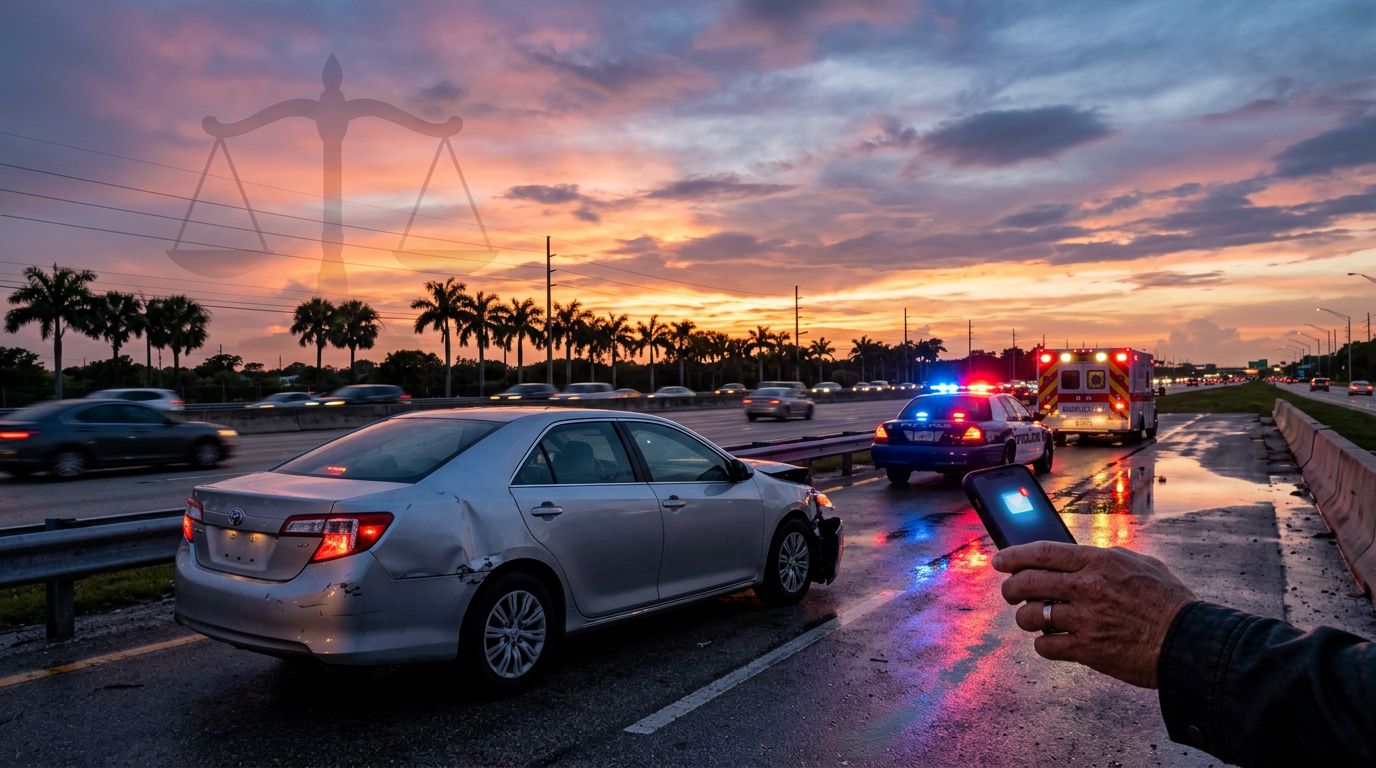
A split second with a phone can change a crash claim. If the other driver was texting, tapping an app, or taking a call, that small distraction can become the key to fault.
That matters because Florida distracted driving claims often turn on proof, not suspicion. The right records can show what happened, when it happened, and whether the driver broke the law.
The challenge is that phone evidence disappears fast. So the sooner the claim gets investigated, the better the chance of building a strong case.
Why cell phone evidence matters after a Florida crash
Many wrecks leave the same question behind: what took the driver’s eyes off the road? Cell phone use is one of the most common answers, and it can help show negligence.
In Florida, texting while driving is banned, and state law also limits handheld phone use in certain zones, including school and work zones. That does not mean every phone glance proves liability by itself. It does mean the records can matter a great deal when they line up with the crash time.
Phone evidence often does two jobs at once. First, it helps show the driver was distracted. Second, it helps connect that distraction to the crash itself. That connection is important, because insurance companies often try to blame weather, traffic, or the injured driver instead.
A strong claim usually starts with a timeline. If the phone log shows an outgoing call or text at the exact time of the wreck, and witnesses saw the driver looking down, the case grows stronger. If the crash report, scene photos, and medical records also line up, the picture gets clearer.
The tighter the timeline, the harder it is to dispute the claim.
What phone records can reveal
Cell phone records do not always show every detail, but they can still tell a useful story. A lawyer can often seek them through a subpoena or other legal process, then compare them with the crash time.
Here is a quick look at what those records may show:
| Record type | What it may show | Why it matters |
|---|---|---|
| Call logs | Incoming and outgoing calls, duration, timestamps | Places phone activity at or near the crash |
| Text logs | Sent and received texts, timestamps | Can support a texting claim even without message content |
| Data usage | App activity, browsing, map use, streaming | Suggests the driver was using the phone for more than calls |
| Cell tower data | Approximate phone location | Helps place the phone near the wreck scene |
The biggest surprise for many people is that the content of a text is not always needed. In many claims, the timestamp matters more than the message itself. If the record shows a flurry of activity at the exact moment of impact, that alone can be powerful.
Still, records have limits. Carriers do not keep everything forever, and some data is overwritten or deleted on a schedule. That is why delay can hurt a case. Once the evidence is gone, it gets much harder to rebuild.
Other evidence that supports the phone records
Phone logs are strong, but they work best with other proof. A distracted driving case often looks like a puzzle, and each piece strengthens the next.
The most useful supporting evidence usually includes:
- Eyewitness statements: Someone may have seen the driver looking down, holding a phone, or drifting before impact.
- Police reports: An officer may note a handheld device, a citation, or a statement made at the scene.
- Dashcam or surveillance video: Video can catch the driver’s posture, lane movement, or hand position before the crash.
- Vehicle data and infotainment logs: Some cars record phone connections, app use, or system activity.
- Scene evidence: A phone on the floorboard, no skid marks, or a clean rear-end impact can support the distraction theory.
Social media can also matter. If a driver posted, messaged, or updated an app right before the collision, that timing may help show distraction. Public posts are only part of the story, but they can back up the phone records.
The best cases do not rely on one fact alone. They show the same story from several angles. When the phone data, the crash scene, and the witness accounts all match, insurance companies have a harder time explaining away the evidence.
How a lawyer builds a stronger claim
A distracted driving claim moves faster when the legal team acts early. First, the attorney sends preservation requests so the other side cannot casually lose phone data. Then, the attorney can push for carrier records, device inspection, and any available app logs.
This is where experienced counsel helps. Florida car accident lawyers know how to ask for the right records and how to compare them against the crash report. If the injuries are part of a broader negligence case, a personal injury law firm can also coordinate the medical proof, wage loss records, and insurance response.
A lawyer also looks for timing gaps. Did the phone show activity five seconds before impact? Did the driver deny using the phone, but the carrier records say otherwise? Did a witness mention a phone before anyone asked about it? Those details matter because insurers often look for small inconsistencies they can use against the claim.
Early action matters for another reason too. Florida claim deadlines are strict, and evidence collection takes time. A case may look simple on day one, then weaken after a few weeks if key records disappear. That is why the first call should happen before the proof starts to fade.
Privacy limits and when phone evidence gets harder to use
Phone evidence sounds straightforward, but privacy rules can create real limits. A lawyer usually cannot just demand every photo, message, or app on a phone without a proper legal basis. Courts look at relevance, scope, and whether the request is too broad.
That balance matters in civil injury claims. The goal is not to search through someone’s life. The goal is to find the data tied to the crash. In practice, that often means a narrow time window around the collision, not months of private communications.
Records are strongest when they match a small window around the crash, not a broad fishing expedition.
If the crash also leads to criminal charges, the rules can tighten even more. Constitutional protections may affect what can be compelled, and defense counsel will often challenge overbroad requests. That is one more reason why the evidence should be handled with care from the start.
Another issue is that phone data does not always tell the whole story. A call log can prove a call happened, but not whether the phone was on speaker or mounted. A data log can show app use, but not what the driver was looking at. So the phone evidence should sit beside the rest of the case, not replace it.
Conclusion
A distracted driver crash can look like a simple rear-end collision at first. Then the phone records appear, and the story changes. That is why cell phone evidence is such an important part of Florida distracted driving claims.
The strongest cases usually move fast. They preserve the records, match the timestamps to the crash, and back everything up with witnesses, photos, and reports.
If you were hurt in a Florida crash and think the other driver was on a phone, the best time to protect the evidence is now.