
Florida Dog Bite Claims at Pet Boarding Facilities
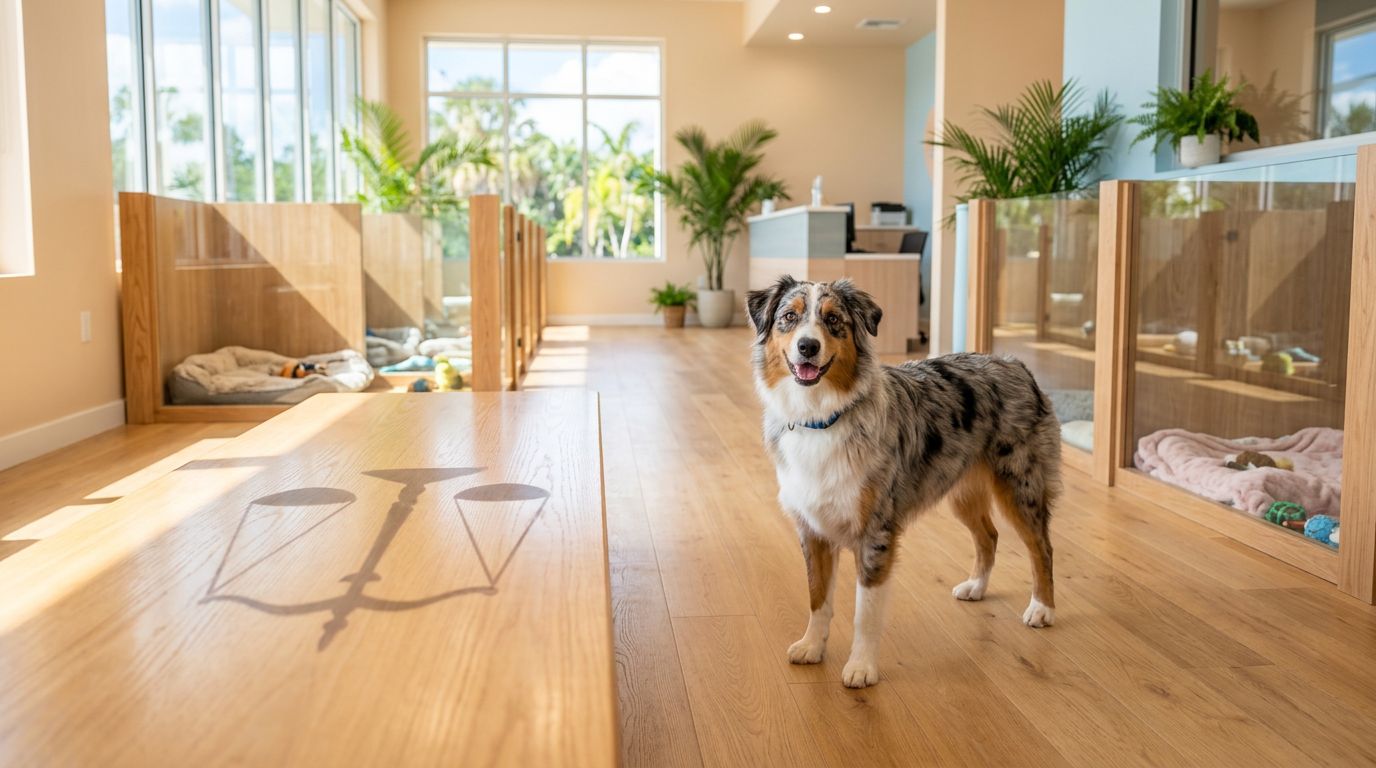
A bite at a boarding kennel can turn a routine trip into a painful legal mess. You may be dealing with medical bills, missed work, and a facility that wants the whole story to disappear before you ask questions.
In Florida, responsibility after a dog bite at a pet boarding facility depends on control, notice, and the records the kennel kept. The dog’s owner may face strict liability, but the boarding business can also be on the hook if staff failed to act with reasonable care. The first step is sorting out which facts matter most.
Who may be responsible after a bite at a Florida pet boarding facility
Florida Statute 767.04 is the starting point. It says a dog owner can be liable when a bite happens in a public place or when the injured person is lawfully on private property. You can read the text on the state site, Florida Statute 767.04, and get a plain-English overview in Florida dog bite law essentials.
The law also reduces damages if the injured person helped cause the bite. At a boarding facility, that can matter if someone ignored warnings, opened a crate, or reached into a restricted area.
The kennel itself is a different question. A boarding business may face a negligence claim if it mixed dogs unsafely, left gates open, ignored warning signs, or handled a known risk badly. That claim does not depend on dog ownership. It depends on what the staff did, and what they failed to do.
Before a claim gets sorted out, it helps to see the main possibilities side by side.
| Potentially responsible party | Why they may be involved | What matters most |
|---|---|---|
| Dog owner | Florida’s bite statute can apply even if the dog had no bite history | Ownership, lawful presence, and comparative fault |
| Boarding facility | Negligence may exist if staff handled dogs unsafely or ignored warnings | Staffing, gates, leash rules, and supervision |
| Property owner or manager | A separate claim may exist if they knew of the danger and had control | Notice, control, and the area where the bite happened |
The split matters because each party may point at the others. One person may own the dog, another may run the kennel, and a third may control the property. The claim often turns on who had the power to prevent the bite.
Why boarding-facility bite claims turn on control and supervision
Kennels run on fast handoffs. Dogs move from intake to crate to play area, and each step adds risk. A locked door that does not latch, a bad match between dogs, or one distracted employee can turn a routine pickup into an emergency.
Recent Florida disputes around boarding businesses have centered on poor supervision and animals hurt during care. Human bite claims at these places often follow the same pattern, one short lapse, then a long recovery.
A first bite still matters
Many people assume a clean history protects the dog’s owner. It does not. Florida dog bite first-bite claims can still succeed when the victim was lawfully present and the statute applies.
At a kennel, the real question is often whether staff saw warning signs and ignored them. If the facility knew a dog was stressed, reactive, or hard to handle, that knowledge can support a negligence claim against the business.
House rules, intake forms, and text messages can also matter. They may show what the facility promised, what it knew, and whether it followed its own safety rules.
A boarding facility can create risk in minutes. A missing latch or a rushed handoff can decide the whole case.
Evidence that helps prove a claim
Medical records do more than prove a wound. They show when you sought care, what treatment you needed, and whether the injury got worse. A dog bite claim medical records guide can help keep that paper trail organized.
Ask for video, kennel logs, intake forms, and any written notes about the dog’s behavior. The more detailed the record, the harder it is for the other side to shrink the event into a small problem.
- Emergency room or urgent care records show when you got treatment.
- Photos of the bite, the kennel area, and torn clothing show the scene as it was.
- An incident report can capture the first account from staff.
- Witness names and staff names can lock down the timeline.
- Texts, emails, and billing records can show what the facility knew and when.
If the kennel controls the cameras and the incident report, move early. Video gets overwritten, and memories fade fast.
That early paperwork also helps if the insurer starts asking for a recorded statement. You want the facts fixed before anyone starts editing them.
Damages that may be recovered after a kennel bite
A bite at a boarding facility can lead to more than medical bills. Recovery can affect work, sleep, travel, and confidence around dogs. Compensation in a Florida claim may include:
- ER care, stitches, antibiotics, and follow-up visits
- lost income from missed work
- future treatment, including scar care or surgery
- pain, anxiety, and sleep loss
- scarring and disfigurement
If infection or nerve damage slows recovery, the claim value may rise. The same is true when the injury leaves a visible scar or limits daily tasks.
The size of the claim usually depends on proof. A clean set of records can show the full cost of the bite. A thin file can make a serious injury look smaller than it is.
What to do in the first 24 hours after a bite
The first day after a bite often decides how strong the claim will be. Use this sequence:
- Seek medical care right away, even if the wound looks small.
- Report the bite to the boarding facility and ask for a written incident report.
- Take photos of the wound, the kennel, and any torn clothing.
- Collect witness names, staff names, and the time of the incident.
- Keep bills, discharge papers, and follow-up instructions in one place.
- Avoid a recorded statement until you know who may be liable.
If the paperwork is messy, Florida dog bite attorneys can help separate the owner’s responsibility from the kennel’s duty to supervise. That matters when the same event may trigger more than one insurance policy.
The faster you move, the better your odds of keeping the proof intact. Kennel footage can disappear, staff memory can blur, and small details can vanish in a day.
Conclusion
A bite at a boarding facility is rarely one simple issue. It can involve the dog owner, the kennel, facility records, and the injured person’s own actions. The strongest claims usually come down to control and proof.
If you remember one thing, make it this: move fast. The kennel’s video, logs, and staff memory can disappear quickly, while the medical record and the statute stay on your side. Those facts carry Florida dog bite claims.