
Florida Dog Bite Claims in Apartment Common Areas: Camera and Lease Evidence
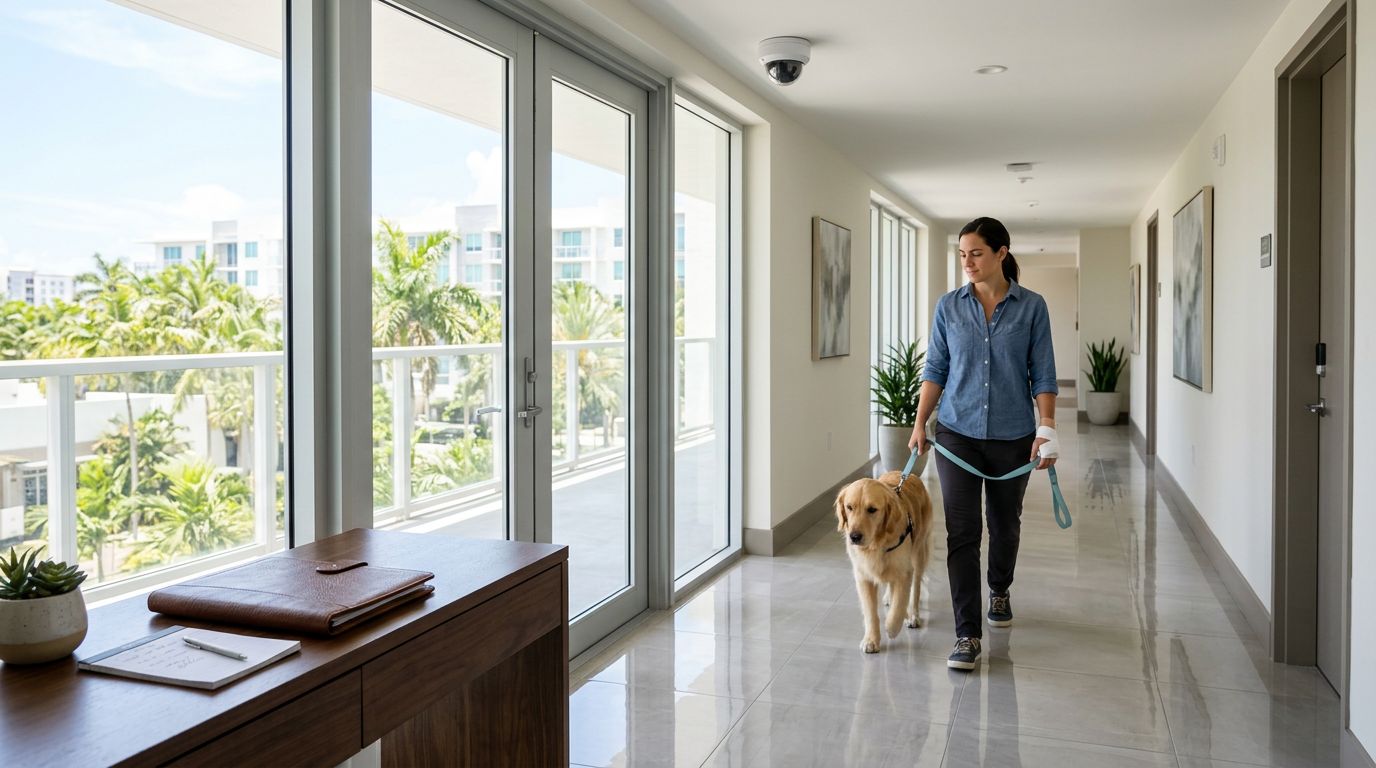
A dog bite in an apartment hallway can leave more than a wound. It can also leave a fight over what happened, who controlled the dog, and which records still exist.
In Florida, apartment common areas often create cleaner liability facts than people expect, but the case still rises or falls on proof. Camera footage, lease terms, and written complaints can turn a he-said-she-said story into Florida dog bite claims with real weight.
The faster you identify the right evidence, the harder it is for a landlord, tenant, or insurer to rewrite the story.
Why apartment dog bites often come down to proof
Florida’s dog bite rule starts with strict liability. Under Florida Statute §767.04, a dog owner can be responsible for a bite even if the dog never acted out before.
That is why apartment cases often turn on two basic questions: was the victim lawfully in the area, and can the owner or manager prove a defense? Residents, guests, delivery drivers, and maintenance workers are often lawfully in hallways, stairwells, breezeways, parking lots, pool decks, and laundry rooms.
A good starting point is this Florida dog bite strict liability rules guide, which breaks down how the state rule works in plain language. If the dog owner tries to blame the victim, the facts still matter. Provocation, trespass, and notice signs can all affect the claim.
That is why apartment evidence matters so much. The more concrete the proof, the harder it is to spin the event into something it was not.
Camera footage can settle the timeline
Apartment cameras often tell the story better than people can. A hallway clip may show the dog off leash. An elevator camera may show the bite start before the victim touched the animal. A parking lot camera may show who was holding the leash or whether the dog broke free.
Use the footage to answer simple questions:
| Source of footage | What it may show | Why it matters |
|---|---|---|
| Hallway or breezeway camera | Leash use, dog behavior, and distance between people | Helps show control and reaction time |
| Lobby or elevator camera | Who entered with the dog and what happened before contact | Can confirm the timeline |
| Parking lot or garage camera | Whether the dog was restrained near shared spaces | Shows conditions in a common area |
| Resident phone video | The immediate aftermath and injuries | Helps preserve details before memories fade |
The best footage is the footage that still exists. Many apartment systems overwrite recordings quickly, so a written preservation request should go out fast.
A camera clip is only useful if someone still has it.
Footage also works better when it lines up with photos and treatment notes. If you want a stronger paper trail, compare the video with this Florida dog bite medical records checklist. Medical records help prove where the bite landed, how serious it was, and what care followed.
What the lease can prove about the dog and the property
The lease can be just as important as the camera. It may show no-pet rules, breed limits, leash rules, noise clauses, or a pet addendum that the tenant signed. If the dog was in the building in violation of the lease, that can help show notice and control.
A lease can also reveal whether the apartment complex had the power to act. Did it have the right to demand removal of the dog? Did it allow repeated complaints to pile up without any response? Did staff know the animal was aggressive and do nothing?
That is where Florida landlord dog bite liability becomes part of the analysis. Landlords are not automatically liable for every tenant dog bite. However, they can face negligence claims if they knew about a dangerous dog and failed to take reasonable action.
Written complaints matter here. So do emails, maintenance logs, incident reports, and prior warning notices. If a tenant had already ignored a leash rule or had prior issues with the same dog, the lease file can become a map of missed warnings.
In apartment cases, the lease often shows whether the complex had rules but did not enforce them. That gap can matter as much as the bite itself.
Steps that help protect a Florida dog bite claim
The first hours after an apartment dog bite are often chaotic. Still, a few steps can make a real difference.
- Get medical care right away and keep every record.
- Report the bite to property management and ask for an incident report.
- Request camera preservation in writing before footage is deleted.
- Save photos, witness names, and a copy of the lease or pet addendum.
- Avoid giving a recorded statement to an insurer until the evidence is organized.
A lawyer can help pull these pieces together before they disappear. A firm that handles Florida dog bite attorneys can send preservation letters, gather records, and look for the lease language that matters.
The key is speed. Once video is gone and witnesses forget details, the case gets harder to prove.
Conclusion
Apartment dog bite cases often turn on the same small details, a camera angle, a lease clause, a complaint buried in a file. Those details can show who had control of the dog and whether the property owner ignored a clear problem.
When the bite happened in a common area, proof does a lot of the heavy lifting. If you were hurt, move fast and gather the records before the building, or the insurer, gets to shape the story first.