
Florida Dog Bite Claims When the Owner Blames Provocation
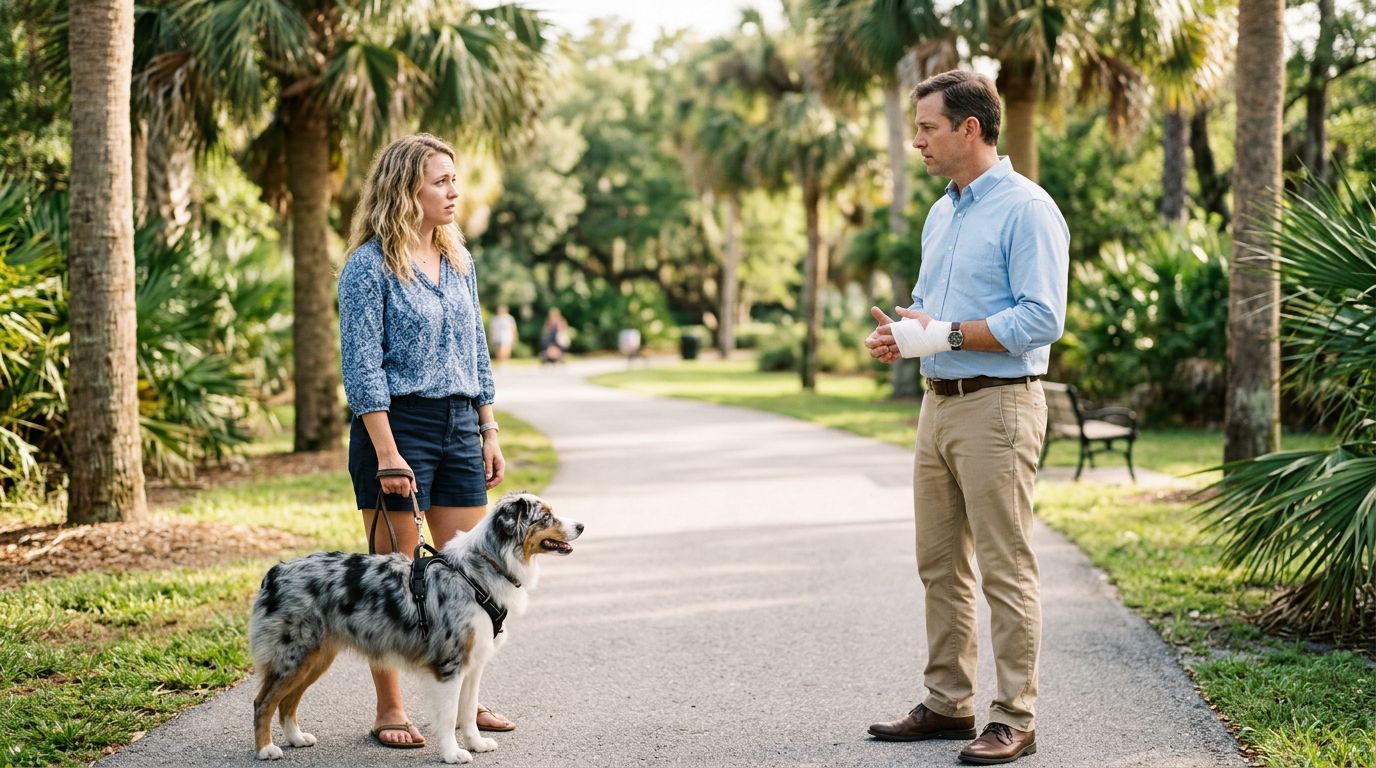
A dog bite case can change fast when the owner says you caused it. One minute you are dealing with an injury, and the next you are hearing that you teased the dog, touched it wrong, or got too close.
That defense matters in Florida, but it does not end the claim by itself. The real question is whether the facts show true provocation, or just a convenient excuse after the bite.
Florida dog bite claims often turn on small details, so the difference between a strong case and a weak one can come down to what happened in those few seconds.
How Florida dog bite law handles provocation
Florida uses a strict liability rule for many dog bite cases. Under the state’s dog bite statute, a dog owner can be responsible when a bite happens in a public place or when the injured person was lawfully on private property. For a clear overview of the basic rule, see Florida dog bite strict liability rules.
That rule gives injured people a real starting point. The owner does not get off the hook just because the dog had never bitten anyone before.
Provocation is one of the main defenses. If the owner can show that the injured person teased, hit, cornered, or otherwise threatened the dog, liability can be reduced or even blocked. Florida courts look at the facts, not the owner’s anger after the fact.
Florida courts look at the whole moment, not a single movement in isolation.
Comparative negligence also matters. If a court finds that the injured person partly caused the bite, damages can be reduced by that share of fault. So even when provocation comes up, the case does not disappear. It shifts into a close look at behavior, timing, and proof.
What actions may count as provocation
Not every odd move counts as provocation. A dog can react fearfully to a lot of things, but fear alone does not make the injured person at fault.
The question is whether the conduct would reasonably threaten or hurt the dog. Hitting it is different from walking past it. Cornering it is different from looking in its direction.
Here is a simple way to see the difference.
| More likely to be seen as provocation | Usually not enough by itself |
|---|---|
| Hitting, kicking, or pulling the dog’s tail | Walking near a leashed dog |
| Cornering the dog or chasing it | Looking at the dog or speaking nearby |
| Throwing objects at the dog | Moving suddenly or backing away |
| Teasing the dog or entering its space aggressively | Trying to pet a dog without more aggressive conduct |
The line matters because dog owners often use broad words like “provoked” after a bite. Courts want more than labels. They want facts.
A person reaching out to pet a dog is not the same as a person striking it. A child stumbling near a dog is not the same as a person baiting it. Context controls the result, and small details can change the entire analysis.
Why the facts around the bite matter so much
Insurance companies look for clean stories. Real life is messier. A bite may happen on a porch, near a gate, during a family visit, or on a sidewalk where everyone gives a different version later.
That is why proof matters. Photos of the wound, the scene, torn clothing, and the dog’s location can help. Witness names also matter, because memory fades fast.
Owners often add other defenses too, such as trespassing or a warning sign. Those defenses can affect the case, but they do not automatically defeat it. The same is true when the owner tries to blame provocation. The facts still need to line up.
In many cases, the claim is paid through the owner’s policy, which is why how homeowners insurance covers dog bites can matter just as much as the bite itself. If the insurer accepts that the policy applies, then the fight often shifts to what happened before the bite and how serious the injuries are.
Medical records also carry weight. A prompt exam can show the bite pattern, the depth of the wound, and the kind of treatment you needed. If the owner later says you “must have done something,” those records help anchor the timeline.
How a lawyer pushes back on a provocation defense
A provocation claim can sound strong when it comes in a quick phone call from an insurance adjuster. It often looks different once the facts are gathered.
A lawyer can press for the details that matter and compare them against the owner’s story. That includes statements from witnesses, photos from the scene, animal control records, and any prior complaints about the dog.
The right evidence can expose gaps fast. For example, an owner may claim the victim hit the dog, but no witness saw it. Or the owner may say the dog was teased, yet the video shows a sudden lunge with no contact at all.
A strong response usually includes:
- Witness interviews while the details are still fresh.
- Photos and video from the scene, if any exist.
- Medical records that show the nature of the bite.
- Animal control or police reports.
- A careful review of the owner’s changing story.
If the insurer is already pointing fingers, speaking with experienced Florida dog bite attorneys can help put the case in order before the defense gets ahead of the facts.
That matters because once a false story hardens, it can take real work to unwind it. Early action gives you a better chance to preserve the truth.
What to do after a bite if provocation is being blamed
If the owner says you caused the bite, keep your focus on evidence, not the argument.
First, get medical care right away. Even a small puncture can lead to infection, scarring, or nerve damage. A doctor’s record also creates a clear starting point.
Next, take photos of the injuries, the dog if you can do so safely, the location, and anything that may show where the bite happened. If your clothes were torn or bloodied, save them.
Write down names and phone numbers for anyone who saw the incident. Also note the owner’s exact words, because people often change their story later.
Do not argue about fault with the insurance company before you know the facts. A recorded statement can be used against you, especially if the owner is already blaming provocation.
Finally, talk with a lawyer who handles dog bite cases in Florida. The right lawyer can sort out the defense claim, test the evidence, and tell you whether the owner’s version holds up.
Conclusion
When a dog owner blames provocation, the case does not end. It usually becomes a fight over details, timing, and proof.
Florida law still gives injured people a path forward, even when the owner points a finger back at them. The strongest claims are built on medical care, solid evidence, and a clear look at what the dog and the injured person actually did.
If the bite happened and the owner is already shifting blame, the facts matter more than the accusation.