
Florida Fire Injury Claims After Missing Apartment Smoke Alarms
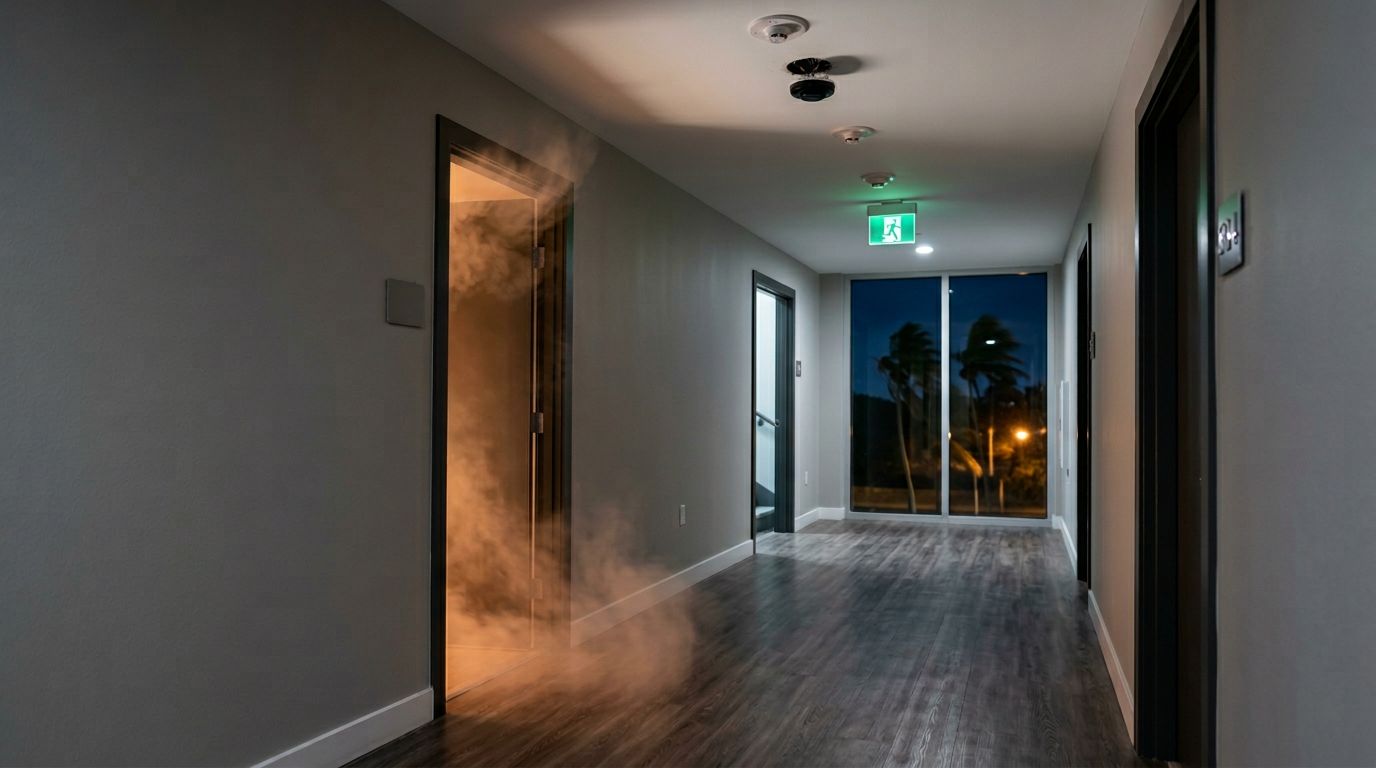
A fire can fill an apartment with smoke before anyone sees flames. If no alarm sounds, the injury claim may turn on those lost seconds.
When a landlord or property manager skips basic fire safety, the case is not only about what started the fire. It is also about whether a working alarm could have given you time to escape. That is why Florida fire injury claims after missing smoke alarms are so fact-driven.
Why missing smoke alarms matter in Florida apartment fire claims
In an apartment fire, warning time is everything. A working smoke alarm can mean the difference between getting out early and waking up to thick smoke in a blocked hallway.
As of mid-April 2026, public sources do not show a clear Florida-only dataset for apartment injury claims tied to missing alarms. Still, the national numbers are hard to ignore. The USFA’s Florida fire loss profile tracks statewide fire trends, and the USFA report on multifamily residential building fires found smoke alarms were absent in a meaningful share of reported multifamily fires.
In apartment fire cases, a missing alarm is often a lost-time case. The legal fight is about how much warning the tenant never got.
That point matters because a claim is not limited to the fire’s cause. Even if the blaze started in another unit, from bad wiring, or from careless cooking, a missing or dead alarm may still have made the injuries worse. Burns, smoke inhalation, broken bones during escape, and head injuries on dark stairs can all tie back to the lack of warning.
To prove that link, lawyers usually look at more than one fact. The fire report, the alarm location, photos of mounting plates or missing batteries, witness statements, and building records all help show what happened. A strong case explains not only that an alarm was missing or failed, but also how that failure changed the outcome.
Who may be liable for a missing smoke alarm in an apartment
Liability in apartment fire cases usually follows control, not labels. The landlord may be responsible. So might the property manager, maintenance company, alarm contractor, or even a product maker in a defect case. The starting point is the duty owed to tenants and guests, which is part of general Florida premises liability duty of care.
This quick comparison helps frame the issue:
| Possible defendant | Why they may be liable |
|---|---|
| Landlord or owner | Failed to provide safe conditions or follow code duties |
| Property manager | Ignored complaints, inspections, or repairs |
| Maintenance vendor | Did poor work or failed to replace alarms |
| Alarm manufacturer | Supplied a defective unit |
Florida law adds another layer. Section 83.51 requires landlords to comply with applicable housing and safety codes, and in some rentals it directly addresses smoke detection devices at the start of the tenancy. Apartment buildings also face fire code and maintenance duties that can vary by building type, age, and system design.
A claim still needs the usual proof. You must show duty, breach, causation, and damages. A missing alarm by itself does not automatically win the case. You still need facts showing who was responsible and what they knew, or should have known. Prior repair requests, unanswered emails, failed inspections, painted-over detectors, missing batteries between tenants, or records showing alarms were disabled can all matter.
The defense will often point at the tenant. They may claim the tenant removed the battery, ignored a chirping alarm, or caused the fire. Shared fault can reduce recovery in Florida, and in some cases it can block it. Still, blame is not always one-sided. A tenant’s mistake does not erase a manager’s separate duty to keep required warning devices in working order.
What to do after an apartment fire to protect your injury claim
Medical care comes first. After that, protect the facts while they still exist.
If it is safe, photograph every place where an alarm should have been, inside the unit, near bedrooms, in hallways, and by exits. Take wide shots and close-ups. Capture batteries, wiring, ceiling mounts, soot patterns, doors, windows, stairwells, and any blocked path out. In apartment negligence cases, early proof disappears fast, which is the same lesson behind this Florida apartment slip and fall proof checklist.
The most useful evidence usually looks like this:
| Evidence | Why it matters |
|---|---|
| Fire rescue report | Fixes time, origin, and response details |
| Photos of alarm locations | Shows missing, damaged, or disabled units |
| Maintenance requests | Helps prove notice |
| Lease and move-in records | Shows who had the duty to install or repair |
| Medical records | Connects the fire to your injuries |
Next, ask in writing that the property preserve evidence. That includes surveillance video, maintenance logs, inspection records, alarm testing history, and prior tenant complaints. Save every text, email, and portal message you sent before or after the fire. If smoke forced a rushed stairwell escape, photos of the route out can also matter, especially where falls happened in poor light or heavy smoke, much like the evidence issues in this Florida stairway fall claims checklist.
Be careful with early statements. Do not guess about why the fire started. Do not say you are fine if you have not been fully checked. Smoke inhalation symptoms can build over hours, and adrenaline can hide pain. Keep records of medical bills, missed work, prescriptions, hotel costs tied to displacement, and any follow-up care.
Apartment fire cases move on paper as much as they move on emotion. The side with the better timeline usually has the stronger claim.
Missing smoke alarms change a fire case because they change time. In many Florida fire injury claims, the central issue is whether a working warning device could have reduced the harm.
That is why these cases depend on fast evidence, clear records, and a close look at who controlled the property. When seconds disappear, proof has to explain what those missing seconds cost.