
Florida Head-On Crash Claims and Black Box Proof
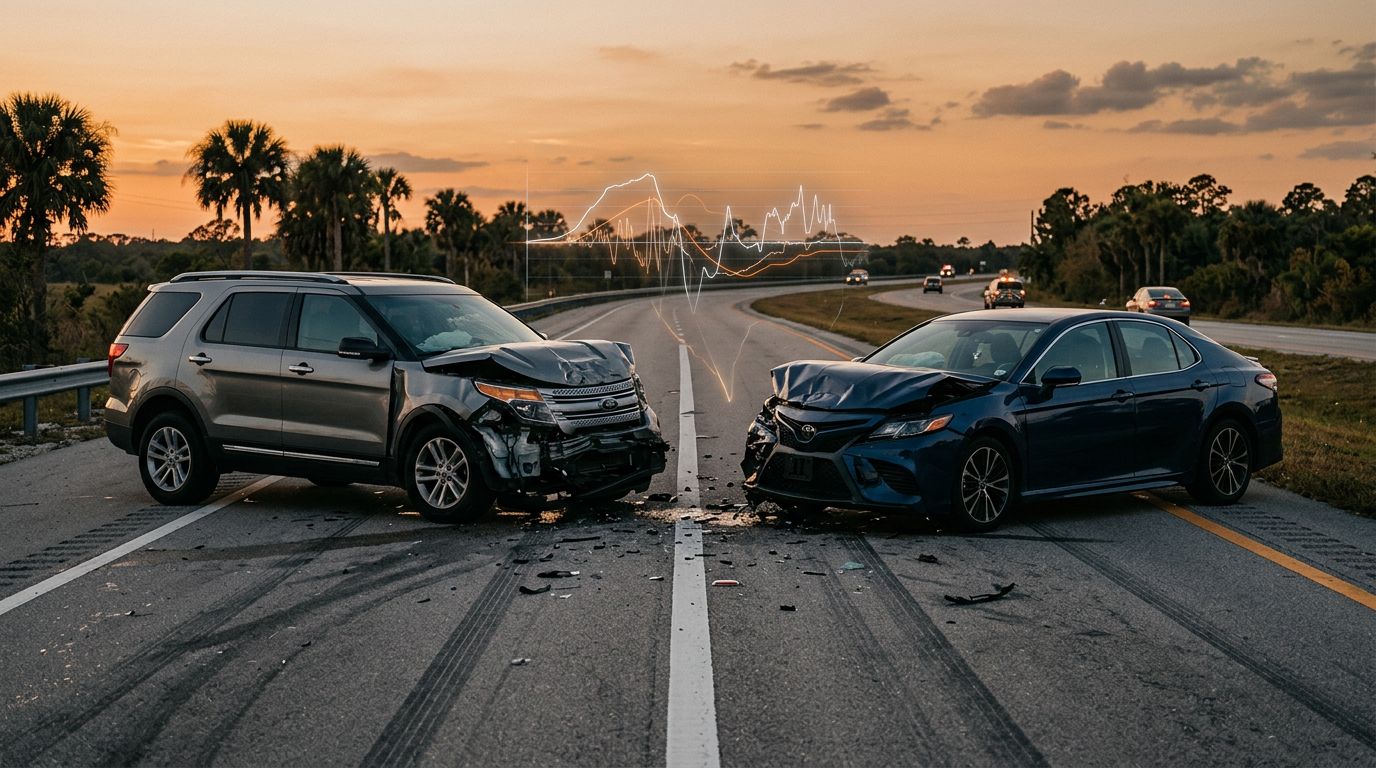
A head-on crash can turn a single lane error into a serious legal fight. In Florida head-on crash claims, the center line and the vehicle’s black box often become the clearest pieces of proof.
That proof matters because memory fades fast after a violent impact. Skid marks get washed away, cars get repaired, and witnesses leave the scene.
Strong claims start with facts that can still be checked. The road, the wrecked vehicles, and the electronic data inside them often tell a cleaner story than anyone’s first statement.
How center line evidence can shape fault
The center line is often the first place investigators look after a head-on collision. On a two-lane Florida road, that line can show where one vehicle crossed into the wrong lane, or where both drivers ended up after impact.
Paint marks, tire scuffs, gouges, and debris fields all matter. So do the final rest positions of the vehicles. Together, they can show direction, speed, and impact angle.
Yet the center line does not answer everything by itself. A driver may swerve to avoid a hazard. A tire may blow. A roadway design may narrow the lane or confuse the path of travel.
That is why photos from the scene are so useful. Close-up shots of lane markings, road edges, and vehicle position can help match the physical evidence to the crash report. If the road was crowded or dark, that context matters too.
A center line crossing matters, but it becomes powerful only when it matches the marks, the photos, and the vehicle data.
Police reports can help, but they are not the final word. They may miss small details, and they often rely on what people said right after the crash. A careful review of the road surface and scene layout can fill those gaps.
What the black box can add
Modern vehicles often store crash data in an event data recorder, which many people call a black box. This device may capture a few seconds of information before and during impact.
That short window can matter a lot. It may show speed, braking, throttle use, seat belt status, and airbag timing. In a close case, those details can support or weaken a story about how the crash happened.
Here is a simple way to compare the two main proof sources:
| Evidence source | What it can show | Common limits |
|---|---|---|
| Center line and road marks | Lane position, path of travel, impact angle | Rain, cleanup, and traffic can erase marks |
| Black box data | Speed, braking, throttle, crash timing | Not every vehicle stores the same data |
| Scene photos | Vehicle location and roadway layout | Only helpful if taken quickly |
| Witness statements | What people saw or heard | Memory can be incomplete or wrong |
The table shows the main point. The strongest claim usually combines several forms of proof. One item can be challenged. Several items that match each other are harder to ignore.
Black box data also needs careful handling. If the car is repaired, sold, or dismantled too soon, the data may be lost. That is why crash evidence should be preserved early, before anyone has a chance to change it.
Why the claim gets stronger with fast action
The best time to protect proof is right after the crash. That sounds simple, but it is where many claims weaken.
A driver may leave the car at a tow yard, then forget to ask for preservation. Weeks later, the vehicle gets repaired or released. By then, the black box may be gone, and the scene may no longer be useful.
A solid claim usually starts with a few direct steps:
- Get medical care and keep every record.
- Photograph the vehicles, road, and visible injuries.
- Save witness names and phone numbers.
- Ask that the car and black box data be preserved.
- Keep repair estimates, wage records, and treatment notes.
Those records help connect the crash to real losses. They also help show that the injuries came from this collision, not from some older problem.
Many people contact Florida car accident lawyers after a crash because they know the scene will not stay unchanged for long. That early help can matter when a tow yard, insurer, or repair shop is already moving the vehicle through the system.
A lawyer can also send a preservation letter. That letter tells the other side to keep the car, the data, and related records. If they ignore it, the issue can help later in the case.
Defense arguments that can shrink a Florida claim
The other driver rarely agrees that the center line tells the whole story. Their insurer may argue that the crash was avoidable, or that both drivers shared blame.
Florida uses a comparative fault system. That means recovery can shrink if the injured person is assigned part of the blame. Because of that, the defense may focus hard on small details.
Common arguments include:
- The injured driver was speeding.
- The driver drifted because of distraction or fatigue.
- Weather reduced visibility.
- Another vehicle forced an emergency move.
- The black box data was incomplete or misread.
These arguments are not always strong. Still, they can create doubt if the evidence is thin. That is why consistent proof matters so much.
A defense team may also question the timing of the data download. If the vehicle sat in a lot for too long, they may argue that the evidence changed. They may attack witness memory, too, especially if the statement came hours after a painful crash.
A good claim answers those attacks with facts. Road markings, repair photos, body shop records, medical notes, and EDR data can all support the same conclusion. When they line up, the defense has less room to spin the facts.
Compensation after a serious head-on collision
Head-on crashes often cause more than a few bruises. They can bring broken bones, head injuries, back damage, and long rehab.
Florida’s no-fault system may cover some early medical bills through personal injury protection. However, serious head-on crashes often move beyond that first layer of coverage. When injuries are severe, a liability claim against the at-fault driver may become the main path to recovery.
Compensation can include:
- Emergency care and hospital bills
- Follow-up treatment and therapy
- Future medical needs
- Lost wages
- Reduced earning ability
- Pain and suffering
- Property damage
The injury records matter just as much as the crash proof. A claim for broken ribs or a concussion needs medical support. A claim for missed work needs pay records. A claim for future care needs doctors who can explain what treatment is still ahead.
When the injuries are major, people often turn to Florida personal injury attorneys who handle crash claims every day. That kind of help is useful when the case needs both medical proof and crash reconstruction.
If the collision caused a death, the case may become a wrongful death claim. In that setting, the center line and black box proof still matter, but the damages follow a different path.
What makes the strongest claim hold up
The strongest Florida head-on crash claims do not depend on one piece of evidence. They rely on a full picture that fits together.
The center line can show where the crash started. The black box can show what the driver did in the seconds before impact. Photos, reports, and medical records can fill in the rest.
When those pieces line up, fault becomes harder to deny. When they are lost, repaired, or ignored, the case gets harder fast.
The first hours after the crash often shape the outcome. That is why careful proof collection matters just as much as the final insurance demand.