
Florida Landlord Dog Bite Claims After Prior Notice
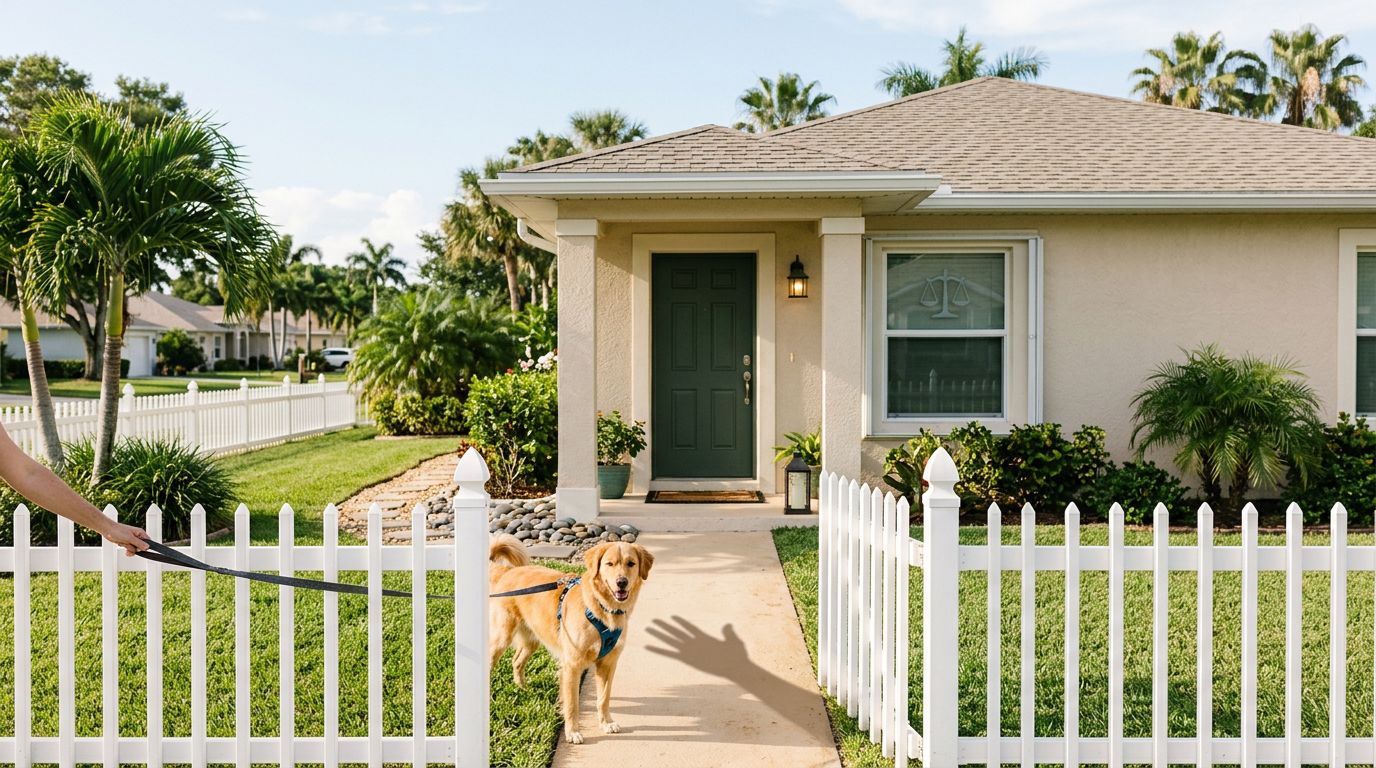
A dog bite in a Florida rental property can create more than one legal claim. The dog’s owner may face liability under Florida’s dog bite statute, while the landlord may also be responsible if the landlord knew about the danger and had control over the property or tenancy.
The difficult question is often not whether the dog was dangerous. It’s whether the landlord had prior notice, had a reasonable way to address the problem, and failed to act. Those facts can determine whether a claim against the landlord succeeds.
Key Takeaways
- Florida generally holds a dog owner liable when the dog bites someone lawfully on public or private property.
- A landlord isn’t automatically liable for a tenant’s dog.
- Prior complaints, earlier attacks, lease violations, or animal control records may help prove landlord notice.
- Landlord liability becomes stronger when the landlord controlled common areas, knew about the dog, or could enforce a lease rule.
- Preserve medical records, photographs, witness information, complaints, video, and communications as soon as possible.
Florida Law Treats the Dog Owner and Landlord Differently
Under Section 767.04, Florida Statutes, a dog owner may be liable when the dog bites a person who is lawfully in a public place or private place. The injured person generally doesn’t need to prove that the owner knew the dog had bitten someone before.
That rule applies to the dog owner, not automatically to the property’s owner. A landlord who rents an apartment, duplex, or house usually doesn’t become legally responsible for every act committed by a tenant’s animal. Ownership of the building alone doesn’t establish control over the dog.
A claim against a landlord usually depends on negligence and premises-liability principles. The injured person may need to show that the landlord:
- Knew, or should have known, about the dog’s dangerous behavior.
- Had enough control over the property or tenancy to take reasonable action.
- Failed to respond reasonably after receiving notice.
- Caused or contributed to the bite through that failure.
For example, a landlord may face a stronger claim if the landlord knew a tenant’s dog had attacked a neighbor, allowed the dog to remain despite a lease prohibition, and failed to enforce the rental agreement.
Prior notice doesn’t create automatic liability. It becomes important when it connects the landlord’s knowledge with a duty and an unreasonable failure to act.
What Counts as Prior Notice of a Dangerous Dog?
A landlord may receive notice in several ways. A previous bite is strong evidence, but it isn’t the only form of notice that matters.
Written complaints from tenants can establish that the landlord knew about aggressive behavior. Emails, text messages, maintenance requests, and property-management records may show that residents reported lunging, chasing, escaping, snapping, or threatening conduct. A landlord’s personal observation of the dog can also support actual notice.
Animal control records may provide additional proof. A prior citation, dangerous-dog investigation, quarantine order, or complaint can show that the issue reached the landlord or property manager. Police reports and homeowners’ association complaints may also help establish what the landlord knew.
Notice can be actual or constructive. Actual notice means the landlord received direct information. Constructive notice means the danger existed long enough, or was obvious enough, that a reasonable landlord should have discovered it.
A complaint that says only “the dog barks too much” may not prove that the landlord knew the dog posed a bite risk. A message reporting that the dog escaped, chased children, and tried to bite a resident presents a different issue. The details, timing, and landlord’s response matter.
A prior warning matters most when it identifies aggressive conduct and shows that the landlord had a realistic opportunity to respond.
When Can a Florida Landlord Be Liable?
Landlord liability often turns on control. Courts may examine the lease, the landlord’s relationship with the tenant, the location of the dog, and the steps the landlord could legally take.
A lease clause requiring approval for pets can support an argument that the landlord retained control over animals on the property. The same is true when the lease bans dangerous animals or requires tenants to follow animal-control rules. Still, a lease provision alone doesn’t prove that the landlord caused the injury.
The landlord’s conduct after receiving notice is also important. Depending on the circumstances, reasonable action might include enforcing the lease, requiring removal of the dog, notifying the tenant in writing, reporting a dangerous animal, or taking lawful steps to terminate the tenancy. The landlord doesn’t have permission to enter a tenant’s home without complying with Florida law, seize the dog, or threaten unlawful eviction.
Common-area conditions can create a separate basis for liability. If a landlord controls a hallway, stairwell, courtyard, parking area, gate, or shared walkway, the landlord may have a duty to address known dangers there. A broken gate or defective fence can allow a dog to escape and attack a resident or visitor.
Property managers may also become involved. A management company that received complaints, handled maintenance, enforced lease rules, or communicated with the tenant may possess records that clarify what happened. The proper defendants depend on the facts, contracts, ownership structure, and each party’s role.
A landlord who had no notice, no control over the dog, and no reason to anticipate the attack may have a strong defense. A landlord who ignored repeated reports and had authority to enforce clear lease restrictions faces greater exposure.
Evidence That Can Support a Claim Against the Landlord
Evidence can disappear quickly after a dog bite. Surveillance footage may be overwritten, witnesses may move, and property managers may change. Start preserving information immediately.
Collect the following when available:
- Photographs of the injuries, torn clothing, blood, the dog, and the scene
- Emergency-room records, physician notes, prescriptions, and treatment bills
- Names and contact information for witnesses
- Animal control or law-enforcement incident numbers
- Emails, texts, letters, and maintenance requests concerning the dog
- The lease, pet addendum, warning notices, and eviction-related documents
- Photographs or video of broken gates, fences, locks, or other property conditions
- Information about prior bites, attacks, complaints, or dangerous-dog proceedings
Ask witnesses to preserve their own messages, photographs, and recordings. Avoid arguing with the dog owner or landlord about fault. A calm written request for preservation of surveillance video may protect evidence that would otherwise disappear.
Medical documentation should describe every injury, including puncture wounds, nerve damage, infection, scarring, fractures, and emotional symptoms. Facial injuries and permanent scars may require treatment long after the first emergency visit.
Florida law also requires prompt reporting of animal bites through public-health channels. Medical providers, animal control, and county health officials may provide instructions about rabies observation, quarantine, and follow-up care. Those records may later help document the incident.
Damages and Defenses in Dog Bite Cases
A successful claim may seek compensation for reasonable medical expenses, future treatment, lost income, reduced earning ability, physical pain, scarring, disfigurement, and emotional distress. The value of an injury depends on its severity, permanence, treatment needs, and effect on daily life.
A child may need special consideration when the bite causes facial scarring, fear of animals, sleep problems, or difficulty returning to school. Adults may face missed work, visible injuries, reduced mobility, or anxiety that affects employment and relationships.
The landlord or dog owner may raise several defenses. Florida’s statute addresses trespassing, provocation, and comparative negligence. A person unlawfully on private property may have a weaker claim. Evidence that the person provoked the dog can also affect liability.
A visible “Bad Dog” sign may affect a statutory claim under Section 767.04, although it doesn’t give every property owner complete protection. The facts surrounding the sign, the injured person’s status, and any negligence remain important.
Florida’s modified comparative-negligence law may reduce recovery when the injured person shares responsibility. The specific legal theory matters, so an attorney should analyze whether the claim relies on statutory dog-owner liability, negligence, premises liability, or several theories together.
Deadlines also require prompt attention. Florida changed certain personal-injury limitation periods in 2023, and the applicable deadline can depend on the claim, the date of injury, the defendant, and the facts. Claims involving a government-owned property may include separate notice requirements. Waiting can damage both the evidence and the legal claim.
What to Do After a Dog Bite at a Rental Property
Get medical care first, even when the wound looks small. Dog bites can damage tissue beneath the skin and may cause infection.
Report the bite to the appropriate local health or animal-control authority. Then notify the landlord or property manager in writing. Describe the date, location, dog, injury, and known witnesses without making guesses about legal fault.
Next, request copies of relevant records and preserve your own evidence. Don’t post photographs or detailed statements about the incident on social media. Insurance companies may request a recorded statement or broad medical authorization, but you don’t have to sign documents before understanding their effect.
An attorney can investigate whether the dog owner, landlord, property manager, or another party had notice and control. A case evaluation should include the lease, communications, medical records, photographs, and any animal-control information.
Conclusion
A Florida landlord dog bite claim depends on more than property ownership. The strongest cases connect the landlord’s prior notice to control over the tenancy, a dangerous property condition, or a failure to take reasonable action.
The dog’s owner may remain the primary defendant under Florida’s dog bite statute. However, repeated complaints, lease violations, prior attacks, and ignored safety problems can support a separate claim against the landlord. Preserve the evidence early, seek medical care, report the bite, and obtain legal advice before signing an insurance release.