
Florida Multi-Lane Left Turn Crashes and the Video That Matters
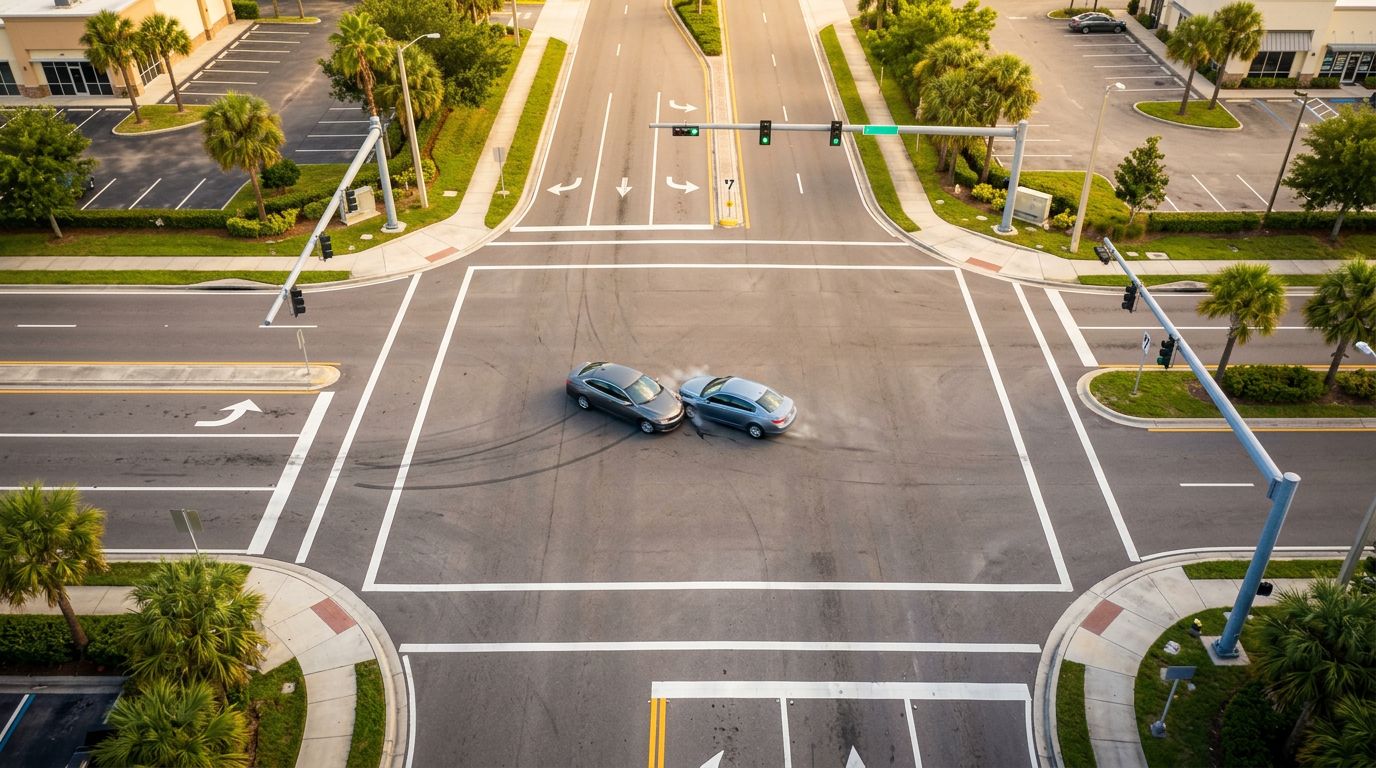
A Florida left turn crash can start as a simple dispute and end as a fight over one camera clip. One driver says the turn was clear. The other says the lane was already occupied. In a multi-lane intersection, those stories can sound believable at the same time.
That is why video matters so much. It can show the lane lines, the light cycle, the speed of each vehicle, and the exact moment contact happened. If you were hurt in this kind of wreck, the footage may carry more weight than any guess at the scene.
Why multi-lane left turns turn into hard claims
Multi-lane intersections create confusion fast. A driver may turn left across two or more lanes, and each lane can change the story. One car may be in the closest lane, while another comes through the far lane at the same time.
That matters because fault often depends on small details. Did the turning driver start the turn early? Did the oncoming driver run a yellow light? Did a vehicle drift out of its lane during the turn? These questions can change the claim.
Florida roads make this worse. Wide intersections, heavy traffic, and short light cycles leave little room for error. A turn that looks safe from one angle can look reckless from another.
The result is often a sharp dispute with an insurer. One side points to the turn. The other points to speed. Both sides may leave out the part that hurts their case. That is where solid evidence matters most.
The video that matters after a Florida left turn crash
Video is not all the same. The best footage often comes from more than one source, and each source answers a different question. A dashcam may show your lane position. A traffic camera may show the signal. A nearby store camera may catch the side impact.
The footage you do not get in the first days may never come back.
Many systems overwrite video quickly. Some business cameras save only a short loop. Traffic cameras may have limits too. That is why timing matters so much after a crash.
The most useful video sources often include:
| Video source | What it can show | Why it matters |
|---|---|---|
| Dashcam | Lane position, speed, turn timing | Often the clearest view of fault |
| Traffic signal camera | Light color and vehicle flow | Helps settle disputes about the signal |
| Business security camera | Approach paths and impact point | Can catch details other cameras miss |
| Cellphone video | Scene conditions and vehicle placement | Supports the timeline after the crash |
One clip can help. Two or three clips can change the whole claim. A lawyer who handles Florida car accident attorneys knows how to move fast before the footage disappears.
What to do in the first hours after the collision
The first hours after a crash are often messy. Even so, a few careful steps can protect the claim. The goal is simple, preserve the scene, preserve the proof, and avoid giving the insurer an easy way to twist the facts.
- Call law enforcement and make sure a crash report gets filed.
- Get medical care right away, even if pain feels minor at first.
- Take photos of the intersection, lane markings, light poles, signs, and vehicle damage.
- Ask nearby businesses if their cameras recorded the crash.
- Save any dashcam footage, phone video, or ride-share video before it gets deleted.
- Write down names and phone numbers for witnesses.
Those steps may sound basic, but they matter. A missing photo or a lost video file can leave a gap that the other driver’s insurer will use. In a multi-lane turn case, the empty space in the record can matter as much as the evidence that exists.
If the scene is safe, try to note the exact lane where each car ended up. Also note weather, traffic, and whether the light was changing. Small details often become big details later.
How fault gets sorted in a Florida left turn crash claim
Florida uses comparative fault, so blame can be divided. That means more than one driver can share responsibility. A left-turn driver may bear most of the blame, but the other driver may still carry part of it if speed, distraction, or lane drift played a role.
Insurers know that. They often look for any fact that reduces their payout. If they can argue you turned too soon, they will. If they can argue the other driver had the green light, they will. If they can argue both drivers made mistakes, they may split fault and cut the claim value.
Evidence is what pushes back against that kind of claim handling. The right video can show where each car came from and how the impact happened. It can also support witness statements and help a crash analyst explain the sequence.
Here is how different proof can work in a left-turn case:
- Dashcam footage can show the turn in real time and settle lane questions.
- Traffic camera footage can show the light phase and intersection flow.
- Witness statements can fill gaps when the camera angle is limited.
- Vehicle damage patterns can match the point of impact to the turn path.
- Police reports can give the first official record, even if they are not the final word.
That mix matters because no single item tells the whole story. A clear video clip is powerful, but a strong claim often uses several pieces together. If the facts are close, the details become the case.
Injuries, losses, and the proof behind the payout
A Florida left turn crash can cause more than vehicle damage. Side impacts often lead to neck injuries, back pain, shoulder damage, head injuries, and broken bones. Even a low-speed crash can leave someone sore for weeks.
The losses go beyond the ER bill. Missed work can hurt quickly. Follow-up care, imaging, therapy, and medication can stack up. If the injury changes how you work or care for your family, the claim may need to cover more than current costs.
That is why personal injury claims need more than a repair estimate. They need records that show the full harm. A personal injury law firm can help document medical treatment, wage loss, future care needs, and pain that does not show up on a receipt.
Video helps here too. It can confirm the force of the impact, the side of the vehicle hit, and the speed of the event. That can support the argument that the injuries were caused by the crash, not by some old problem the insurer wants to blame.
For many people, the fight is not just about who turned first. It is about whether the claim reflects the real cost of the wreck. Good footage makes that harder to dismiss.
Why a lawyer matters when the lanes are crowded
A multi-lane left turn claim can turn into a race against time. Footage gets erased. Witnesses move on. Memories fade. The other driver’s insurer starts building its version of events before your treatment is even underway.
A Florida lawyer who handles crash claims can help preserve the record early. That may include sending requests for video, gathering scene photos, checking for nearby cameras, and comparing the damage with the lane layout. It also means pushing back when an insurer tries to make a rough guess sound like a fact.
The right case file is often built from ordinary pieces. A signal phase. A broken mirror. A security clip from a store across the street. Put together, they can show what really happened in a Florida left turn crash.
Conclusion
Multi-lane left turns create claims that are easy to argue and hard to prove without good evidence. That is why video matters so much. It can settle the light, the lane, the path, and the moment of impact.
If you were hurt in a crash like this, the first days matter. The footage may still be there, but not for long. The sooner the evidence is preserved, the harder it is for the other side to rewrite the story.