
Florida Left-Turn Crash Claims: Signal and Witness Proof
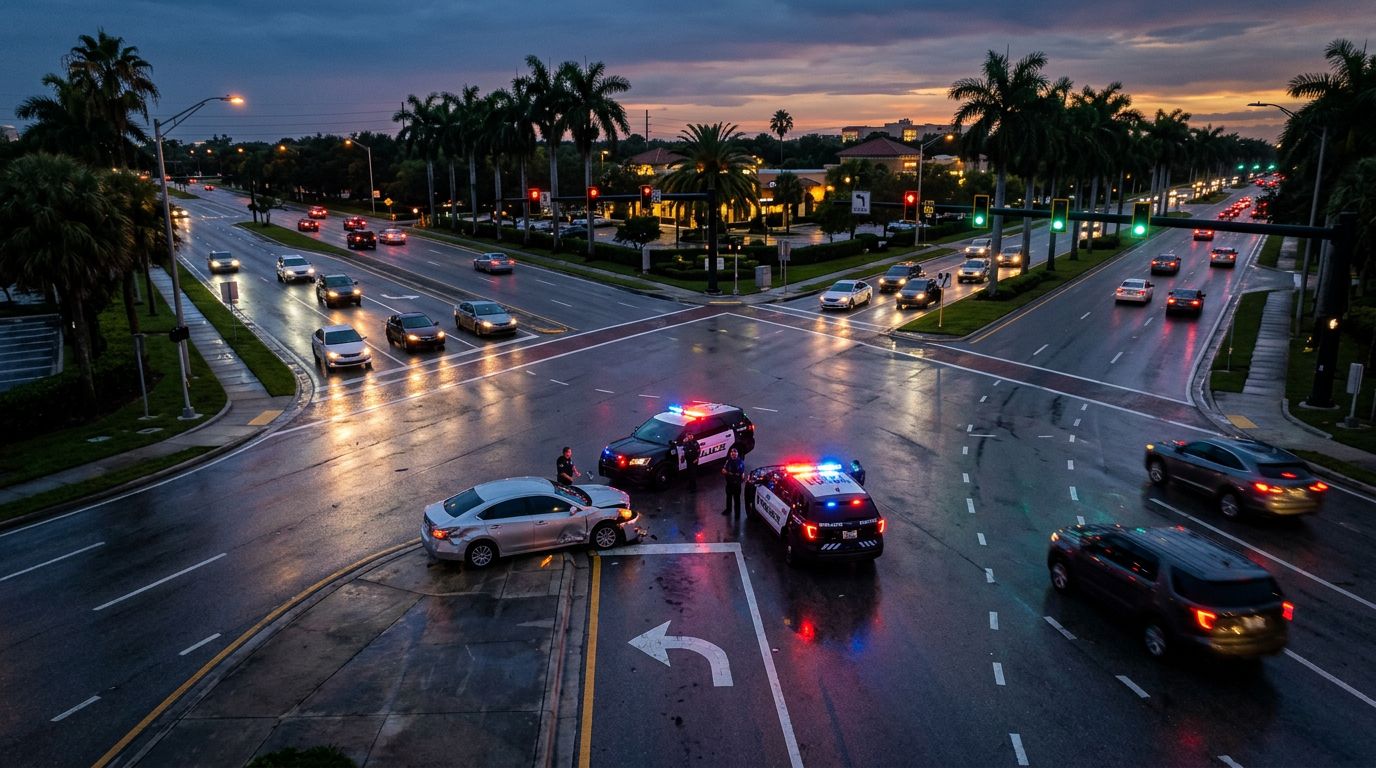
A left turn can look simple until two drivers tell opposite stories about the same light. In a Florida left turn crash, the signal sequence and witness accounts often matter more than either driver expects.
That is especially true at busy intersections, where one second of timing can change fault. If the turn was unprotected, the driver turning left usually had to yield, but proof still decides how the story is told.
Why unprotected left turns create liability disputes
Unprotected left turns are common on Florida roads. They also create some of the hardest fault disputes.
The driver turning left may say the light was green and the oncoming car was speeding. The other driver may say the turn came too early, or that the turn lane blocked the view. Both versions can sound believable on the spot.
That is why these claims often turn on evidence, not guesses. A police report can help, but it rarely settles every question. A witness may only see part of the intersection. A driver may only remember the moment of impact.
The real issue is usually whether the turning driver had enough time and space to make the move safely. In Florida, that question can hinge on the traffic signal, the layout of the intersection, and the people who saw the crash happen.
A signal sequence can matter more than a quick roadside statement when the stories don’t match.
Signal proof that can support your claim
Signal proof is most useful when it shows what the light was doing at the exact time of the crash. That can be hard to capture, but it is often possible with the right records.
Some of the strongest sources are easy to overlook after a wreck. They include intersection video, dashcam footage, and signal timing records. Each one helps answer a different question.
| Signal proof source | What it may show | Why it matters |
|---|---|---|
| Traffic camera video | Vehicle movement and light color | It can show who entered the intersection first |
| Dashcam footage | The seconds before impact | It often captures the full sequence clearly |
| Signal timing data | Which phase was active | It helps test each driver’s version |
| Police photos and notes | Lane positions, debris, and scene details | It can support or challenge the written report |
That kind of proof is often time-sensitive. Some traffic video gets overwritten fast. Some cameras are not preserved unless someone asks early. For that reason, essential evidence for car accident claims often includes more than the cars themselves.
Timing data and camera footage
Timing data can be powerful because it ties the crash to a signal phase. If the left-turn driver had a green arrow, the case looks different than a solid green with oncoming traffic still moving.
Camera footage can be even better. It may show the light color, the position of each car, and whether the through driver braked before impact. When the video is clear, it can cut through arguments fast.
Still, video is not always enough by itself. A camera angle may miss one lane. A dark image may blur the signal. That is why timing records and witness statements matter too.
Photos, police notes, and dashcams
The scene changes fast after a crash. Tow trucks arrive. Traffic clears. Marks on the road fade or get covered.
Photos taken right away can show where each vehicle stopped, which lanes were blocked, and whether the left-turn lane had a clear view. Police notes can also record what officers saw before the scene was disturbed.
Dashcams are especially useful because they can preserve the whole event. Even a short clip may show brake lights, turn signals, and the spacing between vehicles. In many claims, those details matter more than a dramatic description.
Witness proof that carries weight
Witnesses help most when they saw the full sequence, not just the aftermath. An independent witness who watched the light change and saw both cars enter the intersection can be far more useful than a passenger who only felt the impact.
That said, not every witness adds the same value. The best statements are clear, specific, and consistent. They answer simple questions without guessing.
Strong witness accounts usually include:
- Where the witness was standing or driving.
- Which direction they were facing.
- What color the light was when each car entered.
- Whether either driver slowed, braked, or hesitated.
- Which vehicle moved first.
Short memories fade quickly. So do details about lane position, speed, and signal color. A witness who gives a statement soon after the crash often provides more reliable information than someone called weeks later.
Witnesses can also help when the physical evidence is limited. If the video is missing and the signal data is hard to get, a person who saw the entire turn may help fill the gap. That is one reason early interviews matter so much after a Florida left turn crash.
Steps that protect the claim after the crash
The first hours after a crash can shape the rest of the case. A few simple actions can make the proof easier to find later.
- Get medical care right away, even if the pain feels minor at first.
- Take photos of the intersection, the signals, vehicle damage, skid marks, and any visible cameras.
- Ask for the police report number and the names of any witnesses.
- Save dashcam clips, repair estimates, texts, and ride records that show where you were headed.
- Avoid giving a detailed recorded statement to the other insurer before the facts are collected.
For a broader claim roadmap, how to file a car accident claim in Cape Coral covers the basic process many Florida drivers face after a collision.
The goal is simple. Keep the evidence intact while the memory is fresh and the scene is still traceable.
How fault and damages are argued in Florida
Florida negligence cases can involve shared fault. That means each side may try to shift part of the blame. In a left-turn case, the defense may argue the through driver was speeding, ran a light, or failed to react in time.
Good signal proof can weaken those arguments. Solid witness statements can do the same. If the evidence shows the left-turn driver had no safe gap, the claim becomes stronger. If the evidence shows the through driver entered on a stale yellow or after the signal changed, that matters too.
Damages are the other side of the case. If the crash caused injuries, the claim may seek medical bills, lost wages, and other losses. In the right case, pain and suffering may also be part of the recovery. what damages can I recover after a car crash explains the kinds of losses that often come up in injury claims.
The better the proof, the less room there is for doubt. That matters in settlement talks and in court.
Conclusion
A left-turn dispute often sounds like two honest drivers with opposite memories. The signal record and the right witnesses narrow that gap.
When you can tie the crash to a signal phase and support it with fresh witness accounts, the case gets clearer. That clarity can shape fault, damages, and the direction of the claim.
In a Florida left turn crash, proof around the light and the people who saw it can make all the difference.