
Florida On-Ramp Merge Crash Claims: Proving Gap and Yield
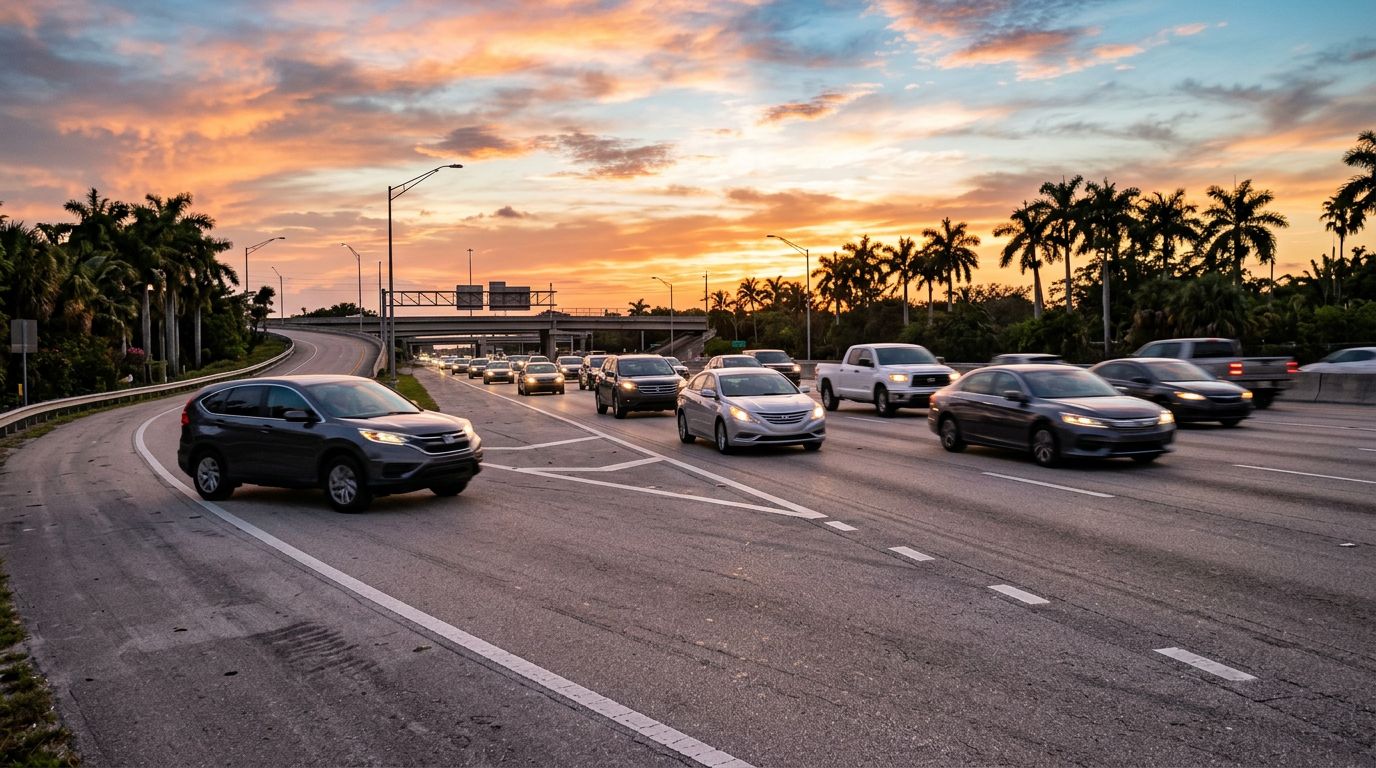
On-ramp crashes happen in seconds, but the blame fight can last months. In Florida merge crash claims, the key question is often simple to ask and hard to prove: was there a safe gap, and did someone fail to yield?
That question matters because merge cases rarely come down to one dramatic fact. They turn on lane lines, traffic flow, speed, signals, and what each driver did in a small slice of time. If the other side says you cut them off, your claim needs proof that tells a clearer story.
The good news is that the right evidence can do that. Photos, video, witness statements, and treatment records often matter more than a driver’s memory. The first step is knowing what gap and yield proof really means.
Why on-ramp merge crashes become fault fights
Merging lanes create pressure. One driver is trying to join moving traffic, while another driver may be holding speed in the travel lane. That mix leaves very little room for error.
Florida highways make the problem worse. Some ramps are short. Some merges happen near curves, blind spots, or heavy traffic. A driver may believe there was room to enter, while the other driver says the lane was already full.
Those cases often turn into a story war. One side says, “I had nowhere to go.” The other says, “You forced your way in.” The damage may not settle that fight on its own.
A merge crash is different from a simple rear-end wreck. The cars may scrape along the side, strike at an angle, or hit after one vehicle drifts toward the lane line. That makes the impact pattern important, but it also makes the surrounding facts important.
The real issue is not only where the cars touched. It is how they got there. If a driver sped up to block a merge, that matters. If a driver entered a lane without checking the space ahead, that matters too.
What gap and yield proof really means
“Gap” proof shows whether there was enough space for a safe merge. “Yield” proof shows which driver had the duty to wait, slow down, or give way. In a Florida merge crash claim, both points can matter at the same time.
Proof of a safe gap
A safe gap is more than a car length. It depends on traffic speed, lane length, weather, sight lines, and how quickly each vehicle was moving. A gap that looks wide in a parking lot can disappear fast on a highway ramp.
If the lane was moving at highway speed, a small opening may not have been enough. If the on-ramp was ending, the merging driver may have had little choice but to enter when they did. Those facts can help explain why a merge was reasonable, or why it was not.
Proof of a yield duty
Yield proof is about timing and control. It asks whether one driver had the legal and practical duty to wait for traffic to clear. It also asks whether the other driver did something careless, like closing the lane, drifting over the line, or speeding up at the last second.
Lane markings matter here. So do signs, merge arrows, shoulder width, and the length of the acceleration lane. A driver who enters without checking for traffic may face blame. A driver who blocks a lawful merge may face it too.
In merge crashes, the clearest proof usually comes from the lane itself, not from the loudest version of the story.
Evidence that carries weight after a merge crash
The best proof often comes from what you collect early. Once traffic clears and vehicles are moved, important details can disappear. Paint marks fade. Debris gets cleaned up. Witnesses leave.
The table below shows the kinds of evidence that often matter most in a merge crash claim.
| Evidence | What it can show | Why it matters |
|---|---|---|
| Scene photos | Lane markings, signs, debris, vehicle positions | Helps show how the merge happened |
| Dashcam or traffic video | Speed, spacing, and movement before impact | Can confirm or challenge each driver’s account |
| Witness statements | Whether a driver signaled, sped up, or drifted | Adds a neutral view of the crash |
| Police crash report | Officer observations, citations, and diagram | Gives the insurer a starting point |
| Vehicle damage photos | Angle of impact and point of contact | Helps match the damage to the claim |
| Medical records | Symptoms, diagnoses, and treatment dates | Connects the crash to the injury |
That evidence works best when it lines up. A dashcam clip, a photo of the lane, and a witness statement can be powerful together. On their own, each one may leave gaps.
Your medical records matter just as much as the crash scene. A clear medical timeline for your injury claim helps connect the collision to the pain, diagnosis, and treatment that followed. That connection often becomes a major issue in settlement talks.
If you keep treatment organized, the claim is easier to read. If dates are scattered or symptoms are never documented, insurers often use that silence against you. They may argue the injuries came from somewhere else.
Why insurers push shared fault arguments
Insurers rarely accept a merge claim at face value. They often look for any fact that reduces their payout. In merge crashes, shared fault arguments are common because the event is fast and the facts can look messy.
They may say the lane was open. They may say you should have waited. They may say you changed lanes too soon or failed to signal. Sometimes they argue that the damage pattern does not match your description.
Common fault arguments often sound like this:
- “There was enough room to merge.”
- “The driver on the ramp entered too late.”
- “The mainline driver had no way to avoid the crash.”
- “The damage does not match the story.”
Each claim needs a real answer. Photos can show the ramp length. Video can show vehicle speed. Witnesses can explain whether traffic was moving or packed. The police report can help, but it does not end the dispute.
Florida fault rules can also split blame between drivers. That means an insurer may try to reduce a payment by saying you shared part of the fault. Because of that, small details matter. A turn signal, a brake tap, or a lane position can shift the way a claim is viewed.
The best response is not a speech. It is proof. A strong file makes it harder for the insurer to turn a merge problem into a blame shift.
How to strengthen a claim before settlement
A merge crash claim gets stronger when the facts are organized early. That starts with the scene. Take photos of the ramp, the lane lines, the signs, the vehicles, and any skid marks or debris. If traffic cameras, nearby businesses, or dashcams may have recorded the wreck, ask about that quickly.
Then keep your records in order. Write down where you hurt, when symptoms started, and where you got care. Save discharge papers, imaging results, bills, and work records. A strong car accident demand package pulls those pieces together so the claim reads like a complete file instead of scattered paper.
Try to avoid loose statements to the insurer before you know the facts. A recorded call can lock you into wording that sounds worse later. If you are unsure about a question, say so. Guessing helps the other side more than it helps you.
A few habits can make a real difference:
- Keep all photos and videos in one place.
- Save every medical visit and follow-up.
- Write down witness names and phone numbers.
- Avoid posting crash details on social media.
The point is simple. A clean record makes a cleaner claim. It also gives your lawyer a better chance to show what happened, who had room, and who should have yielded.
Conclusion
Florida merge crashes are hard because they happen fast, but the claim does not have to be vague. The strongest cases show the size of the gap, the duty to yield, and the evidence that matches both.
When the lane is tight and the other driver blames you, photos, video, witnesses, and medical records can change the picture. In a Florida merge crash claim, proof is what turns a rushed roadside argument into a solid case.