
Florida Mold Injury Claims and Moisture Inspection Records
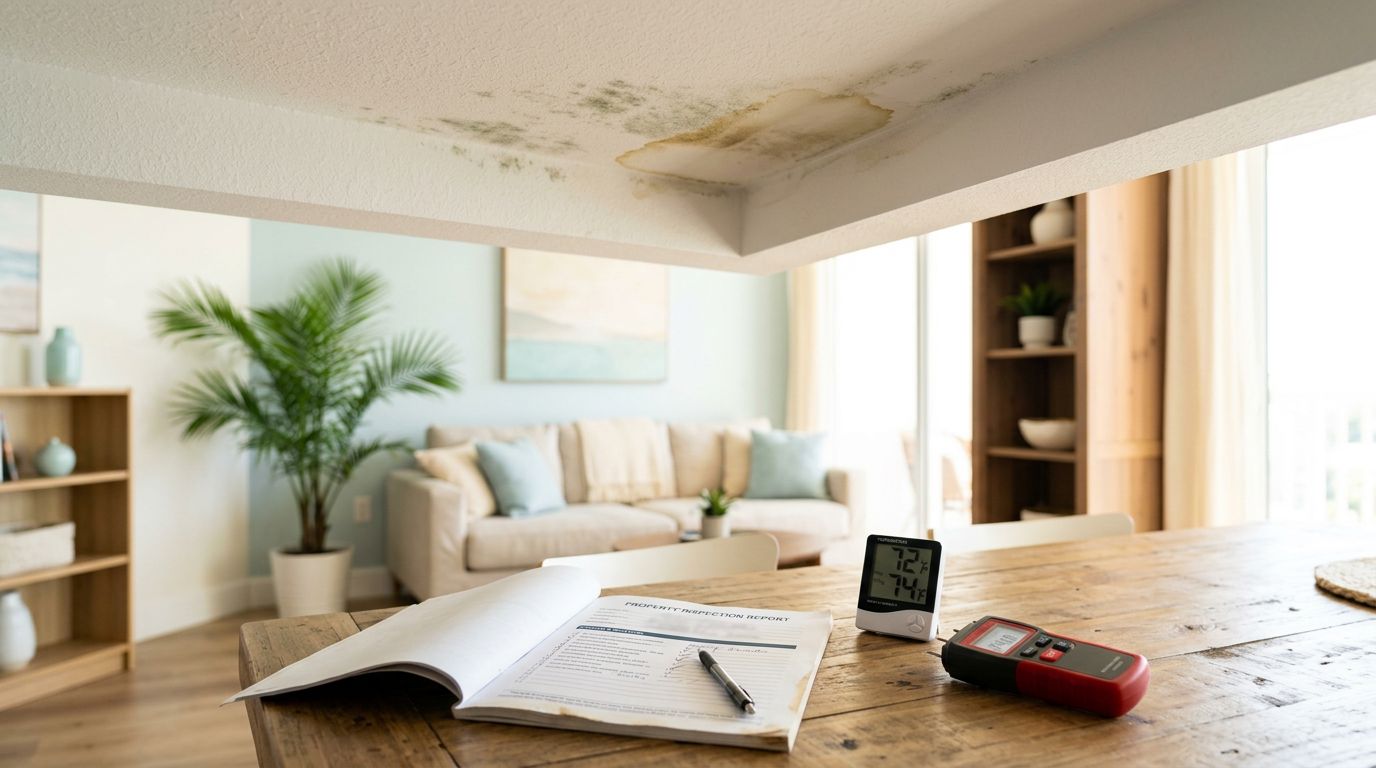
A ceiling stain, musty odor, or recurring leak can become more than a housing problem when it affects your health. Florida mold injury claims often turn on two connected questions: what caused the moisture, and what did the landlord know about it?
Moisture inspection records can answer both questions. They may show when a leak started, whether workers found hidden water damage, and whether the property owner repaired the source or only cleaned visible mold. The steps you take after discovering a problem can affect the evidence available later.
Key Takeaways
- A mold injury claim usually requires proof of a dangerous condition, landlord knowledge or notice, a failure to respond reasonably, and a medically supported injury.
- Moisture readings, inspection reports, repair tickets, emails, photographs, and remediation records can connect the apartment condition to the claimed exposure.
- Florida does not use one universal indoor mold limit to decide whether an apartment is safe.
- Medical records should document symptoms, diagnoses, timing, treatment, and other possible causes.
- Personal injury deadlines can be short, so speak with a Florida attorney before waiting for a landlord’s investigation to finish.
When Apartment Mold Can Support an Injury Claim
Mold does not automatically create a legal claim. A claim becomes stronger when the evidence shows that a landlord or property manager knew about a moisture condition, had a reasonable opportunity to correct it, and failed to take appropriate action.
Common sources include a leaking supply line, a roof or window leak, a broken air-conditioning drain, repeated plumbing backups, or water entering after a storm. In humid Florida apartments, poor bathroom ventilation and an air conditioner that does not control indoor humidity can also support mold growth.
The legal theory may involve negligence, a violation of the lease, or a breach of the landlord’s statutory duties. Florida law requires residential landlords to comply with applicable building, housing, and health codes. The law also requires landlords to make reasonable provisions for certain repairs and to maintain common areas in a safe and clean condition. Read the Florida residential landlord duties before relying on a general statement about habitability.
A tenant normally must show more than the presence of mold. The central issues often include:
- Notice: Did the landlord receive complaints, inspection findings, maintenance requests, or reports from other residents?
- Control: Did the landlord control the roof, plumbing, HVAC system, walls, or other source of moisture?
- Response: Did the landlord investigate and repair the source, or only paint, spray, and replace a small section?
- Causation: Does competent medical evidence connect the exposure to a diagnosed condition?
- Loss: Can you document medical bills, lost income, damaged belongings, relocation costs, or other harm?
A tenant can also face questions about personal conduct. For example, a landlord may argue that the tenant failed to report a leak, blocked an air vent, or refused access for repairs. Those facts do not end every claim, but they can affect fault and damages.
Notice and control matter
A landlord may deny knowledge even when maintenance records tell a different story. A work order for a “wet wall,” repeated requests for a leaking ceiling, or an invoice for drying equipment can show that the property owner had information before the claimed illness began.
The source of the moisture matters too. A tenant usually cannot repair a concealed pipe behind a wall or a roof defect. A landlord may have more responsibility when the problem involves building systems under the landlord’s control.
Keep every message that describes the condition. Use clear language such as “water is entering through the bedroom ceiling” or “the wall remains wet after the plumbing repair.” Vague complaints about an odor may still matter, but precise descriptions give an inspector and attorney more to work with.
Why Moisture Inspection Records Can Decide the Case
A mold sample may show that mold exists. A moisture record can show why it exists and how long the condition continued. That distinction often matters more in an injury claim.
An inspection report may include moisture-meter readings, thermal images, humidity measurements, photographs, descriptions of damaged materials, and the inspector’s proposed repair protocol. A later report may document whether the source was fixed and whether affected materials were removed.
The timing of each record can help establish a sequence:
- The tenant reports a leak or odor.
- The landlord sends maintenance staff or a contractor.
- The inspection finds elevated moisture or water-damaged material.
- Repairs remain incomplete, or the problem returns.
- The tenant develops symptoms or seeks medical care.
- A later inspection finds continuing moisture or concealed damage.
That sequence does not prove medical causation by itself. It can, however, help show notice, persistence, and the condition of the apartment during the relevant period.
The Florida Department of Health mold information explains that Florida has no specific state standards for acceptable levels of airborne mold contaminants. As a result, a dispute may focus less on whether a sample exceeded a legal number and more on the water source, building condition, repair history, and medical evidence.
Records should be read together rather than in isolation. A landlord’s statement that “the area is dry” carries less weight if the same file contains an elevated moisture reading from behind the wall. A clean air sample also may not resolve a dispute if the inspection occurred after materials were removed or the HVAC system had been shut down.
What moisture records can reveal
Look for facts such as:
- The date and location of each reading.
- The instrument used and the comparison area.
- Whether the inspector tested drywall, flooring, framing, insulation, or air.
- Indoor temperature and relative humidity.
- Photos of staining, bubbling paint, warped flooring, or condensation.
- The suspected source of water.
- The work recommended and the work actually completed.
- Any follow-up inspection or clearance report.
A report that contains only a mold label, without measurements or photographs, may provide less useful information than a detailed moisture assessment. Still, even a short contractor invoice can help establish that the property owner knew workers were addressing water damage.
Florida Duties, Notice Rules, and Filing Deadlines
Florida landlord-tenant law does not guarantee that every apartment will have zero mold. It does require landlords to meet duties imposed by the lease, applicable codes, and Florida law.
When a landlord materially fails to comply with required duties, Florida law may allow a tenant to give written notice and, if the problem is not corrected within the statutory period, terminate the rental agreement. The notice rules are technical. A tenant should not stop paying rent, move out, or send a termination notice without understanding how those actions may affect the dispute.
Written notice helps because it creates a dated record. Send the complaint through the method required by the lease, and keep a copy, delivery confirmation, and any response. Include the location of the leak or visible growth, the dates involved, health concerns, and the repair requested. Avoid diagnosing the condition unless a qualified professional has done so.
The landlord may have duties to inspect, repair, and maintain the property. Those duties do not always make the landlord responsible for every illness a tenant experiences. A personal injury claim still requires evidence that the landlord’s conduct caused or contributed to the harm.
Deadlines can control the case
Florida generally gives two years to file a negligence action for a personal injury under the current version of Florida’s statute of limitations. The date that starts the period can depend on the claim and the facts. Lease claims may involve different deadlines, and special rules can apply in other situations.
Do not assume that the deadline begins when a laboratory identifies mold. It may involve the date of the injury, the date you discovered or should have discovered the injury, or another legally significant event. A continuing leak does not automatically preserve every earlier claim.
Public housing, subsidized housing, claims involving a government entity, and cases involving a child may involve additional rules. Also, an injury claim and a claim for damage to personal property may have different legal treatment.
A lawyer can review the lease, notice history, inspection dates, and medical timeline together. Early review matters because some evidence disappears when a tenant moves out or the landlord completes repairs.
Connecting Apartment Exposure to Your Health
A mold report does not establish that mold caused a medical condition. Medical records must connect the timing and nature of the exposure to a diagnosis or injury.
The Centers for Disease Control and Prevention’s mold health information lists possible effects such as nasal symptoms, cough, wheezing, eye irritation, and skin reactions. People with asthma or mold allergies may have stronger reactions. Other symptoms can have many causes, so a doctor must assess the individual patient.
Tell your healthcare provider when the symptoms began, where you lived, whether symptoms improved away from the apartment, and whether anyone else in the household became ill. Provide photographs, inspection reports, and a timeline if the provider requests them. Do not ask a doctor to adopt a legal conclusion. Ask for an accurate medical assessment.
A useful health timeline includes:
- The date you first noticed odor, water, or visible growth.
- The date symptoms began or changed.
- Urgent-care, primary-care, allergy, pulmonary, or other visits.
- Diagnoses, prescriptions, testing, and treatment response.
- Missed work and restrictions.
- Changes after leaving the apartment or staying elsewhere.
Medical history matters. Asthma, allergies, smoking, occupational exposure, prior respiratory illness, and other environmental conditions may appear in the landlord’s defenses. These issues do not disprove a claim, but they require careful medical analysis.
Damages may include past medical bills, future treatment, lost wages, reduced earning capacity, pain, and loss of normal activities. If belongings were damaged, keep photographs, purchase records, replacement estimates, and proof of disposal. Do not discard valuable evidence before photographing it and asking an attorney about preservation.
What to Request and Preserve
Start with the records you already control. Save emails, text messages, portal submissions, photographs, videos, rent records, and notices in more than one location. Preserve original files when possible because they may contain dates and other information that screenshots omit.
Do not repaint, scrub, remove drywall, or throw away contaminated property before documenting the condition. If an emergency requires immediate cleanup, photograph the area first and keep invoices, contractor notes, and removed materials when safe and practical.
A simple record system can separate the evidence into four folders:
- Apartment condition: photographs, videos, odor reports, humidity readings, and personal notes.
- Landlord communications: emails, texts, portal tickets, letters, call logs, and notices of entry.
- Inspection and repair: assessments, invoices, work orders, contractor reports, remediation plans, and clearance documents.
- Health and financial loss: medical records, prescriptions, bills, wage information, mileage, moving costs, and damaged-property records.
Landlord-held documents may include more than the records given to you. An attorney may seek maintenance logs, vendor contracts, prior tenant complaints, incident reports, insurance communications, inspection photographs, building permits, and records for adjacent units.
Ask for records in writing, but avoid threatening or misleading language. Do not secretly record conversations without understanding Florida’s recording law. Florida generally requires consent from all parties to record a private telephone conversation, and a violation can create a separate legal problem.
Build a dated timeline
Write down each event while you remember it. Include the address, room, date, person contacted, response, and the condition after any repair. Identify witnesses who saw the leak, odor, visible growth, or your symptoms.
Your timeline should distinguish what you personally observed from what someone else told you. “Water dripped from the ceiling on June 4” is different from “the contractor said the roof had leaked for months.” Both may matter, but they prove different facts.
If you receive a mold or moisture report, keep the complete report. Do not save only the page that supports your position. Missing pages, altered photographs, or unexplained gaps can weaken credibility and make technical review harder.
Mold Inspections, Testing, and Remediation in Florida
Inspection, sampling, and remediation are different services. An inspection may identify moisture and damaged materials. Sampling may test air or surfaces. Remediation addresses the water source and affected building materials.
The EPA’s guidance on mold testing and sampling explains that visible mold and a known moisture problem may make sampling unnecessary. Testing also cannot answer every legal or medical question. A negative sample taken after cleanup does not prove that no earlier exposure occurred.
A competent inspection should identify the water source, not merely photograph mold. The inspector should explain where measurements were taken, what materials were tested, whether hidden areas were opened, and what repairs are needed. Ask for the inspector’s qualifications and any license required under Florida law.
Remediation should address the source first. Cleaning surface growth while leaving a wet wall, leaking pipe, saturated insulation, or defective HVAC drain can allow the problem to return. The EPA mold remediation guidance discusses moisture control, containment, removal, cleaning, and verification concepts that can help readers understand a contractor’s plan.
No single report proves that an apartment was safe or unsafe for every resident. The condition of the unit, exposure duration, repair history, test method, and medical evidence must be evaluated together.
Defenses Landlords May Raise
Landlords and property managers commonly argue that they did not receive notice, responded promptly, or repaired the source within a reasonable time. They may also claim the tenant caused excess humidity, failed to use ventilation, refused entry, or reported the condition only after moving out.
Another defense may focus on causation. The landlord may point to allergies, asthma, workplace exposure, smoking, a prior diagnosis, or symptoms that began before the tenancy. The defense may also challenge the inspector’s methods or the reliability of air sampling.
Your records should address those issues without exaggeration. Show when you reported the condition, whether workers entered, what remained after repairs, and whether the apartment continued to have water damage. Keep medical information accurate, including prior conditions and symptoms that existed before the exposure.
Florida’s comparative negligence law can affect recovery when a claimant’s own conduct contributed to the harm. The current comparative fault statute contains rules that can reduce damages and, in some negligence actions, bar recovery when the claimant is more than 50 percent at fault.
When to Speak With a Florida Injury Lawyer
Consider getting legal advice before signing a release, accepting a settlement, moving out under disputed circumstances, or allowing evidence to be destroyed. A release may end claims for injuries that have not fully appeared or been diagnosed.
Bring the lease, photographs, communications, inspection reports, repair records, medical documents, wage information, and a dated timeline to the consultation. If you lack the landlord’s records, bring proof of your requests for them.
A Florida attorney can separate a personal injury claim from a lease dispute, identify the proper defendants, review filing deadlines, and assess whether expert testimony is needed. The attorney can also send preservation requests before repairs erase the original condition.
No lawyer can promise a result from mold exposure alone. A strong evaluation depends on the quality of the moisture evidence, the landlord’s notice and response, the medical connection, and the losses you can document.
Conclusion
A musty apartment may leave behind more than an unpleasant smell. The strongest Florida mold injury claims usually have a clear timeline linking the moisture source, landlord notice, repair response, exposure, medical findings, and financial losses.
Preserve moisture inspection records and your own communications before conditions change. Medical documentation should describe what happened to your health, while building records show what happened inside the apartment. Together, those records give an attorney the facts needed to assess whether the claim can move forward.