
Florida Motorcycle Dooring Accident Claims After a Crash
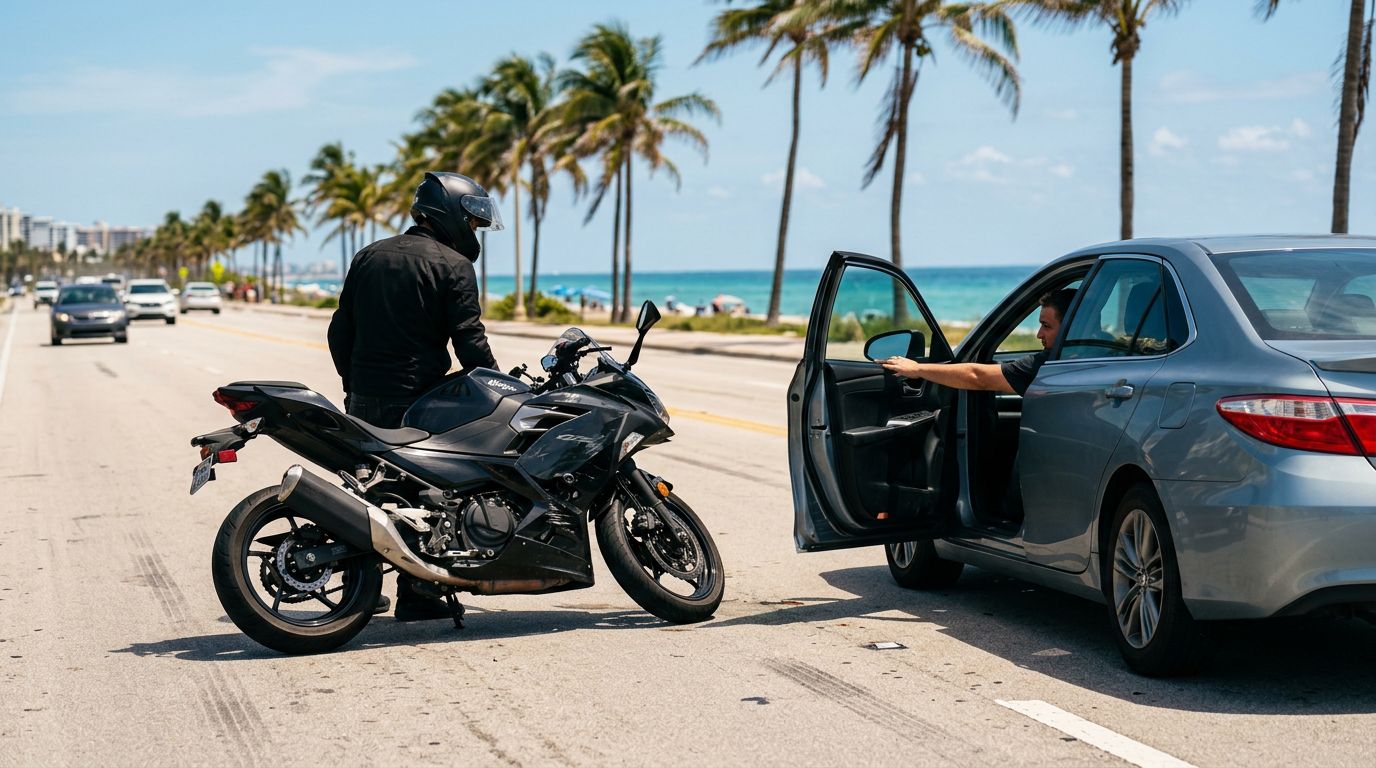
A driver can cause a serious motorcycle crash without moving the car. When someone opens a door into a rider’s path, the impact can throw the motorcyclist onto the pavement or into nearby traffic.
After a Florida motorcycle dooring accident, the injured rider may have a negligence claim against the person who opened the door. Fault, insurance coverage, medical proof, and filing deadlines will shape the value of that claim. Florida law also allows an insurer to argue that the rider shares responsibility, so early evidence matters.
Key Takeaways
- Florida law requires people to take precautions before opening a vehicle door into traffic.
- A rider’s compensation can decrease if a jury assigns the rider part of the fault.
- Photos, video, witness statements, medical records, and damaged gear can support the claim.
- Motorcycle riders usually cannot rely on personal injury protection coverage for their injuries.
- Florida generally gives two years to file a negligence lawsuit for qualifying personal injury claims.
Why an Open Car Door Can Create Liability in Florida
Florida’s door-opening law applies when someone opens a vehicle door on a roadway. The person must take reasonable precautions to avoid interfering with traffic. The person also can’t leave the door open next to moving traffic longer than needed to load or unload passengers.
The wording matters because a driver or passenger may be liable even if the vehicle was legally parked. A legal parking spot doesn’t give someone permission to open a door without checking for approaching traffic. The person who opened the door should look for motorcycles, bicycles, cars, and other road users before acting.
You can review the current text of Florida’s vehicle door statute through the Florida Legislature’s website.
The facts still control the outcome. A claim may depend on:
- Whether the vehicle was stopped or parked in a traffic lane
- Which side of the vehicle the door opened from
- How far the door extended into the rider’s path
- Whether the street was dark, crowded, or poorly marked
- Whether the driver or passenger had a clear view before opening the door
- The motorcycle’s speed and position before the collision
The person opening the door may be the driver, a passenger, or someone standing outside the vehicle. If a passenger opens the door, the claim may involve that person’s conduct and the driver’s actions, depending on what happened. An investigation should identify who opened the door rather than assume the answer.
A rider must also follow Florida traffic laws. For example, evidence of speeding, improper passing, or an unsafe maneuver can affect the result. However, a rider’s partial fault doesn’t automatically eliminate the claim.
How Comparative Fault and Insurance Affect a Door Crash Claim
Florida uses a modified comparative negligence system. Under Florida’s comparative fault statute, a claimant’s award is reduced by the percentage of fault assigned to that claimant. A person found more than 50 percent responsible generally can’t recover damages in a negligence action.
For example, suppose a jury finds that an open-door collision caused $100,000 in damages. If it assigns the rider 20 percent of the fault, the award may be reduced to $80,000. If it assigns the rider 51 percent, the rider may recover nothing under the modified rule.
Insurance creates another layer of concern. Florida generally doesn’t require private passenger vehicle owners to carry bodily injury liability coverage. Drivers must meet financial responsibility requirements, but many policies still include bodily injury coverage. The available policy, rather than the minimum legal requirement alone, may determine how much compensation is available.
A motorcycle rider may have several possible sources of recovery:
- The vehicle owner’s bodily injury policy, if the policy covers the person who opened the door or the vehicle involved.
- The door opener’s individual policy, especially when a passenger caused the collision.
- Uninsured or underinsured motorist coverage on the rider’s motorcycle or household auto policy.
- Health insurance or other benefits, which may pay medical bills while the liability claim continues.
Florida’s personal injury protection system generally doesn’t cover motorcycle occupants in the same way it covers people injured in covered four-wheel vehicles. The relevant Florida PIP statute is one reason injured riders should review every available insurance policy.
Don’t assume the at-fault driver’s insurer will identify all possible coverage. Ask for the declarations page and policy limits through the proper claim process. Also, avoid accepting a quick settlement before doctors understand the full extent of the injuries. Signing a release can end the claim, including claims for future treatment.
Evidence Can Prove How the Door Opened and Who Was Responsible
A dooring collision often turns on a short sequence of events. The door may be open for only seconds, and the vehicle may leave before investigators document its position. Evidence should be preserved as soon as possible.
Start with photographs. Capture the motorcycle, car, open-door damage, roadway, lane markings, parked vehicles, lighting, nearby signs, and the rider’s protective equipment. Take wide photos that show the traffic pattern, along with close images of the impact points. Damage on the door and motorcycle can help show the angle and location of the collision.
Witnesses may remember whether the car was occupied, whether the door opened suddenly, and whether the rider had room to avoid it. Get names and phone numbers if possible. Nearby businesses, apartment buildings, traffic cameras, and doorbell cameras may also hold useful video, but many systems overwrite footage quickly.
The official crash report can provide the date, location, parties, vehicle information, witness names, and an officer’s description of the scene. You can request Florida crash-report information through the Florida Highway Safety and Motor Vehicles crash report page. The report is useful, but it isn’t the only evidence. An officer may arrive after the vehicles move or may not see the door opening.
Keep the helmet, jacket, gloves, boots, and damaged motorcycle parts. Don’t repair or discard them before photographing the condition. Preserve phone records, navigation information, and messages that show where you were and when the crash occurred. A lawyer may also send preservation letters to a vehicle owner, business, apartment complex, or insurer.
Medical evidence connects the crash to the losses claimed. Follow treatment instructions and tell each provider how the injuries occurred. Common injuries include fractures, road rash, shoulder damage, spinal injuries, head trauma, and nerve damage. Some symptoms appear later, so a medical evaluation is important even when the first pain seems manageable.
A claim may include emergency care, surgery, rehabilitation, prescriptions, future treatment, lost income, reduced earning ability, pain, scarring, and motorcycle damage. Keep bills, wage records, repair estimates, and a written record of missed work and daily limitations.
What to Do After a Florida Motorcycle Dooring Accident
Your first priority is safety and medical care. Call 911, move away from traffic if you can do so safely, and don’t argue with the driver or passenger. Tell the responding officer that a vehicle door entered your path. Avoid guessing about speed or fault when you don’t know the answer.
Before leaving the scene, collect insurance and contact information. Photograph the vehicle’s license plate and the door position if it remains open. Get witness information, but don’t ask anyone to change a statement or speculate about what happened.
Notify your insurer promptly. Give accurate facts, but don’t provide a recorded statement to another insurer before understanding your rights. The other carrier may focus on statements that minimize the rider’s injuries or suggest the rider had enough time to avoid the door.
Keep copies of every document, including the crash report, medical records, bills, insurance letters, wage information, and repair estimates. Don’t post crash photos, videos, or comments about the accident on social media. Insurers may use public statements to challenge the severity of an injury or the description of the collision.
A Florida personal injury attorney can assess liability, identify insurance coverage, calculate damages, and handle communications with insurers. The Avard Law Offices website provides information about the firm’s Florida personal injury practice and case evaluations.
Time limits also require attention. Florida generally gives two years to file a negligence lawsuit for a personal injury claim under Florida’s statute of limitations, although exceptions and different rules may apply. Waiting can make witnesses harder to locate, allow video to disappear, and limit the time available to investigate insurance coverage.
Protecting Your Claim After a Door Opens Into Your Path
A Florida motorcycle dooring accident can cause lasting injuries while leaving a disputed account of what happened. The strongest claims connect the open door to the crash, document the rider’s losses, and address comparative fault before an insurer uses it against the rider.
Get medical care, preserve the scene evidence, report the crash, and review all available policies. A careful investigation can show whether the door opener violated Florida law and how that conduct caused the rider’s injuries. Time matters because evidence disappears and filing deadlines continue to run.