
Florida Motorcycle Rear-End Claims and Helmet Camera Evidence
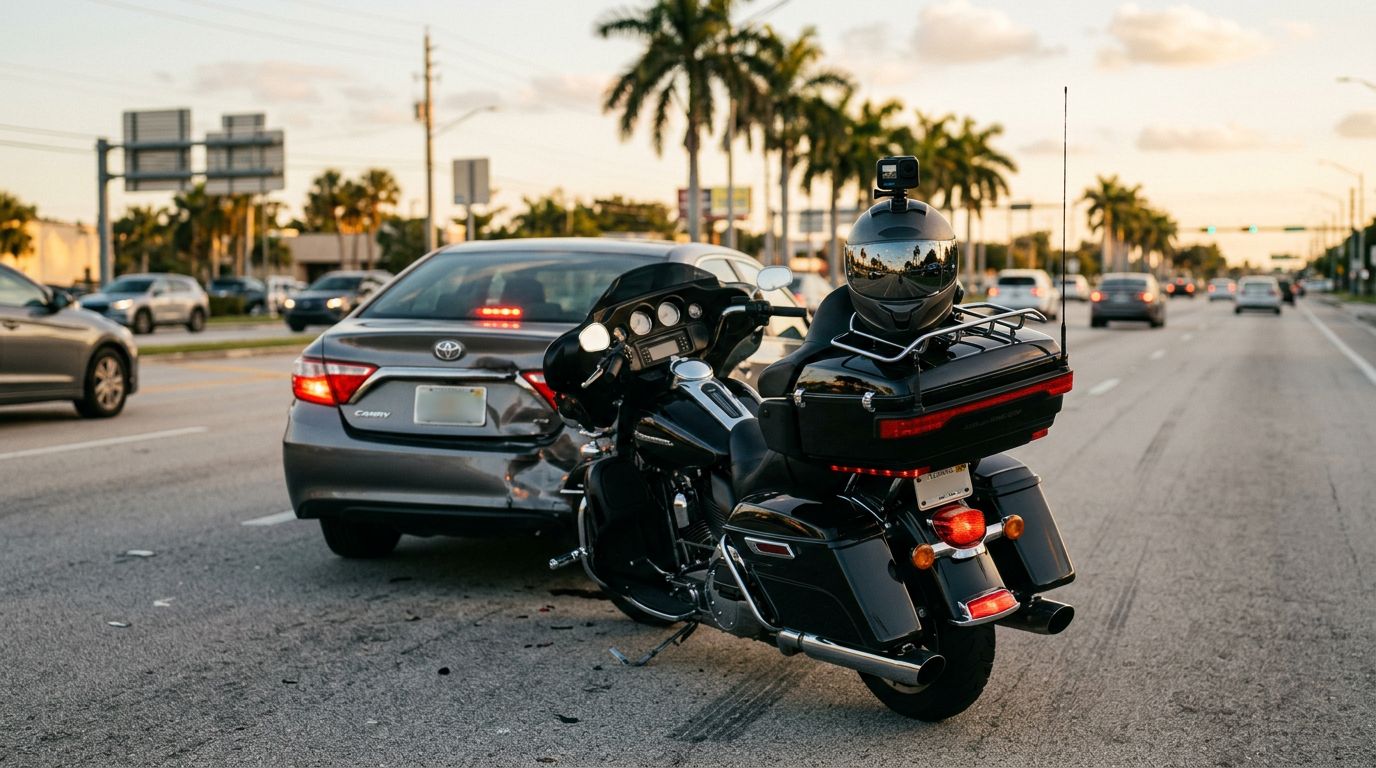
A rear-end impact can leave a motorcyclist with serious injuries even when the collision looks minor in traffic photos. In many Florida motorcycle rear-end crash claims, the driver who struck the motorcycle starts with a legal disadvantage, but liability is never automatic.
Helmet camera footage can clarify what happened within seconds. It may show following distance, lane position, brake lights, traffic signals, and the moment of impact. However, the rider must preserve the original recording and establish that the footage is genuine before using it in an insurance claim or lawsuit.
Key Takeaways
- Florida generally presumes the rear driver caused a rear-end collision, but the other driver can rebut that presumption.
- Helmet camera video must be relevant, authentic, and free from unexplained editing.
- Preserve the original file, camera, memory card, and related metadata.
- Audio may raise separate consent issues under Florida law.
- Most Florida negligence claims filed for crashes occurring after March 24, 2023, have a two-year deadline.
Why Rear-End Motorcycle Crashes Often Point to Driver Fault
Florida law expects drivers to leave enough space to stop safely. A driver who follows too closely, looks at a phone, fails to notice stopped traffic, or reacts too late may be liable for striking a motorcycle ahead.
When a vehicle hits another vehicle from behind, Florida courts generally apply a rebuttable presumption that the rear driver was negligent. The presumption can shift the focus to the driver’s explanation for the crash. Still, it doesn’t guarantee a settlement or verdict for the motorcyclist.
The other driver may argue that the motorcycle stopped suddenly, changed lanes without warning, had defective brake lights, or created an unavoidable hazard. Road conditions, a mechanical failure, or an unexpected third-party action may also affect the analysis. Camera footage can test those explanations against what actually happened.
The rider still must prove several elements:
- The other driver owed a duty of reasonable care.
- The driver breached that duty.
- The breach caused the collision.
- The crash caused legally compensable injuries or losses.
Florida’s modified comparative negligence rule can reduce damages when more than one person contributed to the crash. A claimant who is found more than 50 percent responsible generally can’t recover damages. If the rider is 50 percent or less at fault, the award is reduced by that percentage.
Helmet use can become part of an insurance company’s arguments, especially when the rider suffered a head injury. However, Florida Statute 316.211 limits the use of a helmet-law violation as evidence of civil negligence. The facts surrounding the injuries, medical records, and the statute’s specific language still require careful review.
When Helmet Camera Video Is Admissible
Florida doesn’t have a special statute that automatically admits or excludes helmet camera recordings. Instead, courts apply the Florida Evidence Code and general rules for video evidence.
Under Florida Statute 90.901, the party offering a recording must authenticate it. That usually means presenting enough evidence to show that the video is what the rider claims it is. The rider may testify about the camera, the ride, the date, and whether the recording fairly shows the events.
A judge may also consider the reliability of the recording process. Timestamps, GPS information, file metadata, camera settings, and an unbroken chain of custody can help establish authenticity. If the video came from a memory card or cloud account, keep the original source available.
The footage must also relate to an important issue. Video showing the vehicle approaching, the rider’s speed, the traffic signal, or the driver’s failure to stop is likely relevant. Footage that has no connection to fault or damages may not help the claim.
Evidence can still be excluded if its value is substantially outweighed by unfair prejudice, confusion, or misleading presentation under Florida Statute 90.403. A recording that includes graphic injuries, unrelated arguments, or edited commentary may create disputes about what the jury should see.
The Florida Bar Journal’s discussion of video surveillance evidence provides additional context on authentication and the use of recordings in personal injury litigation.
Audio creates a separate concern
Video captured on a public roadway generally presents fewer privacy concerns than audio of a private conversation. Florida’s Security of Communications Act generally requires consent from all parties before recording a private communication. A helmet camera may capture the rider speaking with a passenger, another motorist, or someone at the crash scene.
That doesn’t mean the entire recording becomes useless. An attorney may be able to separate disputed audio from helpful visual evidence, depending on the circumstances. Don’t delete or alter the file yourself. Preserve everything and allow counsel to determine what portions are usable.
How to Preserve Helmet Camera Evidence
The first version of a recording often has the greatest value. Social media clips, screen recordings, and edited highlights may leave questions about what happened before or after the visible portion.
After a crash, protect the evidence in these ways:
- Save the original video file in its native format.
- Keep the camera, memory card, and mounting equipment.
- Make a secure backup without changing the original.
- Preserve files showing the minutes before and after the impact.
- Record the camera’s make, model, settings, and time zone.
- Avoid filters, cropping, captions, or speed changes.
- Don’t post the footage or discuss the crash publicly.
- Give the recording to your attorney or insurer through a documented transfer.
A timestamp can help, but it may not match the actual time if the camera clock was wrong. That doesn’t automatically destroy the evidence. Other proof, including 911 records, cellphone data, traffic signals, witness testimony, and business surveillance, may establish when the crash occurred.
Footage can also contain information that hurts the rider’s position. It may show speeding, lane splitting, an unsafe lane change, failure to signal, or a distracting conversation. Review the entire recording before making statements about what it proves.
A lawyer may request nearby traffic camera footage or surveillance video from businesses before those systems overwrite it. The same preservation concern applies to the other driver’s dashcam, vehicle event data, and cellphone records. Prompt action matters because some systems retain recordings for only a short time.
What a Florida Motorcycle Crash Claim May Include
A rear-end motorcycle collision can produce more than emergency room bills. A claim may seek compensation for past and future medical treatment, rehabilitation, medication, lost wages, reduced earning ability, property damage, and pain and suffering.
Serious injuries may include fractures, road rash, spinal damage, traumatic brain injuries, nerve damage, and permanent scarring. The value of a claim depends on the medical evidence and the effect on the rider’s work, household responsibilities, mobility, and daily life.
Motorcyclists also need to understand Florida’s insurance structure. Motorcycles generally don’t receive the same personal injury protection benefits that apply to covered vehicles under Florida’s no-fault system. Available coverage may include the at-fault driver’s bodily injury policy, the rider’s uninsured or underinsured motorist coverage, medical payments coverage, or other applicable policies.
Florida doesn’t require every driver to carry bodily injury liability insurance. As a result, identifying all available coverage is often as important as proving fault. An insurer may point to policy exclusions, coverage limits, or allegations that the rider caused the collision.
Most negligence claims for crashes occurring on or after March 24, 2023, must be filed within two years under Florida’s current statute of limitations. Different deadlines may apply to older crashes, wrongful death claims, minors, government defendants, or other special circumstances. Waiting for an insurance company to finish its review doesn’t stop the lawsuit deadline.
When to Speak With a Motorcycle Accident Attorney
A lawyer can examine the video alongside physical evidence instead of treating the recording as the entire case. Skid marks, vehicle damage, repair records, photographs, medical records, witness accounts, and road design may confirm or challenge what appears on screen.
Counsel can also handle communications with insurers, identify all available policies, calculate future losses, and address comparative fault allegations. If the other driver denies following too closely, an attorney may obtain vehicle data, phone records, intersection footage, or testimony from independent witnesses.
The Florida motorcycle accident attorneys at Avard Law Offices can review the circumstances of a collision and explain potential injury claims. Riders can also learn more about how a motorcycle accident lawyer can help after an injury.
Before meeting with counsel, gather the crash report, medical records, insurance information, photographs, witness contacts, and every camera file. Keep a written record of missed work, medical appointments, symptoms, and out-of-pocket expenses. These details can support both liability and damages.
Protecting Your Claim After a Rear-End Collision
A helmet camera may show the crash clearly, but evidence only helps when the claim remains legally and medically supported. Seek prompt medical care, follow treatment instructions, and tell providers about every symptom. Some motorcycle injuries worsen after the initial adrenaline fades.
Report the collision as required, but avoid guessing about speed, distance, or fault. Don’t give an insurer a recorded statement before understanding the questions and the coverage involved. Never sign a release while treatment and future losses remain uncertain.
A rear-end crash can look obvious at the roadside and become disputed weeks later. Preserving the original footage, documenting injuries, and obtaining legal advice early can keep the strongest evidence available.
Conclusion
Florida motorcycle rear-end crash claims often turn on the driver’s conduct, the rider’s injuries, and the quality of the available evidence. Helmet camera footage can show the collision in ways that photographs and conflicting statements cannot, but the original recording must be preserved and authenticated.
Keep every file and device, avoid public posts, and seek medical and legal guidance before negotiating with an insurer. When the video and surrounding evidence tell the same story, they can provide a clear foundation for pursuing fair compensation.