
Florida Shopping Center Assault Claims and the Proof That Matters
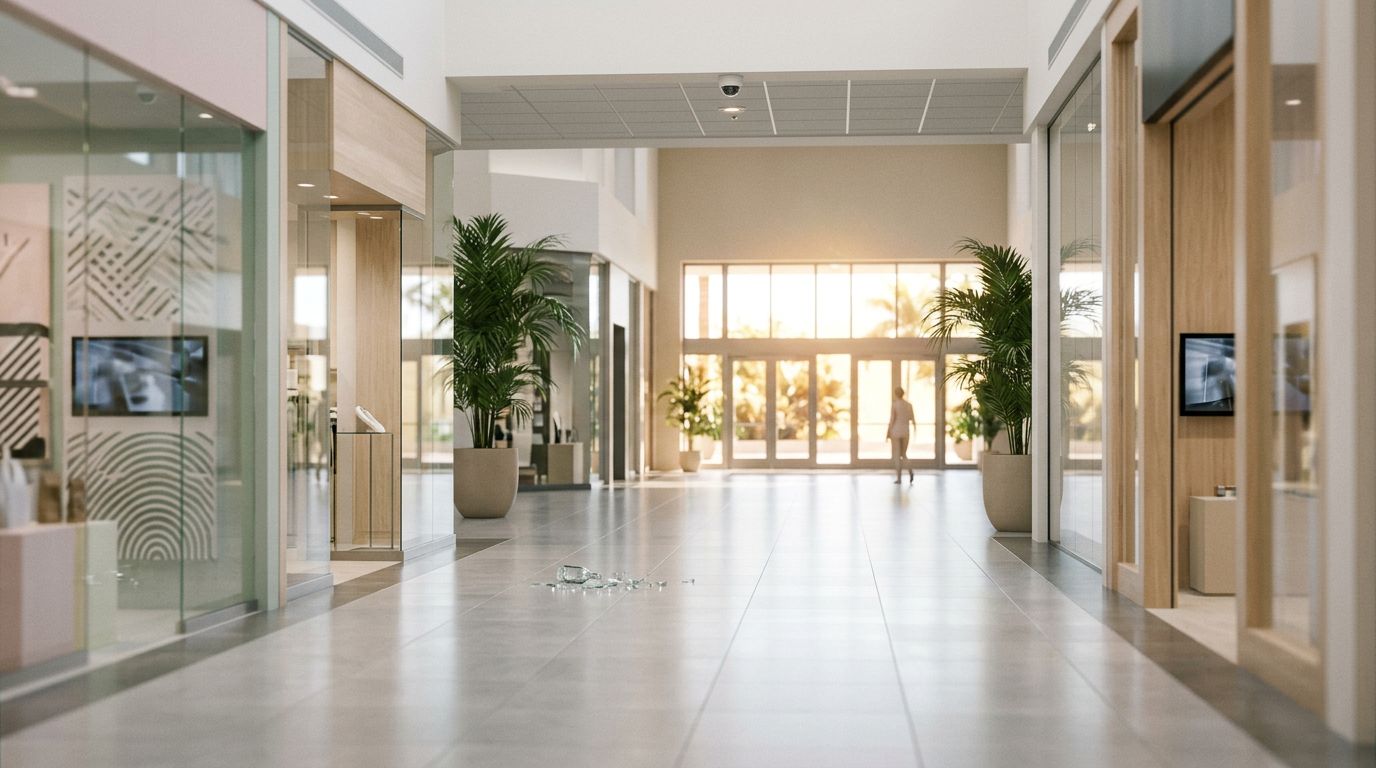
An assault at a Florida shopping center can leave you with injuries, bills, and one hard question: could this have been prevented? Many people focus only on the attacker. In some cases, the property’s own security failures matter too.
A strong florida negligent security claim depends on proof, not outrage. You need facts that show the danger was known, the response was weak, and the failure helped lead to the assault. That starts with knowing what the law expects from shopping centers.
When a Shopping Center Assault Becomes a Florida Negligent Security Claim
Shopping centers invite people onto the property to shop, eat, work, and park. Because of that, owners, managers, and sometimes tenants may owe customers a duty to use reasonable care in common areas. If you want the broader premises framework, Avard Law’s guide to Florida premises liability duty of care explains why control of the property often matters as much as ownership.
Still, an assault by a third party does not create automatic liability. The central issue is foreseeability. In plain terms, was there enough warning that a violent incident could happen, and did the people in charge fail to act reasonably?
That warning can take many forms. Prior robberies in the parking lot matter. So do repeated fights near bars or food courts, trespass complaints, broken gate reports, and calls about poor lighting. A crime does not have to match your assault exactly. A pattern of danger can still put a shopping center on notice.
In these cases, the real fight is usually over foreseeability, not sympathy.
Florida law also changed how fault is weighed in commercial property cases involving criminal acts. Under section 768.0701 on premises liability for criminal acts of third parties, a jury may consider the fault of all people who contributed to the injury, including the attacker. That doesn’t erase a property owner’s responsibility. It means the proof has to show where the shopping center fell short.
The Security Proof That Carries the Most Weight
The best shopping center assault claims are built with records that tell a clear story. The goal is to show what the property knew before the attack, what security measures existed, and what failed in the moment.
This is the evidence that often matters most:
| Evidence | What it can show |
|---|---|
| Surveillance video | Lighting, guard presence, crowd conditions, and how the assault unfolded |
| Prior incident records | A history of fights, robberies, or threats in the same area |
| Maintenance and repair records | Broken lights, dead cameras, bad locks, or ignored repair requests |
| Security staffing logs | Whether guards were present, trained, and assigned where needed |
| Witness statements | Prior complaints, slow response times, or missing security |
| 911 and police call records | Repeated trouble at the property before your assault |
Video often carries the most weight because it can settle arguments fast. It may show a dark walkway, an empty security desk, or a guard who arrived too late. Many systems overwrite footage quickly, so fast action matters. Avard Law’s page on preserving premises incident footage gives a practical look at why early requests matter.
Records from before the assault are often even more important than the video of the attack itself. A shopping center may claim the crime came out of nowhere. Prior incident reports can tell a different story. If management knew about repeated trouble in the same lot or breezeway, that can help prove notice.
The scene itself matters too. Photos of burned-out lights, blocked sight lines, missing cameras, or unsecured side entrances can support the claim. So can tenant emails complaining about fights, loitering, or people sleeping in stairwells. In many florida negligent security cases, the strongest proof comes from ordinary business records that were never meant for court.
Why Foreseeability and Timing Decide the Case
Foreseeability is rarely proved with one dramatic fact. More often, it comes from several smaller facts that fit together. One police call may not say much. Ten calls in six months, plus broken lights and no patrols, tell a much harder story to ignore.
Shopping center defendants often raise a few common defenses. They may say the attack was sudden and random. In the same breath, they argue the criminal alone caused the harm. Some also claim a tenant, not the center, controlled the area. That is why location matters so much. An assault near a shared parking lot, walkway, garage, or courtyard often points back to whoever controlled that common space.
Timing can make or break the claim as well. Video disappears. Witness memories blur. Maintenance records get harder to trace. Meanwhile, many people wait because they assume the police investigation will handle everything. A criminal case and a civil claim aren’t the same. One looks at guilt. The other looks at preventable risk and property negligence.
Medical care should happen early, and evidence preservation should happen early too. Keep photos, receipts, discharge papers, and the names of anyone who saw the scene. Also remember that many negligence claims in Florida now face a shorter filing window. Avard Law’s overview of the two-year deadline for many Florida injury claims explains why waiting can damage a case long before the courthouse deadline arrives.
A shopping center assault claim is often decided long before trial. If the records show prior violence, poor security, and weak response, the case has substance. If the proof disappears, even a serious assault can become much harder to prove.
An assault in a mall or shopping plaza can feel random. At times, it truly was. In other cases, the warning signs sat in plain view for months.
The strongest florida negligent security claims show that the risk was known and that reasonable security steps were missing. When the proof is preserved early, the story does not depend on guesswork.