
Florida Parasailing Injury Claims and Safety Records
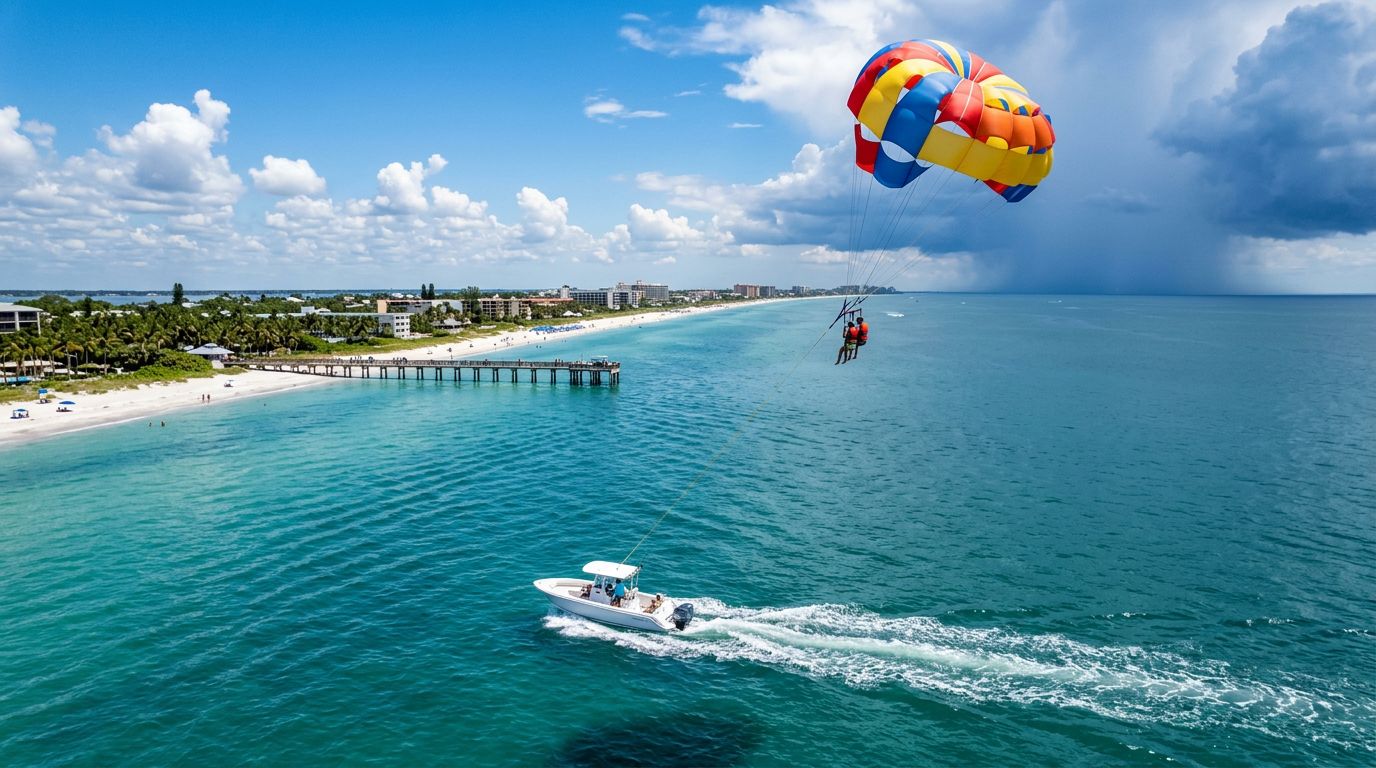
A parasail ride can turn into a serious injury within seconds. A broken towline, unsafe weather, poor instructions, or an error by the boat crew may leave a passenger with lasting physical and financial harm.
Florida parasailing injury claims often depend on evidence that disappears quickly. The operator’s license, maintenance files, weather records, incident reports, and prior safety violations can help show what happened and whether the company had notice of a dangerous condition.
Key Takeaways
- Florida’s commercial parasailing law sets safety requirements for operators and vessels.
- An operator’s prior incidents may help prove notice, but they don’t automatically establish negligence.
- Important evidence includes weather data, equipment records, crew communications, witness statements, and official reports.
- Liability may involve the operator, boat owner, crew, equipment manufacturer, or another company.
- Deadlines apply, and waivers don’t automatically prevent an injured passenger from filing a claim.
Florida Rules That Apply to Commercial Parasailing
Florida’s commercial parasailing statute, Florida Statutes section 327.375, establishes operating requirements for businesses that tow passengers over the water. The statute addresses matters such as operator qualifications, weather and visibility, operating hours, observer duties, communication equipment, and parasailing equipment.
These rules matter because safety decisions often happen before the ride begins. A company may need to delay or cancel a launch when conditions create an unreasonable risk. The captain also must account for boat traffic, wind, storms, equipment condition, and the passenger’s ability to follow instructions.
A violation of a safety rule doesn’t guarantee compensation. However, it may provide evidence that the operator failed to follow a required standard. The facts still must connect that violation to the injury.
Florida negligence law generally requires proof of four points:
- The operator owed the passenger a duty of reasonable care.
- The operator breached that duty.
- The breach caused the accident or injury.
- The passenger suffered damages.
A business that sells parasailing rides has a duty to use reasonable care when selecting equipment, training employees, checking conditions, and managing the launch and recovery. That duty may apply even when the passenger signs a waiver.
The legal analysis can also involve federal maritime law. Parasailing takes place on navigable waters, so the location of the accident, the vessel’s activity, and the parties involved may affect which laws apply. An attorney must evaluate those issues rather than assume that only Florida law controls.
When a Parasailing Operator May Be Liable
A parasailing accident can result from more than one mistake. The boat captain may accelerate too quickly, turn improperly, or fail to account for another vessel’s wake. A crew member may attach the harness incorrectly or give incomplete instructions before takeoff.
Equipment problems also create potential claims. A worn towline, damaged harness, defective carabiner, faulty winch, or poorly maintained boat can cause a passenger to fall or collide with the vessel. In some cases, the company that manufactured or repaired the equipment may share responsibility.
Weather presents another major issue. High winds, reduced visibility, lightning, rough water, and sudden storms can make a flight unsafe. Operators must monitor conditions before launch and during the ride. A company may face liability if employees continue operating after conditions become dangerous.
Passenger conduct can become part of the case, but operators cannot shift every safety responsibility to the customer. The crew controls the equipment and usually controls the launch, tow, and landing. Clear instructions and proper supervision remain important.
Potentially responsible parties may include:
- The parasailing company
- The vessel owner
- The captain or crew member
- A marina or tour company that arranged the activity
- An equipment manufacturer
- A maintenance or repair contractor
More than one party may have caused the same injury. For example, a manufacturer could supply a defective connector, while the operator could fail to inspect it. A claim should identify each contributing cause before a settlement is accepted.
Injuries may include fractures, spinal damage, traumatic brain injuries, internal injuries, nerve damage, drowning injuries, and fatal injuries. Medical records should document the diagnosis, treatment, limitations, and expected future care.
What Operator Safety Records Can Show
An operator’s safety history can provide facts that are difficult to obtain from a passenger’s own memory. The records may show whether the company had repeated equipment problems, prior complaints, earlier accidents, or a history of ignoring weather restrictions.
Relevant records may include:
- Coast Guard license and vessel documentation
- Commercial parasailing permits or registration records
- Maintenance, repair, and inspection files
- Towline, harness, winch, and chute replacement records
- Weather observations and cancellation decisions
- Crew training and certification records
- Passenger waivers and safety briefings
- Incident reports and internal investigations
- Prior citations, complaints, or reported accidents
- Insurance information and claims involving the same equipment
A prior accident does not automatically prove that the operator caused a later injury. The earlier event becomes more useful when it involved similar equipment, the same crew, the same unsafe practice, or a condition the company should have corrected.
For example, repeated reports of a failing winch may help show that the company knew about a mechanical risk. A prior complaint about dangerous launches may support an argument that the operator had notice of unsafe procedures. The value of the evidence depends on its date, reliability, similarity, and connection to the accident.
Public records may exist with the Florida Fish and Wildlife Conservation Commission, local law enforcement, fire rescue agencies, emergency medical services, or the U.S. Coast Guard. The FWC boating accident reporting information explains when boating incidents must be reported and how the process works.
Some records won’t be available to the public. Private maintenance files, employee communications, customer complaints, and insurance materials may require formal discovery after a lawsuit begins. An attorney can request those documents through interrogatories, document requests, depositions, or subpoenas.
How to Preserve Evidence After an Accident
The first priority after a parasailing injury is medical care. Tell the medical provider how the accident occurred, including whether you fell, struck the boat, were dragged through the water, or experienced a sudden stop.
Report the incident to the operator, but avoid guessing about the cause or accepting blame. Ask for the incident report and record the names of employees and witnesses. Take photographs of visible injuries, the boat, harness, towline, winch, launch area, and weather conditions when possible.
Passengers should also preserve:
- Receipts, booking confirmations, and waiver documents
- Text messages, emails, and promotional materials
- Photographs and videos from the ride
- Names and contact information for witnesses
- Medical bills, wage records, and transportation expenses
- Clothing or personal equipment damaged in the accident
Time-sensitive evidence may include security footage, boat GPS data, radio communications, dispatch records, weather app data, and social media posts. A company may overwrite or delete some information under ordinary retention practices. A written preservation request can help protect evidence while the claim is investigated.
An attorney may send a formal demand that the operator preserve the vessel, equipment, electronic data, employee files, and all records related to the ride. The request doesn’t prove liability, but it gives the company notice that the materials may become evidence.
Public records requests can also help. The U.S. Coast Guard’s FOIA information explains how to request records held by that agency. Local agencies have separate procedures, and some accident materials may be exempt or redacted during an active investigation.
A safety record is most useful when it connects a known problem to the specific event that injured you.
Waivers, Comparative Fault, and Filing Deadlines
Parasailing companies commonly ask customers to sign liability waivers. A waiver may affect a claim, but its wording and presentation matter. Florida courts generally examine whether the language clearly and specifically releases negligence claims. Ambiguous language may not protect a business from liability.
A waiver usually doesn’t excuse gross negligence, intentional misconduct, or conduct that violates a safety requirement. It also may not cover a risk that the document failed to describe. The passenger’s age, the signing process, the size and placement of the language, and the facts of the accident can all affect enforcement.
The operator may argue that the passenger failed to follow instructions or accepted a known risk. Florida’s modified comparative negligence law can reduce damages based on a claimant’s share of fault. Under Florida Statutes section 768.81, a claimant found more than 50 percent responsible for the harm generally can’t recover damages in a negligence action.
Deadlines require prompt attention. Many Florida negligence claims arising on or after March 24, 2023, have a two-year statute of limitations. Older accidents may fall under a different rule. Wrongful death claims, claims involving government entities, and maritime claims can have separate requirements or deadlines.
The time limit may also depend on when the injury was discovered, the identity of the defendant, and whether a federal maritime rule applies. Waiting for an agency report or hoping the company will provide records can cause a claim to expire.
A consultation with a Florida personal injury attorney can identify potential defendants, preserve evidence, evaluate the waiver, and calculate medical and financial losses. Keep copies of every document and avoid signing a settlement before understanding the full extent of the injury.
Conclusion
Florida parasailing injury claims often turn on details that are easy to lose after an accident. Safety records, weather data, equipment history, crew training, and prior complaints can show whether the operator recognized a risk and failed to correct it.
A signed waiver doesn’t automatically end the case, and an operator’s safety record doesn’t automatically establish fault. The strongest claim connects the evidence to the specific decision, equipment failure, or unsafe act that caused the injury. Acting quickly helps preserve that evidence before it disappears.